
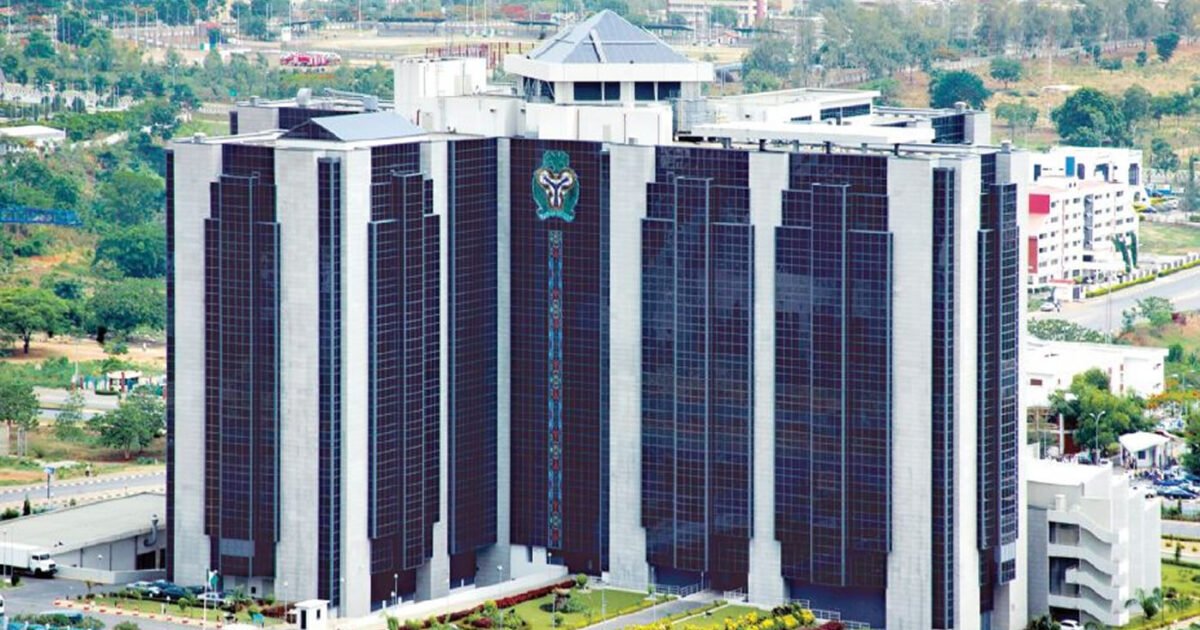
The Central Bank of Nigeria on Wednesday said 33 banks have met new minimum capital requirements under its recapitalisation programme, raising a combined N4.65tn to strengthen the financial system.
The apex bank disclosed this in a statement marking the end of the exercise, which commenced in March 2024 and drew participation from domestic and foreign investors.
The statement was jointly signed by the Director of Banking Supervision, Olubukola Akinwunmi, and the Acting Director of Corporate Communications, Hakama Sidi-Ali.
The statement reads, “Over the 24-month period, Nigerian banks raised a total of N4.65tn in new capital, strengthening the resilience of the financial system and enhancing its capacity to support the economy.”
The regulator said local investors accounted for 72.55 per cent of the funds, while international investors contributed 27.45 per cent, reflecting continued confidence in the sector.
Commenting on the outcome, the CBN Governor, Olayemi Cardoso, said in the statement, “The recapitalisation programme has strengthened the capital base of Nigerian banks, reinforcing the resilience of the financial system and ensuring it is well-positioned to support economic growth and withstand domestic and external shocks.”
It added that while 33 banks have complied with the new thresholds, a few others are still undergoing regulatory and legal processes.
The statement noted, “The CBN confirms that 33 banks have met the revised minimum capital requirements established under the programme.
“A limited number of institutions remain subject to ongoing regulatory and judicial processes, which are being addressed through established supervisory and legal frameworks.
“All banks remain fully operational, ensuring continued access to banking services for customers.”
The apex bank stressed that the exercise was executed without disrupting banking operations, ensuring uninterrupted access to services nationwide.
It further stated that key prudential indicators have improved, particularly capital adequacy ratios, which remain above global Basel benchmarks.
The minimum ratios were set at 10 per cent for regional and national banks and 15 per cent for banks with international licences.
The bank also said the recapitalisation coincided with a gradual exit from regulatory forbearance, a move it said improved asset quality, strengthened balance sheet transparency, and enhanced overall stability.
To preserve these gains, the CBN said it has reinforced its risk-based supervision framework, mandating periodic stress tests and adequate capital buffers for banks.
It added that supervisory and prudential guidelines would be reviewed regularly to strengthen governance, risk management, and resilience across the sector.
“The successful completion of the programme establishes a stronger and more resilient banking system, better positioned to support lending, mobilise savings, and withstand domestic and global shocks,” the statement said.
The earlier reported that foreign capital inflows into Nigeria’s banking sector rose by 93.25 per cent year-on-year to $13.53bn in 2025, up from $7.00bn recorded in 2024, amid the ongoing recapitalisation drive by the Central Bank of Nigeria.
Data from the National Bureau of Statistics capital importation report showed that the banking sector remained the dominant destination for foreign capital, accounting for $13.53bn of the total $23.22bn recorded in 2025, representing 58.26 per cent of total inflows, up from 56.81 per cent in 2024.
The surge reflects heightened investor interest in Nigerian banks as they raised fresh capital to meet new regulatory thresholds introduced by the apex bank, with industry-wide recapitalisation activities driving large-scale inflows across all quarters of the year.
However, the Centre for the Promotion of Private Enterprise recently raised concerns over weak credit flows to small businesses despite recent banking sector reforms.
The CPPE, led by a renowned economist, Dr Muda Yusuf, acknowledged that the ongoing bank recapitalisation exercise by the Central Bank of Nigeria has strengthened the financial system, but warned that the benefits have yet to translate into meaningful support for the real economy.