
In 2016, Kenya’s communications regulator, the Communications Authority (CA), hired a UK-based consultancy firm, Analysys Mason (AM), to analyze the competitive landscape of the local telecoms market.
Leaked reports from 2017 revealed that AM initially suggested Safaricom, Kenya’s leading telecom operator, split its carrier business from its mobile money services (M-PESA). However, a later official report from AM reversed this recommendation, deeming the split as “disproportionate.”
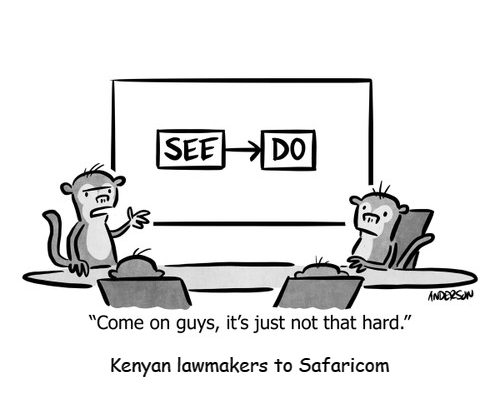
Subsequently, regulators and lawmakers have been urging Safaricom to separate its voice, data, and SMS services from its other activities. In 2021, a parliamentary bill proposing this split was introduced but did not garner enough support. The bill, Kenya ICT (Amendment) Bill, resurfaced in 2022 and underwent its initial hearing.
In the same year, Airtel Kenya, the country’s second-largest operator, carried out a separation of its mobile money services from its primary business.
On September 28, Kenyan members of parliament (MPs) held a subsequent discussion regarding the Safaricom split proposal, indicating their ongoing commitment to advocating for the division.
Despite Safaricom’s resistance to the split, its CEO Peter Ndegwa hinted at establishing a holding company (HoldCo) in 2025, encompassing divisions for various business lines. Under this new structure, M-PESA, contributing nearly half of Safaricom’s revenue, would operate as a subsidiary alongside data, voice, and messaging services.
One significant hurdle to the split is a KES 75 billion ($581 million) tax obligation. Safaricom executives have engaged with the Central Bank of Kenya (CBK) to explore potential tax exemptions, but the results of these talks remain uncertain.