
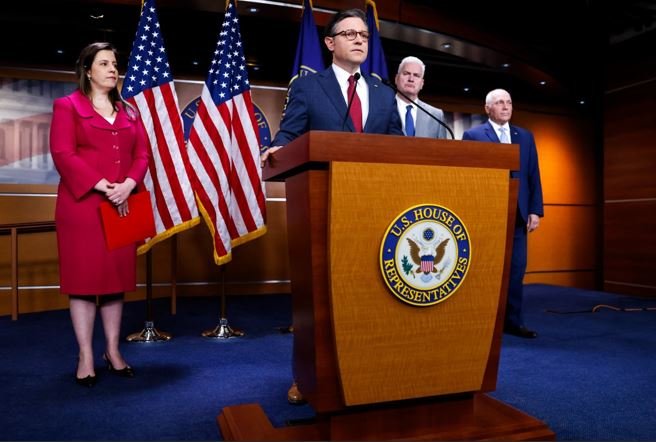
The first day of the new US Congress saw turmoil as conservative Republicans rebelled against President Donald Trump to prevent Mike Johnson from being re-elected as speaker of the House of Representatives. Despite Trump’s support, Johnson failed to secure the necessary votes, leading to uncertainty in House leadership. This setback highlighted the limits of Trump’s influence over House Republicans.
With the upcoming presidential inauguration, the speaker’s election becomes crucial as it impacts House functions, including certifying the presidential victory. The unresolved leadership battle could prompt moderate Republicans to seek alternative options if Johnson loses Trump’s backing. The ongoing struggle for the speakership underscores the division within the Republican Party.
Johnson’s efforts to rally support from conservatives fell short, as his past dealings with Democrats and perceived weaknesses on fiscal matters alienated some party members. Although Johnson narrowly won the initial vote, he lacked the majority needed for re-election due to dissent within his party. The possibility of a prolonged contest for the speaker’s position looms, potentially leading to unexpected outcomes.
The complexity of the speaker election process reflects the internal dynamics of the Republican Party and the challenges of achieving consensus. Despite speculations about alternative candidates, no credible Republican contender has emerged publicly for the next round of voting. The uncertainty surrounding House leadership underscores the divisions and power struggles within the party.