
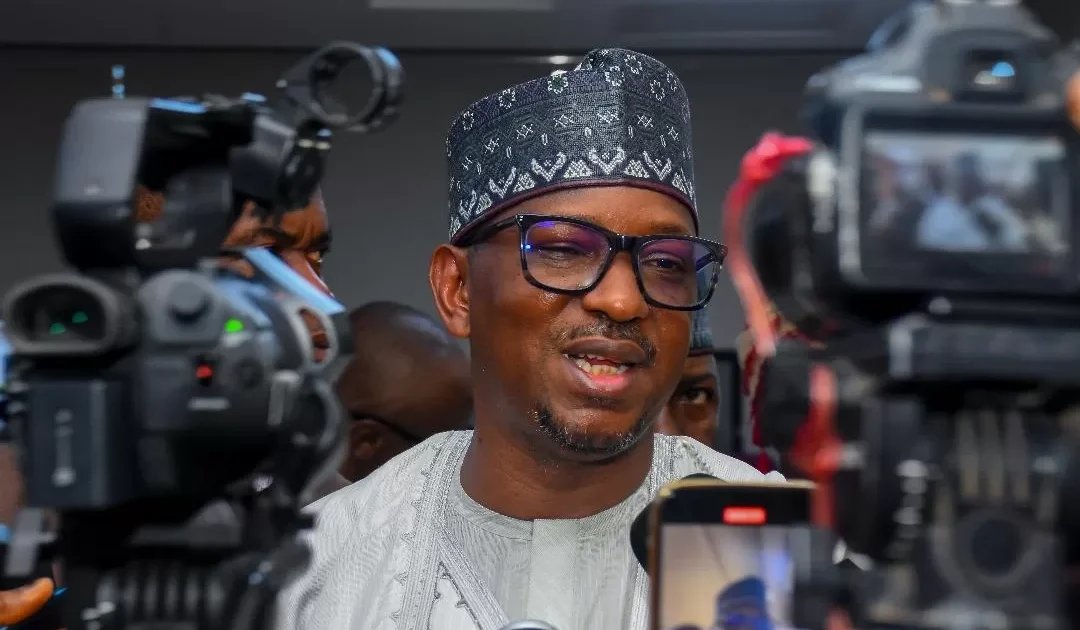
The National Sports Commission is stepping up efforts to secure international hosting rights as part of a broader plan to rebuild ageing facilities and reposition sport as a central driver of Nigeria’s economic growth, Sunday reports.
The strategy, according to the commission Chairman Shehu Dikko, is anchored in the Renewed Hope Initiative for Nigeria’s Sports Economy, a policy framework that outlines both the guiding principles and measurable outcomes of the reforms.
“When we launched the Renewed Hope Initiative for Nigeria’s Sports Economy, it clearly spelt out the fundamentals of what we want to achieve and the outcomes we expect,” Dikko told Sunday .
“You can see everything coming together, but we are just starting. As we have said, we have to do more, and we are going to do more.”
Dikko explained that hosting major competitions sits at the heart of that reset from the outset, and the commission resolved to pursue this as a catalyst for development deliberately.
“Because this is part of our vision and objectives from day one, we said we have to reset and refocus on our sport,” he said.
“Hosting major international events and conferences is part of that vision. We said whatever we are going to do, we have to be intentional and deliberate about it.”
The commission recently staged the Africa Running Conference and has already been offered the 2027 edition, a development Dikko believes underlines growing confidence in Nigeria’s capacity. He added that road running represents just one strand of a much wider ambition.
“It is not just about road running; it is about every sport. We want to be hosting events. That is the only way we can keep our infrastructure functional… and advance the sports economy we are talking about,” he said.
NSC Director General Bukola Olopade framed the hosting push as part of a broader production model designed to build talent and stimulate enterprise.
According to Olopade, Nigeria has sent more than 50 national teams to international competitions over the past year and hosted at least 12 events, in addition to domestic competitions such as the Gateway Games in Abeokuta.
“What we have consistently emphasised is the need to create a pool and a production line of talent, and to generate wealth by hosting international events in Nigeria,” Olopade told our correspondent, arguing that regular competitions on home soil provide athletes with exposure while strengthening the domestic sports market.
Dikko linked that approach directly to infrastructure renewal, pointing to provisions in the 2025 and 2026 federal budgets aimed at rehabilitating stadiums and facilities.
“If you check the 2025 and 2026 budgets, there is a major component dedicated to fixing infrastructure because without infrastructure, you cannot achieve much,” he said.
Dikko added that work is underway in partnership with state governments and private investors across the country.
“Where we want to build or rehabilitate a stadium, we are partnering with state governments and handing some facilities over to them. The Federal Government is also working with state governments to restore other stadiums since the President approved discussions with relevant authorities to bring back key facilities,” Dikko said.
“In Lagos, for instance, they are doing an excellent job rebuilding the National Stadium. They have almost demolished parts of it and are reconstructing it to meet modern standards. We are also handing it over to a private sector consortium that won the bid to manage and restore it.”
Olopade added that private sector involvement has been central to the commission’s momentum, crediting confidence in President Bola Tinubu’s reforms and the leadership team’s combined experience for attracting new commitments.
“With ease, Mallam Shehu Dikko can pick up the phone and speak to managing directors of multinational companies. I can do the same without hesitation. We have already put this into practice, and we are seeing traction,” he said.
He revealed that a private entity had committed to constructing a multi-million naira wrestling hall, while a gaming company had pledged to build a specialised facility for para-sports, adding that documentation was being compiled to demonstrate the direct and indirect economic impact of such initiatives.
Dikko also added that engagement with corporate Nigeria extended beyond headline sponsorship deals, disclosing that he recently met with representatives of the oil and gas sector in Abuja, where he urged them to look beyond organising sporting activities within their industry.
“Just recently in Abuja, I hosted representatives from the oil and gas sector. Part of the discussion was that while they organise sports activities within their industry, they should also return to their companies and ensure that their CSR programmes invest in community sports infrastructure. Wherever they see available space in their communities, they should do something for sports,” Dikko said.
The commission’s ambitions have received public backing from President Tinubu, who announced a comprehensive reset of sports funding beginning from the 2026 fiscal year and pledging that sports funding will be released promptly going forward to avoid the bureaucratic delays that have historically disrupted preparation and participation.
For Dikko, the president’s endorsement signals a shift in how sport is viewed at the highest level of government.
Responding to early critics who dismissed the reform drive as rhetoric, he said recent developments spoke for themselves.
“Two weeks ago, Mr President personally tweeted on his official handle about the records of what sports achieved in 2025. Has that ever happened before in sports?” he questioned.
“There is nothing much to say; we are working. You can see what is happening.”