
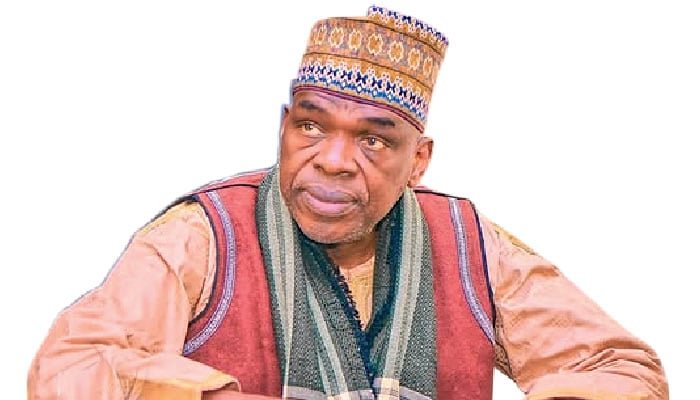
The President of Miyetti Allah Cattle Breeders Association of Nigeria, Baba Ngelzarma, speaks with ISMAEEL UTHMAN on the alleged involvement of members of the association in violent crimes that compelled a US congressman, Riley Moore, to seek sanctions on the group
What is the purpose of your association?
The organisation was registered in 1986. It is a non-religious, non-violent and non-tribal organisation established to protect the interests of cattle breeders, irrespective of where they come from. Once they are cattle breeders and desire to take up our membership, they undergo due scrutiny. Secondly, it was established to help develop the livestock sector towards modernisation. It is also aimed at mitigating conflict between farmers and herders, ensuring peace-building so that they can coexist peacefully. The group also ensures the availability of grazing areas and access to veterinary services for cattle breeders in the country. We also place strong emphasis on educating our members. Without education, they cannot modernise the livestock production system. So, education is one of our core priorities.
What are the criteria for joining the association?
You have to come through your local government. The local government council must certify that, as a cattle breeder, you do not have a criminal record. Then we conduct additional background checks to ensure that you are a practising cattle breeder.
But in spite of all these ideals and processes, members of your association have allegedly been identified with violence across the country. Why is this so?
That is a misconception, and it stems from a lack of understanding of what MACBAN stands for. Because it is the oldest and well-known association, people assume all pastoralists in the country belong to MACBAN. Apart from Miyetti Allah, there are other pastoralist groups, numbering between 25 and 30. Not all pastoralists belong to MACBAN. There are cattle breeders who do not even belong to any pastoralist group. I believe that is why whenever anything affects pastoralists, whether good or bad, it is associated with Miyetti Allah without verifying whether those involved are our members or not. We are not a violent group.
Because of these same alleged violent activities of your members, a US lawmaker, Riley Moore, is sponsoring a bill to impose a ban on your association, especially over alleged violent targeting of Christians in Nigeria… (cuts in)
This is far from the truth. We are really surprised that we were included in the proposed sanctions because we do not know what the association has done to deserve that inclusion. MACBAN is not an armed group and has never at any time supported, aided or funded any criminality. We have never taken responsibility for any criminal act and we do not condone crime. In fact, our members have on several occasions become victims of the same criminality. Our members are at the receiving end of cattle rustling and even kidnapping. We have the records. We are not the perpetrators.
All these allegations against us are based on assumptions because we are a very well-known group in the country. We are a peaceful group and we have never supported criminality. Our records are clear for everybody to see. Framing us a terrorist organisation is misguided.
How do you want to convince people that members of your association are not taking part in violence across the country?
Comment is free, but facts are sacred. The record is there for people to check, which is why we continue to deny and reject any negative tag or erroneous inclusion in violent activities. We have never participated in any form of criminality in this country. We have never been indicted by the Nigerian government at the local, state or federal level as sponsors or perpetrators of violence. That is why we are surprised to be included in the US lawmaker’s list of individuals and groups to be sanctioned.
However, we will continue to advance our cause and present our position to show the world that we were wrongly included in the list because we do not deserve to be there. We have already written letters to the President of the Senate, the Speaker of the House of Representatives, the Office of the National Security Adviser, and the Minister of Foreign Affairs, asking them to intervene in our case because they know us. We have operated in this country for four decades. It is wrong for anyone to frame us as terrorists or recommend us for sanctions. We do not deserve this.
Having said this, if any member of the association has committed or is committing crimes, they are doing so on their own. We have never supported them, and we will never take responsibility for their crimes. Having bad eggs within an association is not new. Even in the military, police, the DSS and other organisations, you will find both good and bad individuals. But does that make the entire institution a criminal organisation? No. Some individuals may be caught committing one form of crime or another, but we have never supported that. They act on their own because we take measures to ensure we do not deal with criminals.
How do you sanction any member of your association found guilty of any crime?
If the offence falls within the provisions of our constitution to sanction, then we deal with the person appropriately as required. If it involves farm destruction, we compel the individual to pay for the damage. We also ensure that where there are laid-down rules and regulations in that state, the person faces the full weight of the law. We allow them to undergo punishment under the laws of the relevant local government or state. But first and foremost, we ensure that compensation is paid for the damage done to someone’s farmland. This is what we have been doing to promote orderliness and peace.
In our efforts to support security agencies and combat crime across the country, we have lost many leaders. We lost three leaders in Kogi State alone—two chairmen and one vice-chairman. One chairman was followed to his house in Lokoja and killed. The other chairman was kidnapped and, even after a ransom of N3m was paid, he was killed. Up till today, his body has not been recovered. We believe those responsible are within Fulani criminal gangs.
In 2025, we lost a chairman in Kwara State. He was followed to his house in Ilorin and killed by gunmen we believe were bandits. Our chairman in Katsina State was killed in his village in Merana, while two of his wives and one daughter were abducted. They were released only after a ransom of N10m was paid. We have similar cases in Plateau and other states as a result of supporting security efforts to combat criminality in their respective states and local government areas.
How many members of your association have you punished for misdeeds?
We do not have exact figures, but many. We have done so in Ekiti and several other places. Whenever we come across such cases, we try to identify the perpetrators and ensure they are punished.
Did you hand them over to the police or just handle it as internal punishment?
We never do this kind of thing without the involvement of security agencies. Whether it is a resolution or any other action, we involve the police. We also encourage the establishment of farmer-herder committees at the local government level so that when such issues arise, they can sit together and resolve their problems amicably. That is why we have a very good relationship with the All Farmers Association of Nigeria. We work hand-in-hand with the association to promote peace and mitigate conflicts whenever they arise between farmers and herders.
In spite of all these, some people still find it difficult to differentiate between bandits and members of your association. They believe the criminals are your members.
Those bandits are criminals; we do not share any similarity with them. Pastoralists account for about 90 per cent of cattle ownership in the country, and incidentally, many of them are Fulanis. Whenever you hear of cattle rustling, those cattle are usually stolen from Fulani pastoralists. We have never denied that there are criminal elements among the Fulanis because you cannot steal large numbers of cows without involving people who understand how to mobilise them. The same Fulani criminals are stealing from Fulani pastoralists. That is where the confusion comes from, and that is why it is sometimes difficult for the public to distinguish.
The reason the public does not know the difference is because they are not fully informed about these issues. Some media reports are one-sided because much of what happens to pastoralists is rarely reported. The narrative is often promoted against pastoralists to the extent that people hardly distinguish between members of the Miyetti Allah Cattle Breeders Association of Nigeria and criminal Fulani herdsmen.
You don’t have any connection to crime?
No. We have never supported any criminality. Those who know us well, especially the security agencies, know that we are not a criminal group because we have been cooperating with them to identify and expose criminals.
What do you think is responsible for the unabated killings in the northern part of the country?
As far as livestock is concerned, we believe the root causes include population growth, climate change and the reduction of rangelands where pastoralists used to graze. Those areas in the northern part are mostly affected by climate change. The water points and dams that used to provide water for animals are no longer functional. Most of the dams in the grazing reserves are silted, and many grazing reserves have been encroached upon by farmers. As a result, grasses no longer grow as they used to.
Because many breeders still practise primitive animal husbandry, they continue to move further into the hinterland in search of grass and water. In the past, there were designated cattle routes linking one grazing reserve to another. However, due to population growth, the emergence of new villages, towns and cities, and expanding farmlands, many of these cattle routes have been blocked. This blockage forces breeders to trespass into people’s farmlands. Sometimes, when animals see green pasture, they graze on it and end up destroying farmlands, which then leads to disputes.
In the past, when there were strong communication links between farmers and herders, such issues were settled immediately on the farmland. But today, because of population growth, the breakdown of communication and rising mistrust, even minor disagreements can escalate into major conflicts.
Sometimes, these conflicts are given ethnic or religious colouration.
Why do you think this is so?
It is because pastoralists, who are mostly Fulanis and predominantly Muslims, share common ethnic and religious identities. When a conflict occurs with a farming community that is largely Christian, a resource-based dispute can easily be interpreted as religious or ethnic.
Also, the government has failed to properly settle pastoralists. They are still allowed to roam in search of pasture in this era, which is no longer sustainable. Very little attention has been given to the livestock sector. Most government focus on agriculture has been on crop production, with little emphasis on livestock. Under the administration of Muhammadu Buhari, over N500bn was reportedly spent on crop production throughout his eight-year tenure, with comparatively little spent on livestock. It is under the current administration of Bola Tinubu that the livestock sector is beginning to receive attention.
The government must take deliberate steps to settle pastoralists in designated areas to overcome farmer-herder conflicts that have evolved into the criminality we see today. We witnessed how farmer-herder conflicts, which we had been addressing before 2014, gradually developed into small-scale cattle rustling and later large-scale rustling. Eventually, some cattle rustlers migrated into kidnapping after acquiring weapons.
You talked about settling the pastoralists. Are you referring to creation of ranches across the states?
Ranching has many models. Given the type of pastoralists we have in this country, if we ask them to adopt an intensive cattle ranching system, many of them cannot afford it. By the time they acquire land and provide grass and water, their resources may already be exhausted because they depend on their cattle for virtually everything. The cattle are their only source of livelihood. So, they cannot afford a capital-intensive ranching system. If you understand the peculiarities of this group, you will realise that many of them practise open grazing as the only option available to survive.
It is only when you understand these dynamics that you can sit down and develop a settlement model that suits these peculiarities. We have grazing reserves in the northern part of the country, numbering about 415. Of these, about 145 are gazetted, meaning they are backed by law, while the others are simply designated grazing areas. Altogether, they cover about six million hectares of land. We believe there have been encroachments, but perhaps not more than one million hectares. That still leaves about five million hectares that could be developed and converted into either community ranches or commercial ranches.
The land tenure system in the North differs from that of the South. Land in the North is generally accessible for public use, while in the South, communities largely own the land. That is why I said commercial community ranches may be more suitable in the South. Communities could convert forest areas into ranches, and the government can profile anyone who wishes to operate there, charging fees for pasture and water usage. Through proper profiling, both the government and the community will know who is operating in the ranch and who should be held accountable if any criminal activity occurs.
In the northern part of the country, the grazing reserves could be consolidated and developed into functional community ranches. What herders currently seek in the hinterland would then be available within the reserves, eliminating the need for constant movement. In addition, such settlements should provide veterinary services, schools, hospitals, markets, and meat and milk processing facilities.
What do you think is responsible for the killings in Plateau, Benue and Kwara states?
The causes of the crises differ from one state to another. But when you analyse them collectively, you may find that they stem largely from criminality that has been allowed to persist for too long without accountability. In some states, the violence may be linked to resource-based conflicts.
Plateau State has a long history of conflict between settlers and indigenes. In Benue State, it may involve resource-based disputes with political undertones. I believe the situation in Kwara State is more related to insurgency and outright criminality. Because people do not fully understand the nature of these crises, once a Fulani individual is involved, it is often associated with the Miyetti Allah Cattle Breeders Association of Nigeria.
The conflict taking place in Katsina State and Zamfara State may not be the same as what is happening in the Middle Belt. The number of deaths recorded in Katsina and Zamfara today may even be higher than the total recorded in the entire Middle Belt. However, because these incidents receive less coverage, many people are not fully aware of what is happening there.