
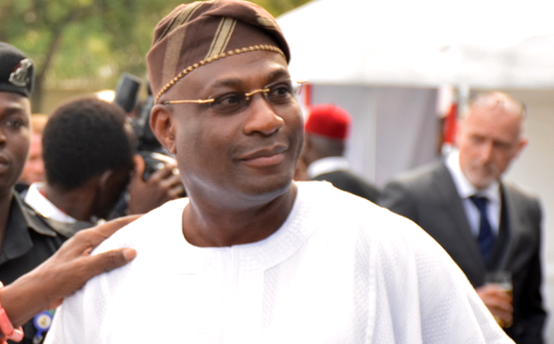
A retired Lagos State Commissioner of Police, Fatai Owoseni, has described policemen as victims of systemic inefficiencies in Nigeria’s criminal justice system, often forced to operate under harsh conditions with minimal resources.
Speaking on News Central’s live programme, A Place at the Table on Thursday, Owoseni said the challenges faced by the police often put them in difficult positions with the public.
He said Nigerians often misjudge the police, failing to recognise the structural challenges that make effective law enforcement difficult.
“What I should let Nigerians know is that the police itself is a victim. The police deserve sympathy,” he said.
He explained that issues such as transporting suspects to prisons often fall on officers who lack adequate resources.
Owoseni recounted a personal experience during his tenure as Commissioner of Police in Lagos.
He said, “I have been in a situation where as commissioner of police in Lagos, I had to use two million naira to treat a suspect before we can take him to court. Because in the court, they will not take the suspect from you. And the poor policeman is put on the spot.”
He criticised the lack of basic facilities, adding that hospitals and correctional centres often require out-of-pocket payments to treat suspects.
“Even if the police take that suspect to the hospital, they will not treat that suspect unless someone brings money. Is this someone that is paid a pittance that will use his salary to buy the drugs? Is it someone that is paid a pittance that we bring a vehicle to go and take a criminal?” he asked.
Owoseni also highlighted the inadequate funding of police divisions. “Ikeja Police Division, for instance, has jurisdiction over more than one million people. And you are funding that police division with 30,000 naira in three months. Hell, what do you expect the police to do?”
He said the police are constrained not just by lack of equipment but also by the system itself.
“When the magistrate sits and says this case is adjourned and this guy is going to be remanded in the prison, the correctional facilities don’t have a vehicle.
“The victim is the police. Because the correctional facility guy and the court would tell the prosecutor, how do we get this person to the prison, to the correctional facility, to go and be remanded? And that is where you put the poor policeman in trouble.
“He has no choice other than to tell the complainant to say that the correctional facility officer says there is no vehicle. That is why I say he’s a victim,” he said.
Owoseni also observed that the police reflect the culture and society they serve.
“Policing is a cultural thing. The police will reflect the culture and the society.
Reflecting on his early years in the force, he recalled a time when resources were more adequate.
“As of 1984, when I joined the police, my first posting was Shagamu in 1985. We had lorries. We had Land Rovers. We deployed our policemen to their beats. But today, a poor policeman posted to the house of a judge has to find his way by riding Okada.”
While acknowledging that things have improved under the current government, Owoseni urged Nigerians to understand the challenges facing the police.