
The Manufacturers Association of Nigeria has found that maintenance lapses account for between 10 and 15 per cent of energy waste in factories, while most facilities lack sub-metering systems needed to track consumption.
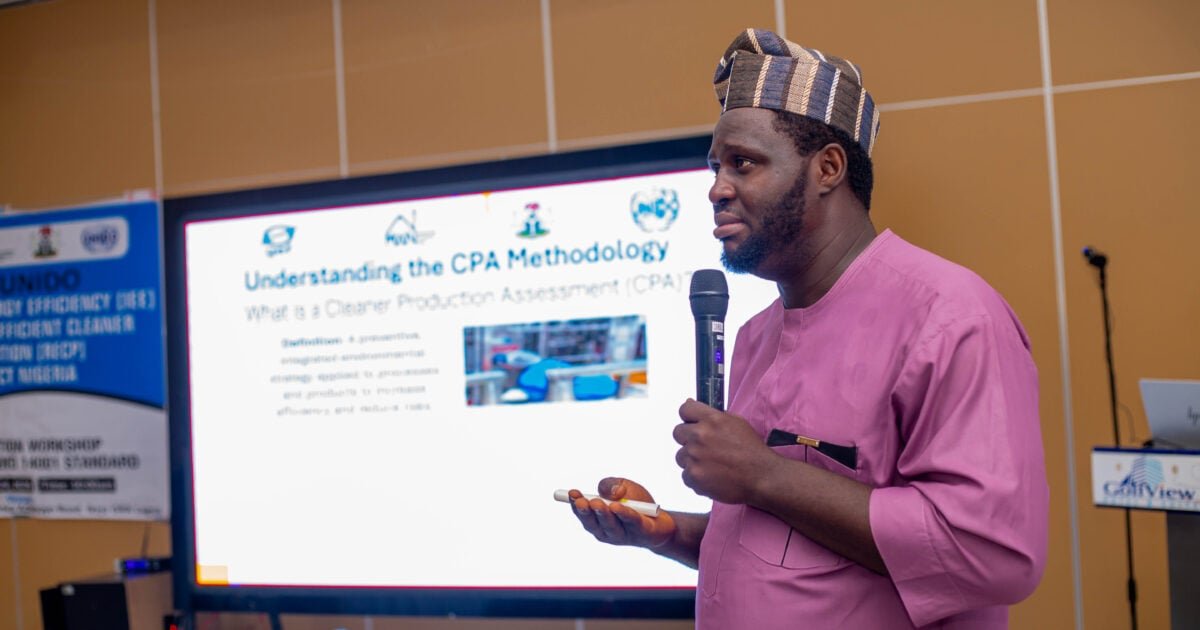
The findings emerged from a Cleaner Production Assessment conducted in 42 industries across four geopolitical zones and presented at the National Stakeholders’ Sensitisation Workshop on ISO 50001 and 14001 standards in Lagos on Tuesday.
The assessment, carried out under the GEF-UNIDO Industrial Energy Efficiency and Resource Efficiency Cleaner Production Project, covered sectors including food and beverages, basic metals, wood and wood products, textiles and leather, and petrochemicals.
Presenting the technical findings, IEE and RECP National Expert Obafemi Adejumo said the study exposed a wide gap between current practices and global best standards. He noted that the study uncovered significant industrial energy efficiency gaps across the country.
“What I have noticed is that there is a big gap between where we should be and where we are at the moment. Not all parts of the industry are doing well with energy efficiency. Some industries are already doing well, but a lot of other industries have not really plugged into it”, Adejumo said.
The CPA identified compressed air systems as a major source of electricity waste, accounting for about 25 per cent of losses, largely due to leaks and improper use. In some plants, optimising the system enabled operators to shut down one compressor entirely.
Steam systems accounted for 30 per cent of losses, while lighting contributed 18 per cent. The assessment also found significant thermal losses from poor insulation and flue gases in boilers and furnaces, inefficient motor systems running at partial loads, and a lack of Variable Speed Drives.
The report highlighted that most facilities lack sub-metering, making it difficult to manage energy use effectively.
“Data gaps are a serious issue. Most facilities lack sub-metering, making it difficult to manage what isn’t measured,” the assessment noted.
The study also found that idle equipment in textile and leather factories and a weak maintenance culture contributed to avoidable losses of up to 15 per cent.
The assessment revealed that grid unreliability in Kano and Anambra amplified energy losses, while thermal inefficiencies were more pronounced in the basic metal and petrochemical sectors.
However, it recorded successes in the food and beverage sector, where a Lagos-based plant reduced compressed air leaks by 20 per cent after optimisation.
Overall, the CPA estimated that industries could achieve between 20 and 25 per cent energy reduction, translating to about 500 megawatt-hours of savings per plant annually, if integrated industrial energy-efficiency measures were implemented.
The association urged manufacturers to adopt ISO 50001 and ISO 14001 standards to institutionalise energy management and cleaner production.
National Project Coordinator, GEF-UNIDO IEE/RECP Project, Jacob Oladipo, said ISO 50001 focuses on energy efficiency, while ISO 14001 addresses resource efficiency and cleaner production.
“Today, we are looking at feedback from the exercise conducted under this project, mainly the exposure of the project components to ISO standards 50001 and 14001. The 50001 has to do with energy efficiency, while the 14001 has to do with resource efficiency and cleaner production,” Oladipo said.
He said the CPA exposed poor water management practices across industries, stating, “We discovered that industries extract their water from boreholes and attach no importance to the usage of water. They use fresh water and discard it without knowing the volume used per day. If you are producing and you don’t know the volume of water you are using, how will you know the volume of water that you are wasting?”
He added that recycling water reduces overall consumption and improves resource efficiency. “One of the cardinal principles of resource efficiency is that you produce with less waste. If you recycle your water, it reduces the amount of water you use at the end of the day because water is not going out into the drain,” he said.
Adejumo stressed that awareness and top management commitment remain critical to closing the efficiency gap.
“One thing that will be needful is that the top management in the industry needs to be equipped with the right knowledge of this concept. If the top management doesn’t buy into it, the ordinary facility manager will not be able to do it”, Adejumo said.
He explained that the campaign’s core message rests on cost savings and competitiveness. “If you can reduce energy consumption, then your cost of production will be reduced. When you save energy costs in your facility, you boost the sustainability of your organisation and make it competitive,” Adejumo said.
He warned that inefficiencies also increase carbon emissions, stating, “If you burn more fuel because of inefficiencies, then you have more emissions into the atmosphere. We must work on that on a national scale.”
Meanwhile, the Chief Executive Officer of Spectra Industries Ltd, Duro Kuteyi, said the initiative exposed hidden financial leakages in factories.
“The IEE and RECP initiative is an innovative system that shows industrialists where they are losing money, and now they can prevent it,” Kuteyi said.
He said factories could recover waste heat from generators and commercialise waste streams. “Even in the use of a generator, the heat coming from the generator can be converted to do other things in the factory. From the waste generated, we had already put energy into that waste, so it should not be trashed. The waste should be commercialised to compensate for part of the energy used”, Kuteyi said.
He urged industrial leaders to personally undergo ISO training. “It is better for the industrialist himself to understand this so that he can pass it down. Everybody stands to benefit if he wants to”, he said.
In his welcome address, the Director-General of MAN, Segun Ajayi-Kadir, represented by National Technical Coordinator Dr Oluwasegun Osidipe, described the project as a defining moment for the sector.
“The implementation of the GEF-UNIDO Industrial Energy Efficiency, Resource Efficiency and Cleaner Production Project marks a defining moment in our collective journey towards sustainability,” Ajayi-Kadir said.
He asserted that manufacturers must champion sustainable practices to enhance competitiveness and resilience, stating, “As we embrace the principles of energy efficiency, we will not only be reducing our carbon footprint but also saving on energy costs. In return, the efficiency, competitiveness and resilience of operations will be enhanced to meet the increasing demand of our global marketplace.”
He urged policymakers to create an enabling environment that supports energy management systems and cleaner production, adding that Nigeria can safeguard its environment and foster sustained economic growth by optimising resource use and investing in energy-efficient technologies.