
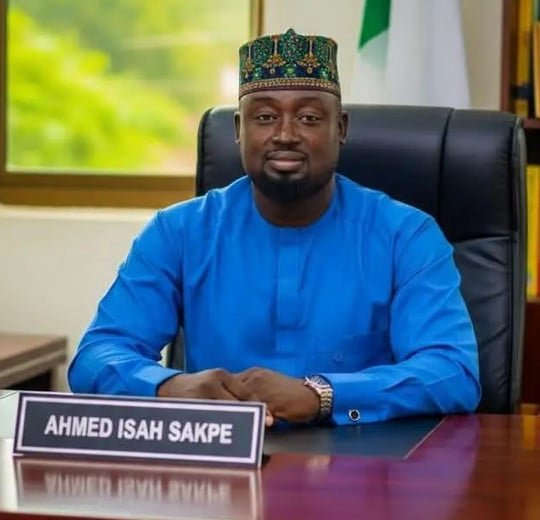
NIGERIA appears to be all out against press freedom. Indeed, the recent detention of a Niger State-based human rights journalist, Ahmed Sakpe, popularly known as Ahmed Lee, is yet another troubling reminder of the shrinking civic space in the country.
According to online newspaper Premium Times, the arrest followed a complaint reportedly lodged by Mohammed Gimba, a protocol aide to Niger State Governor, Mohammed Bago. The police authorities said the complaint stemmed from a press statement published on the Crusader Radio Facebook platform, which Sakpe manages.
Sakpe’s legal team, led by Ibrahim Wali, has petitioned the Niger State Police Command, calling for the dismissal of the complaint against him and demanding an investigation into the conduct of both the complainant and the police officers involved.
In the petition submitted to the Commissioner of Police, Wali stated that Sakpe was detained without a warrant, was not informed of any alleged offence, and had not been charged before any court.
That he regained his freedom only after the intervention of the Nigeria Union of Journalists, Niger State chapter, underscores a deeper malaise: the vulnerability of journalists to the whims of powerful political actors and a law enforcement system beholden to power.
If these allegations are accurate, they represent a gross abuse of power and a dangerous politicisation of the police.
Law enforcement agencies are not extensions of the offices of governors or their aides. They are constitutional institutions, funded by taxpayers, mandated to act in accordance with the law—not at the pleasure of politically exposed persons.
Amnesty International described Sakpe’s arrest as unlawful and a violation of the journalist’s right to freedom of expression. It reiterated that intimidating, harassing or punishing journalists for carrying out their professional duties runs contrary to both the Nigerian Constitution and international human rights conventions.
Equally worrisome is the broader pattern this case represents. The 2025 annual report by Media Rights Agenda, titled “The Reign of Impunity,” paints a grim picture.
It documents 86 incidents of attacks on press freedom across the country in 2025 alone. Arrests and detentions accounted for 38 of those incidents — roughly 44 per cent of all documented cases.
These ranged from physical assaults to arbitrary detentions. Not a single case was investigated or prosecuted. This brazen impunity indicates that journalists in Nigeria are fair game.
The weaponisation of the Cybercrimes Act has become a convenient tool to silence dissent and suppress critical reporting, especially online. What was designed as legislation to combat cyber fraud is increasingly deployed to muzzle journalists and activists.
Tellingly, Reporters Without Borders has flagged Nigeria as one of West Africa’s most dangerous and difficult countries for journalists.
In its 2025 World Press Freedom Index, Nigeria’s press freedom score dropped from 51 per cent in 2024 to 46 per cent in 2025. This decline is not accidental; it reflects a steady rise in state hostility toward the media.
Even more damning is the role of the police. The Nigeria Police Force was identified as the worst perpetrator in the MRA report, responsible for 41 incidents — nearly 48 per cent of all attacks.
This finding aligns with earlier reports, including one by the Wole Soyinka Centre for Investigative Journalism, which revealed that the police account for nearly half of state-led infringements on citizens’ freedoms.
In 2024 alone, law enforcement and security agencies were responsible for 45 out of 69 reported attacks on journalists between January and October. This disturbing pattern is unacceptable in a constitutional democracy.
Section 39 of the 1999 Constitution guarantees freedom of expression and the press. A free, uncensored and unhindered media is not a nuisance to be managed; it is a pillar of accountability and good governance.
Today’s politicians and public officers must purge themselves of any remaining vestiges of military authoritarianism hitherto ingrained in their psyche. Democracy in the new order
President Bola Tinubu must go beyond rhetoric. His administration should issue clear, enforceable directives to security and law enforcement agencies to desist from harassing journalists.
More importantly, there must be consequences for officers and public officials who abuse their positions to intimidate the media.
There needs to be institutional reform, strict accountability, and an unequivocal commitment to press freedom; incidents such as that of Sakpe’s arrest will recur. This reign of impunity must be stopped.