
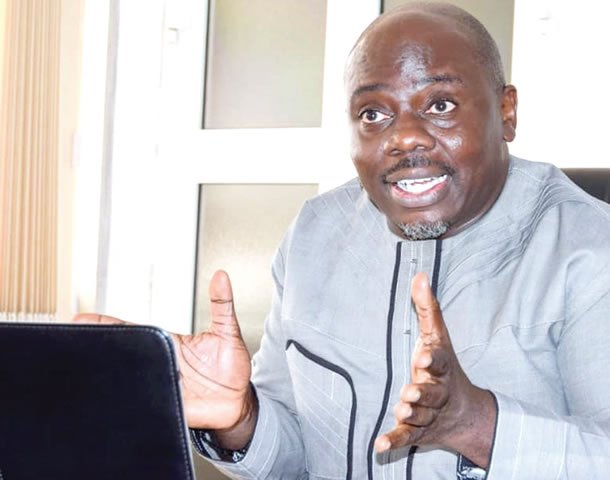
The Development Agenda for Western Nigeria and the BRACED Commission, comprising Bayelsa, Rivers, Akwa Ibom, Cross River and Edo states, alongside other stakeholders, have agreed to explore investment opportunities along the 750-kilometre Lagos-Calabar Coastal Road.
The programme, held at the corporate head office of the DAWN Commission at Cocoa House, Dugbe, Ibadan, on Tuesday, was attended by representatives of governments from the South-West states and other relevant stakeholders.
Participants noted that if the opportunities presented by the road are properly harnessed, the project could serve as a game changer capable of increasing Nigeria’s Gross Domestic Product to between $1.4tn and $14tn over the next 50 years.
In his welcome address, the Director-General of the DAWN Commission, Seye Oyeleye, said the commission convened stakeholders from the South-West and South-South regions to plan how to maximise the economic benefits of the road.
He said, “The biggest infrastructure programme in the last 65 years in Nigeria, which is the 750-kilometre Lagos-Calabar Coastal Road, requires structured development to avoid the mistakes of the past.”
Oyeleye stressed the need for collaboration among states to create industrial, green and tourism zones to maximise the economic potential of the project.
“We at the DAWN Commission, which is the think tank for the South-West states, decided to bring in the critical states along what we have described as a game changer for southern Nigeria. The biggest infrastructure programme in the last 65 years in Nigeria is the 750-kilometre Lagos-Calabar Coastal Road.
“What we planned to do was bring in the three South-West states—Lagos, Ogun and Ondo. We also invited the BRACED Commission, which covers the South-South states, because the road runs parallel to those states. The idea is that for the South-West region to harness the benefits of that road, there has to be structured development,” he said.
The DG warned against repeating past mistakes associated with uncoordinated development.
“We must ensure that the mistakes of the past, where states worked in silos and pursued individual interests, are not repeated on this infrastructure. We have seen examples in different parts of the world where a coastal road becomes a major catalyst for development.
“It is important not to wait until the completion of the road before planning begins. From the discussions so far, we are already considering collaborative efforts on how Lagos, Ogun and Ondo can work together. We are looking at creating industrial zones, green zones and tourism zones.
“One of the outcomes we expect from this meeting is an agreement to establish a joint body that will supervise development along this corridor. There has to be a team dedicated solely to development along the coastal corridor, and this must happen as soon as possible,” Oyeleye added.
In a lecture titled Unlocking Economic Potentials of the Lagos-Calabar Coastal Highway: Land Governance and Regional Alignment for the South-West Corridor, the Managing Director and Chief Executive Officer of Makaya Consult, Eko Atlantic City, Olawale Opayinka, projected that the coastal road could significantly increase Nigeria’s GDP over the next five decades.
He emphasised the importance of preserving the integrity of the corridor and ensuring coordinated development to prevent haphazard growth.
“There is a major opportunity in this coastal highway of over 700 kilometres, with the possibility of maintaining the integrity of that corridor. We have about 700 square kilometres of potential development.
“With our population expected to grow significantly over the next 50 years and our GDP currently at about $400bn, developments along that corridor could create enterprise value ranging from $1.4tn at the lower end to about $14tn at the upper end.
“The values we have projected can only be realised if the states work together. If they fail to collaborate, the projected value may not be achieved. It does not stop with Lagos, Ogun and Ondo; it also involves Edo, Delta, Bayelsa, Rivers, Akwa Ibom and Cross River. If they fail to do the right thing on their side, it could undermine the entire project,” he said.
He added that the project could significantly transform Nigeria’s economic outlook.
“We are talking about moving the Nigerian economy from under $400bn today to between $1.4tn and $14tn over the next 50 years. This provides an opportunity to build a multi-trillion-dollar economy and position Nigeria among the leading economies in the world,” Opayinka stated.
In his remarks, the Director-General of the BRACED Commission, Joe Keshi, also stressed the need for coordinated planning, citing examples of well-planned coastal roads in other parts of the world.
“This is the beginning of a conversation to ensure that we plan adequately and avoid the haphazard developments that have affected many roads in Nigeria.
“It would be unfortunate if a major infrastructure project like the coastal road eventually reflects the same pattern of unplanned development seen in some parts of the country,” he said.
Keshi emphasised the importance of political will among state governments.
“We are encouraging governors to develop the political will to understand that this road could be a game-changer for the southern states if the right steps are taken. The road itself is only the beginning; what comes after the road is what we are discussing here—how to ensure that it strengthens the Nigerian economy and does not become another example of unplanned development,” he added.
Other speakers, including Commissioners for Physical Planning and Urban Development in Ogun, Ondo and Lagos states—Tunji Odunlami, Sunday Olajide and Olayinka Abiodun—as well as the Ogun State Commissioner for Culture and Tourism, Oluwasesan Fagbayi, emphasised the need for collaboration to ensure effective economic planning.
Similarly, stakeholders, including Muyiwa Ige; the Nigerian Investment Promotion Commission South-West Zonal Head, Ololade Okeowo; Executive Director of Odu’a Investment Company Limited, Yemi Ajao; retired Director of Federal Highways, Folorunso Esan; and Permanent Secretary, Lagos State Ministry of Environment, Tajudeen Gaji, stressed the importance of proper zoning, security and governance structures.
They noted that synergy among states, the Federal Government and relevant agencies would be critical to unlocking the full economic potential of the Lagos-Calabar Coastal Highway.