
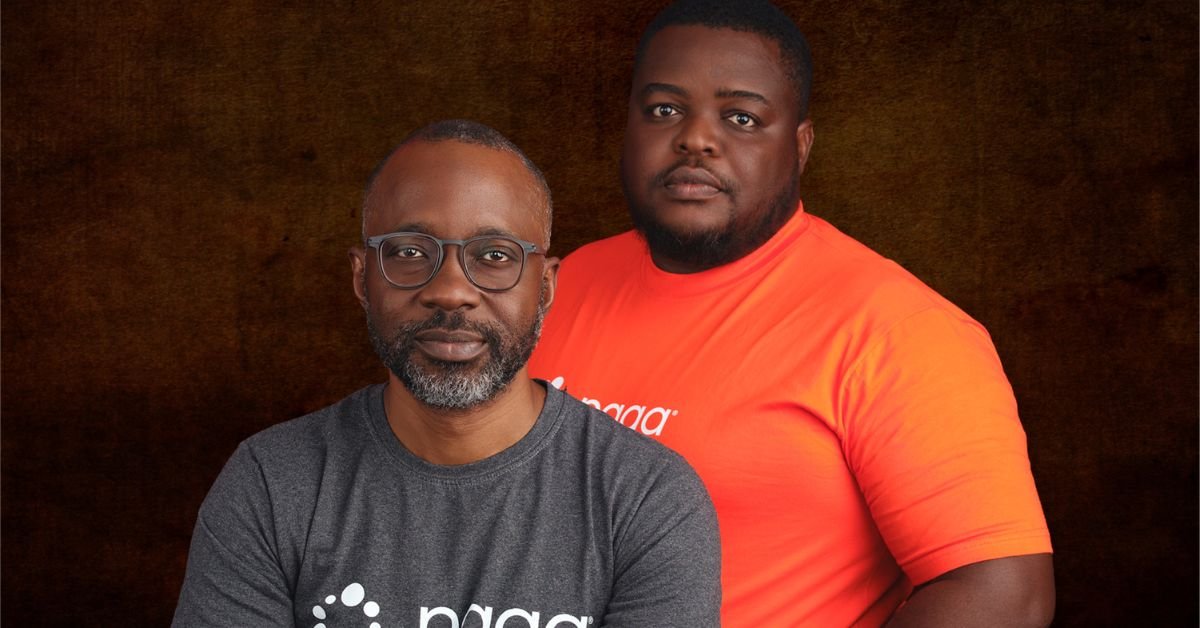
Tayo Oviosu is transitioning from the day-to-day running of Paga Nigeria after 17 years and stepping into a new role as Group CEO in a major leadership reshuffle at one of Africa’s oldest fintechs.
Opeyemi Oyinloye, the company’s general manager of business operations, will take over as Acting CEO of Paga Nigeria, pending the Central Bank of Nigeria’s regulatory approval.
Oviosu moves up to Group CEO, where he will focus on expanding into new African markets and building out Paga’s investments in stablecoins, crypto, and artificial intelligence (AI).
The transition marks the first time in Paga’s history that someone other than Oviosu will lead its biggest market. It also signals that one of Africa’s oldest fintechs is expanding to become more than a Nigerian payments company.
“Act 1 of Paga ended, and Act 2 is beginning,” Oviosu told TechCabal in an interview at his Lagos office in March. “It became very clear to me about a year ago that for us to accelerate, we need someone else to come and run the day-to-day of the business lines.”
The restructuring comes at a significant moment for Paga. The company processed ₦17.1 trillion ($12 billion) in transaction value in 2025, a 96% year-on-year jump. It launched US banking services for the African diaspora in September 2025 through a partnership with Regent Bank, and in January 2026, it became PayPal’s local partner in Nigeria, marking the global payments network’s return to the country after two decades.
Oviosu wants Paga to go even further by expanding into new African markets, stablecoins, and AI-powered commerce, efforts he could not lead while running the company’s complex domestic operations.
The company has raised $45 million to date from investors, including the Global Innovation Fund, Omidyar Network, and Adlevo Capital, and is planning a new funding round.
Oviosu said the transition had been in the works since last year, before the PayPal partnership and the US expansion, not because of them.
The trigger, he said, was strategic. Paga wants to be what Oviousu calls the “global financial services infrastructure for Africa”, and reaching that goal requires shifting from domestic operations to new markets and new technologies.
Jay Alabraba, Paga’s co-founder and director of business development, is also transitioning to group director of special projects, with an initial focus on two priorities: building out Paga’s financial services offerings around credit and lending and supporting Oviosu on new market entry.
Alabraba described the restructuring as a natural evolution rather than a disruption.
“We have a strong enough team that can continue to run certain things while other parts of the business can focus on new areas of growth,” he told TechCabal in a separate interview on a call in March.
He emphasised that neither he nor Oviosu is stepping away from the company. They remain available for design discussions, escalations, and partnership engagements, but the day-to-day operational decisions will no longer require their direct involvement, he added.
What Oviosu will now do as Group CEO
At the group level, Oviosu will lead Paga Labs, a unit that has been operating quietly for about 18 months. The division is Paga’s vehicle for investing in emerging financial technologies, and Oviosu said it is preparing to launch products across three areas: stablecoins, blockchain (where it has already partnered with local partners), and AI-enabled commerce.
“How does AI affect payments? How does AI come into the world of what we’re building and make things just easier? Make commerce easier,” Oviosu said. “Those are the things that we are going to lean on very strongly.”
Oviosu would also lead Paga’s international expansion, as the company’s strategy has evolved from earlier ambitions to enter markets like Mexico and the Philippines to a sharper focus on Africa and the African diaspora.
The US launch was a deliberate step toward giving Africans access to global financial rails, and the PayPal partnership was designed to connect Nigerians to global commerce, Oviosu said.
Paga’s next phase is opening its infrastructure to financial systems in other countries, enabling businesses and individuals to trade and make cross-border payments through the company’s consumer app or through third-party applications built on Paga Engine.
“You should be able to, through Paga’s infrastructure, trade in China. Through Paga’s infrastructure, pay someone in Vietnam easily. Show up in Rwanda and make your payments,” Oviosu said.
Why Oyinloye?
Oviosu said the choice of Oyinloye, who managed the company’s business operations for seven years, reflects the leadership depth Paga has built over 17 years.
“It was a very obvious choice for us,” Oviosu said. “He has been with us for seven years, running operations for the business and being integral to our strategy formulation and to our execution.”
Oviosu described Oyinloye’s previous role using an analogy: if Paga were making sausages, Oyinloye was not responsible for choosing which sausages to make but for ensuring that whatever sausages were being made were made really well. That internal focus gave Oyinloye visibility into every dimension of the business, from strategy alignment and execution cadence to how the company takes care of its people, Oviosu said.
As CEO of Paga Nigeria, Oyinloye will report to the Paga Nigeria board, which Oviosu will chair. Oviosu has always been the board chairman for Paga Group. The role also carries the title of Group COO at the United Kingdom parent level, with all established businesses reporting to Oyinloye.
Alabraba, who worked closely with regulators, investors, and partners in his previous role, said Paga’s leadership bench extends beyond Oyinloye. “We have general managers of our business lines that are deeply experienced, with multiple years within Paga, and they are also culture carriers within the organisation,” he told TechCabal.
What’s next for Paga?
The restructuring is not tied to a specific capital raise, Oviosu said, but he confirmed that Paga will go out and raise fresh funding to finance its group-level ambitions. The company is also likely to pursue acquisitions to expand into new markets.
“We will see not only fundraising, but we will also likely see some acquisitions to drive that expansion,” Oviosu added.
Paga is currently profitable, which Oviosu said gives the company the ability to control its own destiny. But the scale of what it is attempting—entering new African countries, building stablecoin products, and investing in AI-powered commerce—will require fresh capital.
Alabraba echoed the need for fresh funding, noting that while the restructuring is not a fundraising prerequisite, it shows the scale Paga wants to operate at and the kind of investment required.
“There will be fundraising events in the near future,” he said.
The question of perception
For 17 years, Oviosu has been the public face of Paga, responding to customer complaints on X, engaging directly with users, and serving as the company’s most visible spokesperson. He acknowledged that his transition may raise questions about whether something is wrong at the company.
“The phrase ‘stepping back’ is actually not the right phrase,” he said, noting that he got emotional when informing the CBN about the change. “My child’s first word was Paga.”
The transition, however, is about acceleration, not retreat. He plans to remain active on social media, continue engaging with customers, and still come to the office. The broader leadership team is also becoming more visible.
At the very first town hall Paga ever held, Oviosu told his team two things that surprised them. The first was that he wanted Paga to exist in some form 200 years from now. The second was that he would not be there forever, but he intended to move through the company on his own terms.
Seventeen years in, Oviosu sees this restructuring as the inflexion point he described back then. The business is profitable, still scaling at venture pace, and operating in a competitive market that demands constant vigilance.
However, the opportunity to build financial infrastructure that connects Africa to global financial systems is, in his view, too large to pursue while also running the day-to-day of a complex Nigerian operation.
“I’m certainly not going to Bora Bora,” Oviosu said. “There’s still work to do.”