
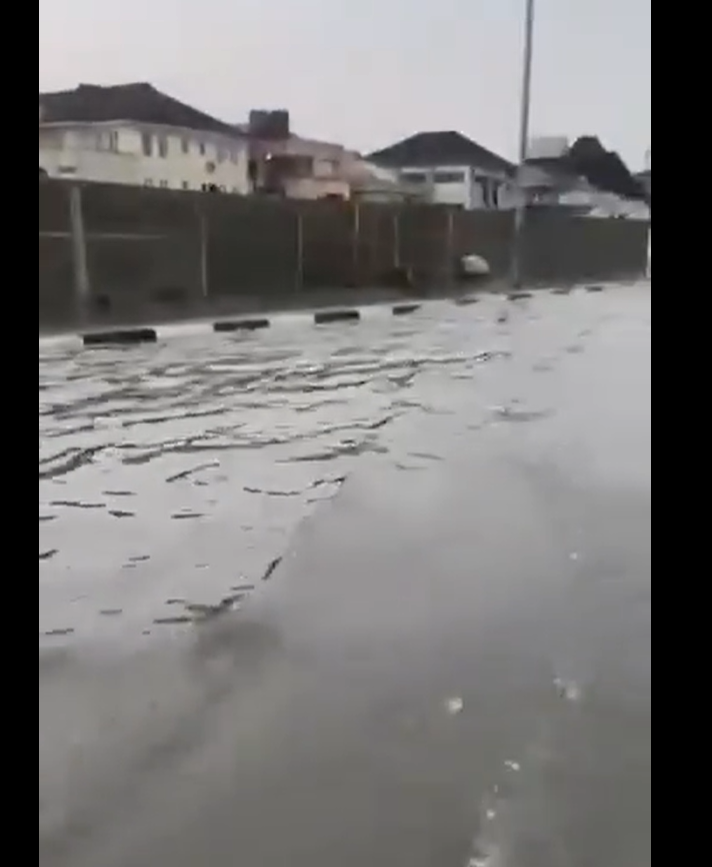
A fresh controversy has erupted over flooding along sections of the Lagos-Calabar Coastal Highway, with Nigerian Ambassador-designate to Mexico, Reno Omokri, defending President Bola Tinubu against criticism from former lawmaker Dino Melaye.
Melaye had posted a 15-second video on X (formerly Twitter) showing a flooded stretch of the coastal highway, with vehicles cautiously navigating waterlogged sections, raising concerns about the durability of the multi-billion-dollar project.
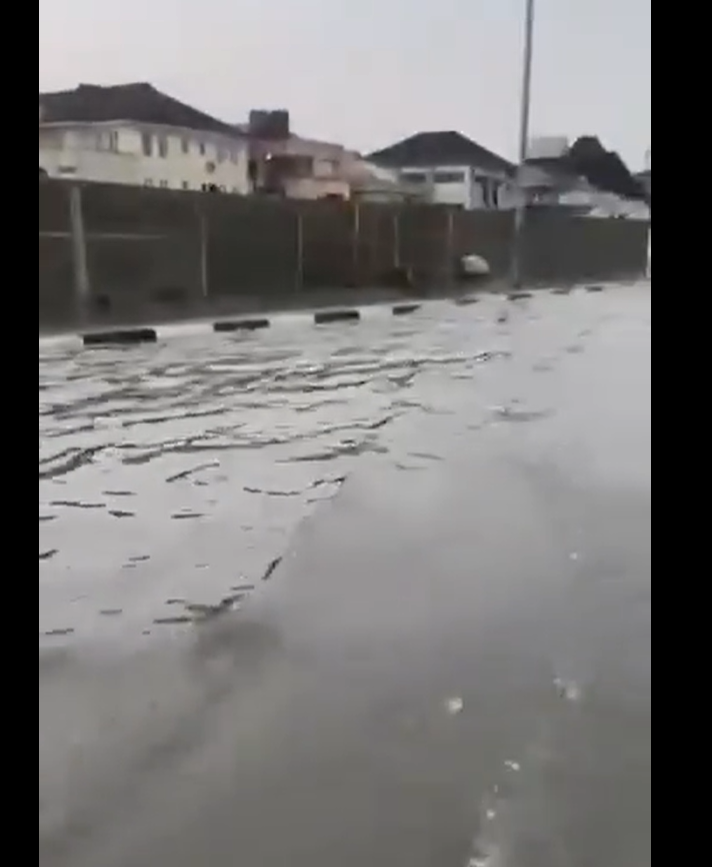
But in a strongly worded open letter obtained by our correspondent on Tuesday, Omokri dismissed the criticism, attributing the flooding to the natural geography of Lagos rather than any engineering failure.
He also warned the former lawmaker against attributing the phenomenon to governmental failure.
He noted that Lagos Island, one of the few places in Africa at or below sea level, experiences regular flooding, a situation worsened by climate change.
“Dear Distinguished Senator Dino Melaye,” Omokri wrote, “Thank you for raising this observation. However, please note that Lagos Island is one of the few places in Africa that is either at or below sea level. As such, and even more so because of climate change, the island will experience regular flooding.”
He emphasised that the incident captured in the viral video was not unusual and should not be attributed to the quality of the Lagos-Calabar Coastal Highway.
“This phenomenon has nothing to do with the quality of the Lagos-Calabar Coastal Highway or any supposed failure of President Tinubu. It is happening as a result of a fact of nature,” he stated.
Omokri further drew comparisons with the Netherlands, noting that even advanced nations with sophisticated infrastructure experience periodic flooding.
“The Netherlands is an industrialised and developed European country. But despite their technological advancement, many of their roads are flooded annually, worse than what you are mocking Lagos for. Please fact-check me: On multiple occasions this year alone, the Dutch government announced temporary road closures due to flooding,” he added.
Defending the design of the coastal highway, Omokri said engineers had incorporated flood-mitigation features into the project.
“I have been on the Lagos-Calabar Coastal Highway and listened to the engineers and technical staff as they gave a briefing on the road. It is built to anticipate flooding and mitigate its effects. Give it some hours after the rainfall, and the floods will gradually dissipate,” he said.
He continued, “Flooding is not new to Lagos, particularly on the Island and coastal corridors where large portions of land sit at or below sea level. Seasonal heavy rainfall, poor drainage, rising sea levels, and rapid urbanisation have historically combined to inundate major roads, disrupt traffic, and damage property.
“Over the years, successive administrations in Lagos have implemented measures such as drainage expansion, lagoon dredging, and shoreline protection. During his tenure as governor, Tinubu initiated large-scale land reclamation projects, most notably the development of Eko Atlantic City, built on reclaimed land along the Atlantic coastline.”
Omokri referenced this project in his defence, saying, “Rather than mock President Tinubu over this issue, which is normal for low-lying islands, all Nigerians should be proud that, despite this hazard, President Tinubu, as Governor of Lagos, was able to reclaim land from the sea by sand filling an area the size of Manhattan in New York.
“That 10 million square metres of reclaimed land, now known as Eko Atlantic City, is presently the most expensive real estate in Sub-Saharan Africa and is worth $6bn in 2026, an amount greater than the GDP of all but ten Nigerian states.”
He added that flood-control initiatives introduced during Tinubu’s administration, including mobile barriers and lagoon dredging, had helped protect Lagos from more severe coastal threats.
“You may also recall that it was this same Asiwaju Bola Tinubu who, as Governor, introduced mobile flood barriers and the dredging of the Lagos Lagoon, which, according to international environmental groups, is credited with saving much of Lagos from being submerged by the sea, as has recently occurred in Indonesia, Thailand, Vanuatu, and Argentina.
“Rather than mock such a man, who could add $6bn to the GDP of Nigeria with just one idea, I think every reasonable person should be proud that we have such an asset at the helm of affairs in Nigeria, which may explain why the IMF listed Nigeria as the sixth largest contributor to global GDP growth in 2025, a fact celebrated by Elon Musk, the world’s richest man.
“I do hope these facts will give you a new perspective on the issue of Lagos. Thanks again, and may God bless you,” he concluded.
The Lagos-Calabar Coastal Highway, a legacy federal infrastructure project, is designed to run along Nigeria’s southern corridor, linking Lagos to Cross River State. The project is expected to boost regional trade, tourism, and connectivity, while opening up coastal economies.
However, since construction began, the highway has faced scrutiny over environmental concerns, cost implications, and now its resilience to flooding.
Experts say coastal highways worldwide often contend with flooding risks, especially in low-lying regions exposed to tidal surges and heavy rainfall. They note that such roads are typically designed with drainage systems, elevated sections, and erosion control mechanisms to manage water flow.
As construction progresses, the durability of the Lagos-Calabar Coastal Highway amid Nigeria’s evolving climate realities is likely to remain under close public and expert scrutiny.