
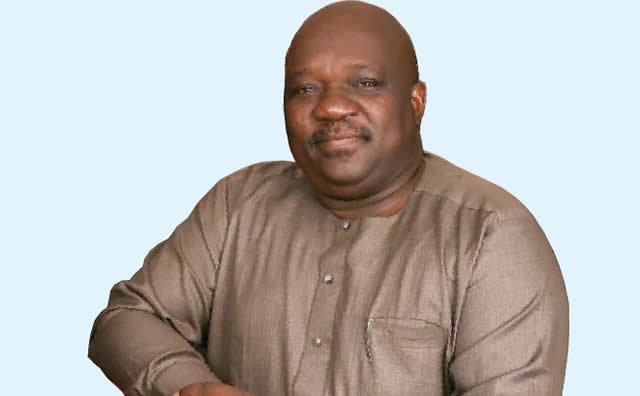
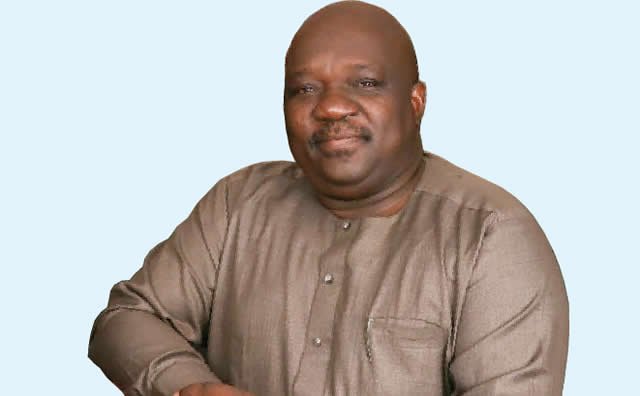
The Festival of Arts and Culture tagged FESTAC ’77 brought together thousands of participants from across Africa and the diaspora in one of the continent’s biggest cultural gatherings, aimed at promoting pan-African unity and Black civilisation, almost 50 years ago. Chairman of the FESTAC Africa Renaissance Festival, Yinka Abioye, speaks with WALE AKINSELURE on plans to revive the festival, which last held in 1977
Why is it necessary to revive FESTAC now, almost 50 years after the event?
The first reason why there’s a need to bring it back is because of all the things we are seeing in the world today that are not going very well for the continent. FESTAC actually started in 1966 by Leopold Senghor (former President of Senegal) and our other leaders back then, as a tool to bring our people together, in terms of removing the colonial line that divides the countries, but more than anything else, removing colonialism from our minds. So, that was what FESTAC’77 was supposed to do. And it was supposed to be something that continued every two to four years subsequently, so that Africans can get to know one another and realise that the white mind just put the line there to divide us unnecessarily. As you probably know, the Biafran War started in 1967 and lasted for about three to four years, blocking Nigeria from doing the second one. So, the second one did not happen until 1977. The good thing was that Nigeria had money and power back then and had a lot of things going for itself. It was just a time when a lot of the African countries were getting freed, including the Angolans, the Mozambiques, but more than anything else, the Soweto in 1976. So, ‘77 was very big, was successful. You have the data on what happened in ‘77. But after ‘77, if we had been riding on the back of ‘77, Africa would have integrated a little bit more, but we lost that integration. So, we brought it back in 2022 – 45 years after 1977, and we have been doing it for the last four consecutive years, never to die again. We will do Senegal this year, to commemorate 60 years since 1966, but the big one is 1977, which will be 50 years in 1977 in Nigeria. Hopefully, we can use it to reignite pan-Africanism again. Look at what’s going on in the industry: Ghana doesn’t like Nigeria. Nigeria doesn’t like Ghana. South Africa doesn’t like Ghana. South Africa doesn’t like Nigeria. The continent is actually moving backwards. There’s no better time than to do something that brings all of us back again. So, that is the reason for FESTAC, and that’s why we continue to aggressively utilise it to bring our people together.
FESTAC ’77 aimed to promote African unity. What concrete impact do you expect FESTAC 2027 to have in that regard?
The uplifting of Africa is everybody’s job. Look at what is going on in South Africa right now; it is sheer ignorance. The majority of the people running around and fighting were not there when President Olusegun Obasanjo was taking a tax of VAT out of workers’ salaries in Nigeria to support the African National Congress, taking their people to universities in Nigeria, giving them passports to be able to travel, training them, giving them money, and giving them food. All of those are lost. And the kids of today are thinking they know what they are doing, that Nigerians are their problems. Nigerians are not your problem. Your problems are bigger than Nigeria. So the issue on the continent is our fathers, 50, 60 years ago, who saw Africa as one. If you look around back in the days of Abdel Nasser, Kwame Nkrumah, all those leaders back then, they even made an effort to marry from another country so that they could have reasons to integrate. We don’t do that anymore. We don’t travel. We have prejudice. I have never been to your village before, so I think people in your village are like this, but I don’t know. So I just say a bunch of what I don’t know about your people, and the same thing with country to country. People say this country is a very dangerous place to go. Have you ever been there? So we also come from the angle of ignorance. So the work to bring Africa together is a lot. We just have to continue doing it. We are all responsible for it. But for the continent to be better, we have to educate our people better. We have to intra-travel the continent. When we intra-travel, we get to know one another better. Then, intra-African trade will increase. Intra-African trade has been 15 per cent for the last 40 years. We are doing something wrong. Whenever we want to buy something of commercial value, we still go through clearing houses in London and New York to buy something from one African country to another. So we are still doing a lot of things wrong. The only way we can remove that is to have a platform like FESTAC, where all of us come together and use the soft policy or soft coming together to build a power of strength and other things that we need to grow. So we must keep it going individually, as well as getting the governments to be involved as much as possible.
Why did FESTAC stop after 1977? Do you think African governments failed to sustain it?
There are two reasons people give. Some people believe that the colonial masters didn’t want us to ever come together like that again with that much power, which I don’t think we can blame them forever. Some people also believe that it is a lack of focus on our side. The 1960s and 70s, even into the 80s, saw a lot of coups d’état in Africa. So, African leaders were distracted a lot. Ethiopia was supposed to come after Nigeria, and they were fighting Eritrea. So, you can understand why they died. What is difficult to understand now is why it’s difficult to wake people up for them to jump and bring back yesterday. Our leaders in the 50s, in the 60s, and in the 70s have roads named after them in different countries. You don’t see that anymore. So, I think the commitment of One Africa is not there like it used to be anymore. We also need to raise our leaders’ awareness on that.
Given perceptions of instability across Africa, especially coups, what strengths should the continent be projecting instead?
They are the ones who are causing most of the coups. Practically almost every one of our coups is Western world-manufactured for their own benefit. So, we need to be smart enough not to be used against one another again. But, as a continent, we are the ones who fed the Western world for the last 200 to 300 years. Even China has been riding on our back for the last 50 years. We are the ones with the biggest space, land, and arable land. We are the ones with the youth. We are the ones with the minerals, the rare earth, as well as all the other precious minerals; we have everything. So we have no excuse. What we need are leaders who understand all of these and know how to extract those values. One of the things we try to do with FESTAC is to teach the African pride, not an empty pride, the pride that tells you who you are and your worth and how you spin that worth into something of value. We have the brains because our children are the ones leading a lot of organisations globally. So if we’re not smart, we wouldn’t have so many children in corporations in the West appointed to lead a lot of organisations. So we have everything working for us. We don’t have any excuses.
Which governments have made firm commitments to the FESTAC renaissance in recent years?
Yes, we had a big welcome in the island and the mainland of Tanzania. Tanzania Island has its own president who also reports to the overall president of the nation, who is on the mainland, Samia Hassan. Dr Hussein Mwinyi, who is the president of Zanzibar, was very supportive. He met with us. He gave us his support. He made some announcements, and we got some love from that angle. We also got some love from ex-leaders of Tanzania, like Jakayi Kikwete and other leaders like that, which is why we brought it into Arusha, Tanzania. The third one was in Kenya. We got great support from the late Raila Odinga. We got great support from the governor of the area, Prof Anyang Nyong’o, the father of Lupita Nyong’o, who is a big Hollywood actress. Her father was extremely supportive. So far, I would say I would put him as number one, and of course, Baba Olusegun Obasanjo and some other leaders outside of those countries. In Ghana, we had some support. It could have been better, but we had the minister’s support and some other organisations within the country, or maybe it’s because they have other things going on. With Nigeria, in 1977, it took three to five years to plan, 1977, and it’s the might of the project. Now the project is organised by a smaller group of people. But the good thing is that we have over a year now that we want to launch. So we are just in the process of writing letters to the presidency and writing letters to the ministry to ask them to get involved.
Are you concerned that the 2027 election politics could overshadow FESTAC?
Yes, we do. But, for anything you do in this world, there’s never going to be a good time if you don’t go ahead and do it. One of the things that’s always wrong with us in Africa is that we let something else block whatever it is we are doing. It is more important because when you start talking about FESTAC 2027, and somebody says, “ Oh, they didn’t celebrate 50 years of FESTAC in 2027, nobody would turn around and say, “ Well, it’s because of the election, that’s why they didn’t do it. So we know there’s an election in February. We know there’s an inauguration in May. The only thing we can do is to put the festival a little bit later in the year. The promise we have made to ourselves is that we will do the festival. If we have a lot of financial support, we’ll do something very big. If we don’t, we’ll do something small. But we cannot let Pan-Africanism die because the election is only about Nigeria. So, at the end of the third quarter and the fourth quarter, we can put the event together and still celebrate the continent and the diaspora.
What exactly have the African Union and the United Nations committed to this project?
There is the United Nations Economic and Social Council, which is a partner in what we are doing. They are aware of what we are doing. We also partner with the African Union Development Agency, and we partner with the African Continental Free Trade Area. So they’re all partners. Don’t forget that a lot of these organisations don’t fund themselves. They are funded by the budget and the government contributions. And they are not well-funded. I’m not making excuses for them, but a lot of time, when you want to do things on this continent, the first thing you want to do is get endorsement, which we have. Trying to get money from them now is like pulling teeth. But if you want to do your program, you just continue until you get the wave where everybody wakes up and jumps on what you are doing. You just have to keep going. So they are aware. They participate in so many ways. AUDA-NEPAD was in Ghana with us last year. UNESCO was with us. Inter-Africa Trade was with us. If they have money to give us, we’ll be glad to take it from them.
FESTAC ’77 was criticised for lavish spending. How will the 2027 edition avoid that? What scale and duration are you planning?
The one in 1966 was also one month. So 1977 was also one month. One month was needed for the scope of the work that was done, for the people around the world that were brought together to permeate culture, tribe and religion. When we brought the festival back, we’re not the government; we don’t have any slush funds anywhere. So we had to redesign the product. We asked, what were the things that were done back then that we thought could have been done either better or more? We felt that there should be some stuff to bring the children in a little bit more, bring the women in a little bit more and deal with a lot of the issues that we have today using that platform. Considering the fact that we are not a government and we don’t have money sitting somewhere, we designed it to be one week. I can see 2027 probably stretched to a little over a week because there are a lot of interests, and trying to replicate 1977 might take more than that because different bodies of programs are coming up as we are going. But what we typically do is to have a stage for arts and culture, a minimum of 12 hours a day. And then we have other things around that week. We have an exhibition to promote the SMEs. We promote travel and tourism within the country and around the country and neighbouring countries for people who are coming. We talk about gender-based violence. We talk about sports to bring the kids in. We talk about movies, promoting the movies because children like movies and movies become a catch to bring them in and then teach them all the other things we want to teach them. We have food, fashion, we talk finance, we talk about fintech. So all the stuff that is happening in our lives today, we bring them up and touch on the topics, for four to eight hours of discussions. And hopefully, during that discussion, the teams that are participating get to form a networking group that can then, after the festival, continue to work together and share knowledge, share best practices, and then the continent can gain from what the other people are doing better than one, and the continent can grow from there.
How do you plan to engage younger audiences who are more drawn to digital platforms, on their phones, than live theatre?
Yes, we have already reached out to partner with the Wole Soyinka National Theatre. We are communicating with them very frequently. We are also a partner with the Wole Soyinka Foundation to do other things. So theatre is important because it brings something beyond the screen. Theatre brings immediacy, it brings reality, it’s cultural, it brings on life emotions, it does a lot. So there will be a lot of that during the FESTAC 2027. We always do a lot of theatre and stage shows. And that’s why we have 12 hours per day of events, including stage shows, modern music, folk music, poetry, mime, a whole lot of live shows, even an open microphone, where people are doing things live, to make sure people see them. Maybe while people see them, they can get lucky and get drafted or signed on to an opportunity.
What is the long-term plan to ensure FESTAC becomes a sustained, periodic event? Who should drive that continuity: government or the private sector?
If FESTAC had been going on, that would not be what’s going on in South Africa today. There is the saying that when your pendulum has swung too far to the right, and you want to put the pendulum in the middle, you have to swing it far to the left. Africans still do not know one another. So we need to get opportunities to meet as often as possible, as many times as possible, for the more we meet, the more we realise we are the same and the fewer problems we are going to have. So, to keep it going, it needs to be a Public-Private Partnership, private companies, SMEs, with the blessing of the government. It’s just a matter of looking at what you have to raise in terms of sponsorship, benevolence, sympathisers to the culture, the language, to make sure the language doesn’t die, to make sure we have good writers in Africa, to make sure we have good media. These are some of the things that we do during that week. We have a media retreat. We have a writer’s retreat. So we do all those things so that we can use it to perpetuate the growth of the continent. But in terms of sustainability, it’s not only the government. We need corporate donors. They can come in so many ways as benefactors, as sponsors, and just work with us to make the continent a better place for all of us.