
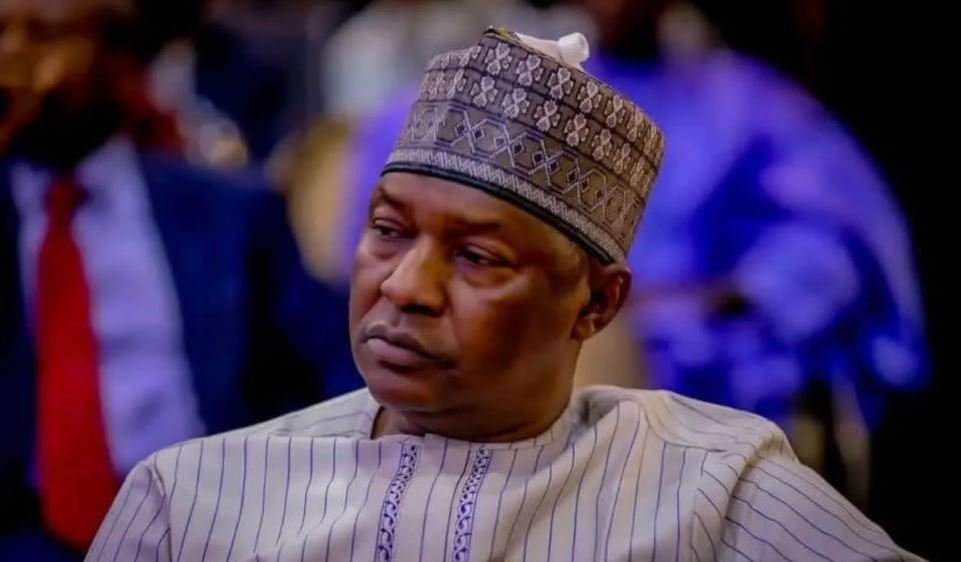
Political tensions are rising in Kebbi State as the government of Governor Nasir Idris and former Attorney-General of the Federation, Abubakar Malami, engage in a heated war of words over governance, insecurity and corruption following Malami’s entry into the 2027 governorship contest, writes ANIMASAHUN SALMAN
The political relationship between former Attorney-General of the Federation Abubakar Malami (SAN) and the incumbent Governor of Kebbi State, Nasir Idris, is currently characterised by intense hostility and conflict as both prepare for the 2027 gubernatorial election cycle.
As a result of the frosty relationship, the political atmosphere in Kebbi State is heating up ahead of the 2027 governorship election following a fierce exchange between Malami and the administration of Governor Idris.
What began as Malami’s declaration of interest in the governorship race under the African Democratic Congress has quickly escalated into a broader political confrontation, with both camps accusing each other of insecurity, economic failure, poor governance and political opportunism.
Malami had dumped the ruling All Progressives Congress for the African Democratic Congress in his bid to contest for the state’s number one job and has aimed scathing criticisms at the state government, especially on insecurity and corruption.
However, the Kebbi State Government, through Special Adviser Yahaya Sarki, Idris’ Special Adviser on Media and Publicity, slammed Malami, accusing him of misgovernance, distorting facts about security and poverty, and bringing political thugs into the state.
Also, in his reply to Malami, Governor Idris dismissed his entry into the race as no threat to his administration, stating that Malami’s political influence was minimal and that he had never won his own polling unit.
In a strongly worded statement titled, “Malami sneezes, and Kebbi State Government catches a cold,” and dated May 10, 2026, the former minister said the reaction of the state government to his declaration reflected panic and fear of political competition.
According to him, the government abandoned the issues he raised and instead resorted to personal attacks.
“Yesterday (May 9), the Kebbi State Government issued a 1,500-word statement in response to my formal declaration of intent to contest the 2027 governorship election. The statement contained ad hominem attacks, unsubstantiated allegations and a list of unverified achievements,” Malami stated.
The former minister went on to highlight what he described as alarming social and economic realities in the state.
He claimed that 67.6 per cent of children between the ages of six and 15 are out of school, while the net attendance rate stands at 38 per cent — figures he said rank among the worst in the country.
Malami also alleged that more than 88 per cent of children in the state live in multidimensional poverty, lacking access to healthcare, nutrition, clean water and education.
On healthcare, he said 608 severely malnourished children reportedly died between January and September 2025, while malaria prevalence among children under five remains high.
He further accused the administration of failing to secure rural communities, citing persistent bandit attacks, kidnappings and the abduction of the Deputy Speaker of the Kebbi State House of Assembly.
“The people of Kebbi State — farmers who have abandoned their lands, mothers who have lost children to malnutrition, and youths without jobs — will ultimately judge the government’s performance,” he said.
Malami insisted that his ambition is driven by public service rather than personal gain.
“My declaration centres on restoring security, rebuilding public education, strengthening healthcare delivery, reviving agriculture, creating opportunities for young people and restoring dignity to governance,” he added.
One of the strongest points in Malami’s criticism was his claim that Kebbi State had received more than N1tn in federal allocations, internally generated revenue, loans and grants within the last three years.
He argued that despite increased revenues following the removal of fuel subsidy, residents had seen little improvement in their living conditions.
“Despite these resources, there is no visible transformation in school enrolment, healthcare for malnutrition cases or the security of farmlands,” he said.
Political observers say the debate over how states are utilising increased federal allocations is likely to remain a major issue ahead of future elections.
But the Kebbi State Government dismissed Malami’s claims, describing his governorship ambition as politically opportunistic.
In a statement signed by the Governor’s Special Adviser on Media and Publicity, Yahaya Sarki, the administration titled its response, “Malami’s Entry into Kebbi Guber Race: A Wolf in Sheep’s Wool.”
While acknowledging his constitutional right to contest, the government questioned his credibility and dismissed his criticisms.
“We even welcome his ambition — if only for its nuisance value,” the statement read.
The government accused Malami of contributing to many of the challenges he now condemns, noting that he served for eight years under former President Muhammadu Buhari.
The Kebbi government argued that many of the problems highlighted by the former minister became deeply entrenched during the years he occupied one of the most powerful offices in the country.
According to the statement, figures who held key positions in Abuja during the previous administration played contributed to the current situation the state finds itself.
“People like him, who held sway in Abuja until three years ago, bear direct responsibility for many of the problems afflicting not just Kebbi State, but Nigeria at large,” the government stated.
The administration linked the current economic and security challenges facing the country to the Buhari era, alleging that many officials who served during that period enriched themselves while governance suffered.
“During the eight years Malami and his associates held power, they ruthlessly exploited the trust reposed in them and transformed themselves from near penury into overnight multibillionaires,” the statement alleged.
According to the government, both Nigeria and Kebbi State were left with severe humanitarian and governance challenges by 2023, which the current administration is now working to address.
Defending Governor Idris’ record, the government highlighted what it described as achievements in education, healthcare and infrastructure since assuming office.
It said thousands of classrooms had been constructed across the state, while new schools had been established and learning materials distributed to pupils.
The government also said it recruited 2,000 teachers in a single exercise and sponsored additional personnel for training programmes.
In the health sector, it claimed that all 31 general hospitals in the state were undergoing rehabilitation, with major facilities in Birnin Kebbi, Argungu, Yauri, Zuru and Bunza either completed or nearing completion.
“Modern medical equipment and advanced facilities have been procured and are being distributed to hospitals statewide,” the statement added.
The government also pointed to ongoing improvements at Sir Yahaya Memorial Hospital as evidence of progress in the healthcare sector.
Security debate deepens
Security has emerged as one of the central issues in the growing political rivalry.
While Malami accused the state government of failing to protect rural communities and farmlands from bandit attacks, the government argued that insecurity worsened during his tenure as Attorney-General.
The administration said terrorism and banditry expanded significantly during the Buhari years and accused Malami of failing to speak strongly against attacks in his home state while in office.
“Throughout his time as the nation’s Chief Law Officer, Malami was rarely, if ever, heard forcefully speaking out against the insecurity ravaging his own state of origin,” the statement said.
Analysts believe security will remain a decisive factor in the political contest, especially in northwestern Nigeria where communities continue to grapple with violent attacks, displacement and kidnappings.
Malami’s decision to contest under the African Democratic Congress has also introduced a new dynamic into Kebbi politics, traditionally dominated by the All Progressives Congress.
Although the ruling APC still controls the political structure in the state, observers say Malami’s national profile, political networks and grassroots influence could make the race more competitive than previous governorship contests.
A political analyst based in Abuja, Dr Musa Tukur, said the intensity of the exchange suggests both camps understand the significance of the contest.
“When a government responds with that level of urgency to an aspirant’s declaration, it means the candidacy is being taken seriously,” he said.
Another political observer, Hauwa Garba, noted that voters would benefit more if the rivalry shifted toward policy debates rather than personal attacks.
“Instead of insults, Kebbi people want clear plans on schools, agriculture, roads, healthcare and jobs,” she said.
For now, both camps appear determined to shape public opinion ahead of the political season.
Malami insists the state needs rescue from what he described as “empty propaganda and ineffective leadership,” while the government maintains it is already correcting the failures of previous administrations.
“There will be no retreat and no surrender in the collective struggle to rescue our state,” Malami declared in his closing remarks.
But the government responded just as forcefully, insisting that those who contributed to past national failures cannot now present themselves as agents of change.
With party primaries still more than a year away and the governorship election nearly two years off, political observers believe the confrontation may only be the opening chapter in what could become a prolonged and highly contested battle for Kebbi State’s top office.
For many residents, however, the central question may ultimately go beyond rhetoric and political accusations: who can offer the most credible path toward security, economic growth and development in 2027?