
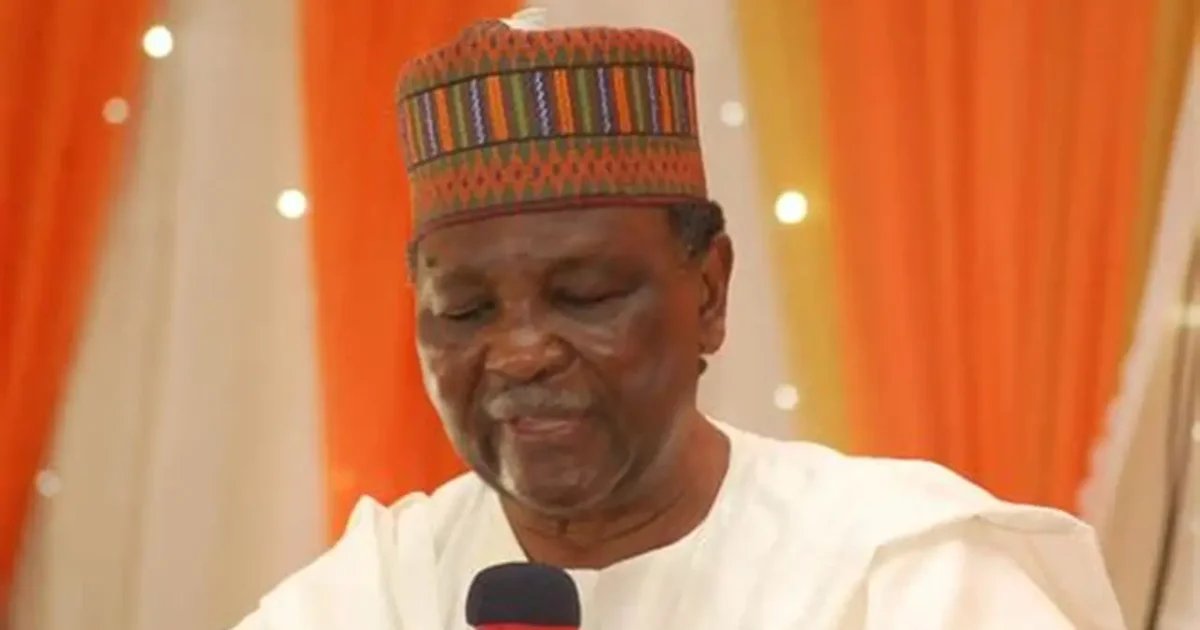
Former Head of State, Gen. Yakubu Gowon (retd.), has revealed that Mrs Efuntiloye Williams, wife of Mr Akintola Williams, doyen of Nigeria’s accounting profession, personally tutored his wife, Victoria, on etiquette, British customs, home management, and international protocol to prepare her for the demands of the office of First Lady.
Gowon also disclosed that, before the tutoring, his personal aides had, without the knowledge of Victoria’s father, secretly concluded arrangements to enrol her in a finishing school in London.
He said the discovery led to an angry confrontation with his future father-in-law and Principal Secretary, Hamza Ahmadu, who accused the Head of State of disrespecting him.
The revelations are contained in Chapter 17 of Gowon’s 859-page autobiography, My Life of Duty and Allegiance, titled War’s Raging; Gowon’s Marrying, obtained by our correspondent at the book’s launch in Abuja on Tuesday.
According to the book, once Gowon’s personal aides correctly gauged that he had settled for Victoria, they moved decisively and independently to prepare her for the role ahead.
They enrolled her in a finishing school abroad and concluded all travel arrangements without first seeking Hamza’s approval.
When Hamza was informed, his reaction was described as “volcanic.”
“How dare he do this without seeking my blessing and permission?” Gowon quoted Hamza as thundering, describing the confrontation as a trying episode in their courtship.
Gowon wrote that Hamza’s wife eventually prevailed on him to relent, arguing that all arrangements had already been concluded and it would be wrong to cancel them outright.
Hamza only changed his stance after her sustained entreaties, and the travel arrangements were allowed to proceed.
Victoria received a further layer of preparation on her return from London.
Gowon wrote that Mrs Oye Williams, wife of Mr Akintola Williams, widely regarded as the doyen of the accounting profession in Nigeria, was a lively and highly respected lady who quickly offered to share practical tips with Victoria drawn from her vast experience.
He recounted, “Mrs. Oye Williams, late wife of the doyen of the accounting profession in Nigeria, Mr Akintola Williams, and a lively lady that I highly respected, quickly offered to share with Victoria practical tips drawn from her vast experience of etiquette and British customs and traditions.
“Her principal concerns were to ensure that the ‘First Lady’ appeared most presentable, did Nigeria and womanhood proud, and avoided potentially embarrassing missteps. She soaked in the older woman’s lessons and thanked her profusely.
“When, however, they came round to discussing the issue of her wardrobe, she quietly informed Mrs Williams that she had made her choices.
‘Aunty, I have already done a selection of what I need to wear, and I hope and am sure I will not embarrass you or Nigeria.’”
He added that the older women who came around did so not merely out of courtesy but with a genuine desire to make Victoria’s transition as smooth as possible.
He wrote that Victoria instinctively knew she had to make a smooth transition from being a bachelorette to being the wife of a Head of State, and that she worked at it quietly.
The former Head of State described Victoria’s overall demeanour throughout this period as unobtrusive and purposeful.
He described her as a woman who absorbed what she needed, processed it quietly, and never sought to run a parallel office to his own.
The wedding, held on Saturday, April 19, 1969, at the Anglican Cathedral Church of Christ, Marina, Lagos, drew widespread controversy, Gowon said.
He noted that many people felt the timing of the wedding was wrong, given the raging Civil War.
According to him, the media gave the event headlines such as “The war is raging; Gowon is marrying.”
“Several individuals felt that the timing of my wedding was wrong, not minding that I had kept thoughts of getting married on hold for most of the Nigerian Civil War because I was focused on the country’s challenges.
“The event attracted its share of controversy that provided hot news for the media, which merrily feasted on the story with screaming headlines that literally said: The war is raging; Gowon is marrying,” he wrote.
Gowon said he rode the storm in large part because Victoria, though young, was not a frivolous person, and that rather than nurse any grand ambition of running a parallel office as First Lady, she was content with being a supportive wife of the Head of State.
He recounted that the service was conducted by Bishop Seth Irunsewe Kale and Provost Bishop Festus Oluwole Segun of Lagos.
Hamza, whose fury had nearly derailed the union, walked Victoria down the aisle, he said.
Gowon also revealed that he first encountered his wife, then Victoria Zakari, in 1964, when she accompanied Dr Ishaya and Mrs Victoria Audu to his residence in Ikoyi, where he was then Chief of Staff.
She was at the time undergoing nursing training at the University College Hospital, Ibadan, a career path he wrote was not of her own choosing, but the result of following her father Hamza’s wishes.
He wrote that his attraction to her initially expressed itself as something he could not immediately place—whether it was her beauty, her personality, or the sense that something significant had happened at that contact.
He said he was cautious from the outset given his position.
“If I was cautious about not making myself vulnerable to any possible charge of leveraging my high office to disrupt any possible relationship Victoria might have had, she, on the other hand, was emphatic about not starting any relationship with me if I had one ongoing with anyone else. She did not want any wahala,” he wrote.
Gowon said the connection to Victoria had come through his police ADC, Mr Sani Yaroson, who had told him about Victoria’s elder sister, Comfort.
He wrote that through coincidence, friends later steered him back toward Victoria herself.
He also disclosed that he received what he described as a “scathing letter” from Victoria that was “dripping with poison,” in which she told him in clear terms that she had no further interest in him.
“Her letter gave me further insight,” he wrote, adding that Victoria’s memory was “razor sharp” and that the greatest injustice anyone could do to her was to put out a false front in the belief they could cheat or trick her.
According to him, Victoria had asked him to put down his commitment to her in writing.
“She wanted a relationship on a clean slate, and very well documented, not just by me saying so verbally.
“Her request that I put this in writing initially sounded like a joke to me. When, however, I further reflected on the matter, I realised that I needed to treat it with all seriousness, not just out of my deep love and respect for her and her noble parents, but especially in view of the complications brought on by my previous relationship with Edith Ike and the birth of a son she named Musa Jack Gowon.
“As any mutual relationship between Edith and I had long been over, my conscience was clear as I wrote to Victoria to affirm that I had no existing relationship with any lady. This, of course, was the truth and it settled the matter,” he wrote.
The chapter also contains Gowon’s account of the family’s years in exile in the United Kingdom following his ouster by Murtala Muhammed in 1975, and their eventual return to Nigeria in 1983 after Muhammadu Buhari overthrew the Shagari civilian government.
Victoria’s biggest regret, he wrote, was that their years in exile robbed their children of a proper Nigerian and African upbringing. He wrote that she blamed herself more for not allowing the children to come home more frequently, and that the circumstances of their removal from Nigeria in 1983 bordered on treasonable felony—circumstances his successors in office had wanted to use against him but could not, given the political dynamics of the time.
The book, running to 859 pages across 36 chapters, covers Gowon’s life from his Angas origins in Plateau State through his military career, the Civil War, his ouster in 1975, and his years of exile and academic study abroad.