
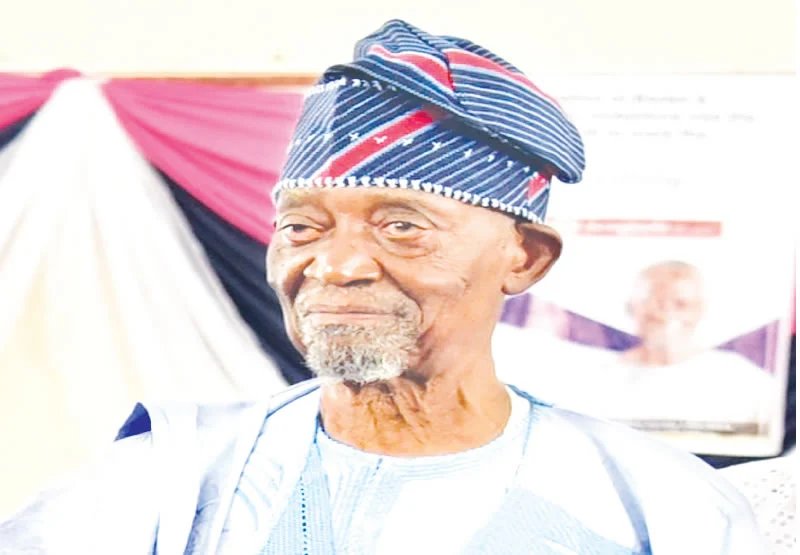
Amid growing concerns over kidnappings and violent attacks in parts of the country, former Afenifere National Secretary-General, Basorun Sehinde Arogbafa, says successive warnings by the pan-Yoruba socio-political organisation on insecurity were largely ignored by authorities. He argues that governments must move beyond rhetoric and deploy modern security technology, strengthen local security structures, and mobilise communities to confront criminal networks. He spoke with PETER DADA
The insecurity bedevilling many parts of the country in recent times, particularly the recent abduction of schoolchildren and teachers in Oyo State, has become a major concern for stakeholders in the region. However, elders have not been very vocal on the issue. What is going on?
It is very sad and unfortunate that this is happening in our country. Insecurity has become a serious problem, but I believe we can collectively find solutions to it. The innocent pupils and teachers have remained in captivity for some time now, and we in Afenifere have been doing our best to ensure that the issue receives the attention it deserves. We have held several meetings and made numerous representations to the government on the need to tackle insecurity decisively. Let me put a few things in perspective. Afenifere has been raising concerns about insecurity for many years. As a socio-political organisation, we do not carry arms. The best we can do is act as a pressure group by drawing the attention of government and other stakeholders to the dangers confronting the country. I served as Afenifere’s Secretary-General for more than 12 years under our revered leader, Chief Reuben Fasoranti. As far back as 2015, we warned the nation and called on the government to take decisive action against Boko Haram before it grew into a greater threat. That was one of the key resolutions reached at our meetings. We also urged South-West governors to unite and adopt a common strategy to confront the growing security challenge. Beyond that, we encouraged every Yoruba man and woman to remain vigilant, to be conscious of suspicious movements in their communities, and to avoid becoming informants or collaborators for criminal elements. In 2016, we again raised the alarm. Around that period, Chief Olu Falae, who is now the Oba of Ilu-Abo, was kidnapped on his farm. The incident underscored the seriousness of the security situation. Following that development, I organised a seminar at the former Western House of Chiefs in Ibadan, where practical recommendations were made for government action. Unfortunately, not much came out of it. Again, in 2018, a professor addressed one of our meetings and revealed disturbing findings about activities in South-West forests. According to research he cited, there were about 250 illegal Fulani camps across forests in the region. We called on the authorities to investigate and take action, but little was done. Take the issue of RUGA as another example. Afenifere strongly opposed the policy because of its implications for communities across the country. We spoke out repeatedly until the proposal was eventually halted. The point I am making is that Afenifere has not been silent. We have consistently raised concerns, issued warnings and offered suggestions. This issue is of great concern to us as well.
Are you saying governments did not paid attention to your advice?
Governments need to do much more than they are currently doing. I appreciate the fact that Nigeria is a complex and diverse country with many challenges competing for attention, but we still expect greater urgency and seriousness in addressing insecurity. For instance, not too long ago, South-West governors announced plans to acquire drones for security operations. Such technology can help security agencies monitor difficult terrains and track criminal activities. However, we are yet to see the expected results. That raises questions about implementation. We expected swift action because this is not a challenge that can be postponed.
Some people argue that the problem goes beyond the powers of state governments under the current constitutional arrangement. Do you agree?
The South-West governors may have been making efforts, but the last Federal Government was too lenient and too soft in its handling of the security situation.
Which government are you referring to — the immediate past administration of Muhammadu Buhari?
Yes. That government appeared to be looking the other way while these marauders continued to move in and operate freely.
What advice would you give the government regarding the rescue of the abducted schoolchildren and teachers in Oyo and Borno states?
My advice is that the governors of the affected states should do everything within their powers to ensure the victims are rescued safely and reunited with their families. More importantly, governments at all levels should not wait for such incidents to occur before taking action. In any case, the problem is already with us. These criminal elements are present across many parts of the South-West. They are involved in killings, kidnappings and other forms of violence. The reality is that they are already in our midst, and we must confront the situation with urgency.
If they are already among us, should they be allowed to remain and continue wreaking havoc on the region?
Certainly not. That is why governors must be more proactive in protecting the lives and property of our people. These criminals are armed with sophisticated weapons, including AK-47 rifles, while ordinary citizens are largely defenceless. I believe security outfits such as Amotekun should be adequately equipped to confront these threats. The important thing is that those responsible for protecting our communities must have the capacity to do so effectively. I have held this view for a long time. As a university student in the early 1960s, I argued that law-abiding citizens should not be left vulnerable when criminals were already acquiring weapons and terrorising communities.
Why did you hold that view at the time?
Because even then there were armed robbers, thieves and other criminals carrying weapons. My argument was simple: if criminals have access to weapons, society must find lawful ways to ensure that communities are protected. Unfortunately, that proposal was not accepted. But the broader point remains the same today. Governments and citizens alike must be more proactive. People are being killed and kidnapped. We cannot afford to remain passive while the threat continues to grow.
What role can local communities play in addressing the security challenge?
People must understand that many of these crimes do not occur without local collaboration. Criminals often rely on information from individuals within the communities they target. They need intelligence, logistics and support to operate. Unfortunately, some people among us aid and abet these criminals. Some act as informants, while others provide supplies and assistance. This is a serious problem that must be addressed if we are to make meaningful progress against insecurity. The entire community must be involved in finding solutions. Traditional rulers, community leaders and residents all have important roles to play. I know many Yoruba monarchs have long sought a more clearly defined constitutional role, and that is understandable. However, they cannot wait for constitutional reforms before acting. Our people are being kidnapped and killed, and everyone must contribute to efforts to improve security.
Right now, there are the local hunters, the OPC and other local vigilante operatives in our communities. We expect them to apply traditional power to fight the bandits; do you believe this can solve the problem?
Tradition is being modified. We have to move with the times. It is true that in those days, Are Ona Kakanfo and other war leaders could come up with incantations and traditional methods to do certain things. But nowadays, things have changed. We can still come together, like Afenifere has been doing, to give ideas and opinions. But things have gone beyond that now. We need to act. We need drones. We need sophisticated equipment to flush these people out. Incantations alone cannot do it. Abracadabra alone cannot do it. I’m not saying those things do not exist. Talking about Gani Adams and others, things have gone beyond that. Look, the last encounter with the Fulani somewhere around Owo showed that we cannot rely on those methods only now. That will not help us. When we have drones, sophisticated weapons and other technology, these are the things we need now. I’m not underrating traditional methods, but what we need now is beyond that ability. All of us should be more proactive.
People are clamouring for state police creation, is that sufficient too?
We should not wait until we have state police. Let them take responsibility, like Akoko people are doing.
What are the Akoko people doing?
You should have heard that not too long ago, these Fulani attackers wrote to people in the Akoko area that they were coming to attack and the Akoko monarchs warned the recognised Fulani living amongst them that they would be held accountable if their brothers carried out their threat. They told them: ‘if anything happens to us here, your people will be driven away from this locality. So, tell your brothers who are coming.’ And of course, we haven’t had the attack there. So, we have to be proactive. The new National Security Adviser has to be proactive. Our government has to be more proactive. The President has also mentioned the fact that he wants state police because state police know the nooks and crannies of every area. But the cooperation is not coming from the legislators. They are not being proactive. The only thing we will call on the President to do is, as I said, issue a special order. He has the right to give a special order, to create it, if the governors and legislators are not cooperating
So, what do you think can be done specifically?
The government has its role to play. But within ourselves, because you said we should start from our own side, security is an issue that concerns you and me. We have to put our own effort into it.