
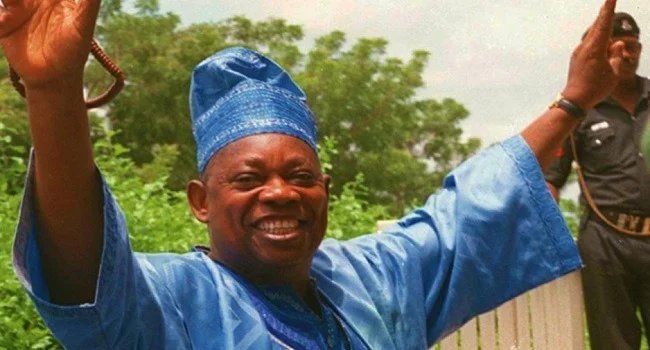
MKO Abiola’s decisive presidential election victory on June 12, 1993, changed that date from ordinary into one of the most significant landmarks in Nigeria’s political history. Today, June 12, is celebrated as Nigeria’s Democracy Day, replacing May 29 as the country’s official day of democratic remembrance.
Yet the significance of June 12 extends far beyond a public holiday. It represents a powerful statement about what Nigeria once achieved, what it lost, and what it can still become.
When former President Muhammadu Buhari declared June 12 as Democracy Day on June 6, 2018, he acknowledged a truth that had endured for 25 years.
In his words, “June 12, 1993 was the day when Nigerians in millions expressed their democratic will in what was undisputedly the freest, fairest and most peaceful elections since our independence.”
That is the pure truth.
The June 12, 1993 presidential election between Abiola of the Social Democratic Party and Bashir Tofa of the National Republican Convention remains the gold standard against which every Nigerian election is measured.
It was not merely an electoral exercise; it was a national referendum on unity, merit, and democratic choice.
At a time when politicians routinely exploit ethnic and religious divisions, June 12 stands as compelling evidence that Nigerians are far less divided than they seem.
The election shattered long-held assumptions about the country’s fault lines. Nigerians voted massively for Abiola, a Yoruba man running on a Muslim-Muslim ticket with Babagana Kingibe. Voters from every geopolitical zone looked beyond ethnicity and religion to support a candidate they believed could lead the country.
Even within military barracks nationwide, that verdict held.
No political figure before or since has galvanised Nigerians across regional, ethnic, and religious boundaries quite like Abiola.
Of the 6.6 million votes initially announced, Abiola secured about 4.3 million votes and won 19 of the country’s 30 states at the time. Remarkably, he carried all the states in the South-East, won in the FCT, and even defeated his opponent, Tofa, in Kano State, Tofa’s home base. The message was unmistakable: Nigerians could unite behind competence, vision, and hope.
That remains one of the most enduring ideals of June 12.
But the election almost did not happen. On June 10, 1993, just two days before the scheduled poll, Arthur Nzeribe and the so-called Association for a Better Nigeria obtained a Kangaroo court injunction, at night, seeking to stop the election.
In one of the defining acts of democratic courage in Nigeria’s history, Humphrey Nwosu, Chairman of the National Electoral Commission, refused to succumb to pressure. He disregarded the injunction and proceeded with the election.
For that decision, Nigeria owes him a permanent place among the heroes of democracy.
The true tragedy came on June 24, 1993, when military President Ibrahim Babangida annulled the election.
It was one of the gravest injustices ever inflicted upon the Nigerian people. The annulment did not merely rob Abiola of a presidency he had clearly and legitimately won; it robbed Nigeria of a rare opportunity to consolidate democratic norms and build a more united country.
In February 2025, Babangida publicly expressed regret for annulling the election and admitted that the poll was free, fair and won by Abiola. But the admission came decades too late. The damage had long been done. The ill-effects linger.
Nigeria lost a historic opportunity to build upon a major electoral breakthrough. A successful transfer of power following the June 12 election might have accelerated democratic consolidation, strengthened national cohesion, and fostered greater public trust in elections. Instead, the country entered another period of instability, repression, and uncertainty.
The aftermath of the annulment revealed the high cost of denying people their democratic choice. The government moved swiftly against dissent.
Media houses were shut down, journalists were arrested, court actions relating to the annulled election were blocked, and the NEC itself was dismantled.
Beginning in July 1993, protests erupted across the South-West. Security forces responded with lethal force. More than 100 people were reportedly killed during the initial crackdown.
Economic activities suffered. Banks and businesses closed. Ethnic tensions deepened. Many residents from other ethnic groups fled Lagos to their zones amid fears of violence.
The crisis exposed how quickly democratic betrayal can destabilise a country.
Yet from that darkness emerged some of Nigeria’s greatest democratic heroes.
First among them was Abiola himself. Despite being denied the presidency he had clearly won, he refused to surrender the mandate freely given to him by Nigerians.
He paid an extraordinary personal price for defending democratic principles. In June 1994, after declaring himself president, he was arrested and charged with treason.
His detention sparked nationwide protests and a nine-week strike involving petroleum workers, academics, and bankers. The oil workers’ strike severely disrupted the economy and demonstrated the depth of public support for the June 12 mandate.
Abiola never renounced his claim. He never abandoned the cause and ultimately became a martyr for democracy.
Another hero was the National Democratic Coalition. Formed on May 15, 1994 and led by figures such as Anthony Enahoro, Michael Ajasin and Abraham Adesanya, NADECO became the most formidable civilian resistance movement against military rule.
Its members faced harassment, imprisonment, exile, and threats to their lives while demanding recognition of Abiola’s victory and a return to democratic governance.
The June 12 struggle also produced numerous courageous individuals whose sacrifices deserve lasting recognition.
They include Kudirat Abiola, assassinated in Lagos in 1996 after publicly supporting her husband’s cause; Shehu Yar’Adua, Alfred Rewane, Gani Fawehinmi, Abraham Adesanya, Wole Soyinka, Alani Akinrinade, Ndubuisi Kanu, Frank Kokori, Bagauda Kaltho, Chima Ubani, Beko Ransome-Kuti, and Bola Tinubu.
Their sacrifices ensured that the democratic flame remained alive during some of Nigeria’s darkest years.
But history cannot be honest if it celebrates only heroes of June 12 while forgetting those responsible for undermining democracy.
Arthur Nzeribe, Ibrahim Babangida, and Sani Abacha occupy a despicable place in that history. Their actions helped frustrate the democratic aspirations of millions of Nigerians because they chose themselves over their country.
Tragically, Abiola died in detention on July 7, 1998, in controversial circumstances, just as his release appeared imminent.
His death remains one of the most painful chapters in Nigeria’s democratic journey.
It is equally important to acknowledge the role played by Abdulsalami Abubakar in steering the country back toward civilian rule after Abacha’s death. His transition programme ultimately facilitated the emergence of a Yoruba president, partly in recognition of the wound created by the June 12 annulment.
Thirty-three years later, June 12 continues to speak directly to Nigeria’s political class, reminding them that ethnicity and religion need not determine electoral outcomes.
June 12 demonstrates that Nigerians are capable of embracing inclusive politics when presented with credible leadership. It shows that merit, competence, and vision can triumph over division.
Sadly, vote rigging, ballot-box snatching, voter intimidation, election-related violence, and ethnic incitement—which were absent on June 12—remain threats to democratic development.
Electoral disputes are now settled in courtrooms rather than at polling units.
That is not the spirit of June 12.
June 12 symbolises elections that are free, fair, peaceful, and credible. It symbolises outcomes that reflect the genuine will of the people, and symbolises a democracy where citizens choose leaders rather than leaders choosing themselves.
Nigeria can learn valuable lessons from Ghana, Botswana, Mauritius, Namibia, and Zambia, where electoral credibility is gradually becoming entrenched. Elections in these countries are not perfect, but voters increasingly trust that their ballots matter and that incumbents can be peacefully replaced.
Nigeria must cultivate a new generation committed to the values embodied by June 12. Citizens should prioritise competence, integrity, and performance over ethnic, religious, or regional considerations. Political parties should recruit credible candidates. Schools should teach morals, democratic values and the principles of good governance.
June 12 is not merely about remembering the past. It is about shaping the future.
The election proved that Nigerians can rise above their differences. It proved that credible elections are possible and that democracy can unite rather than divide.
That is why June 12 lives on. It lives on in the sacrifices of heroes and martyrs. It lives on as a reminder of what Nigeria lost through annulment and what it can still regain.