
When an institution fails publicly and spectacularly, the country tends to ask one set of questions. Who is responsible? Who must resign? Who must be prosecuted? Who must pay back what? These are necessary questions, and I will not pretend they are not. But they are not the most useful questions.
There is one question that, in my experience, leads more reliably to understanding than any other. It is the question I want to make a habit of asking, and I want to recommend to every Nigerian who cares about how this country actually performs.
Where was the board?
Every major institutional failure of the last twenty years, anywhere in the world, has a board behind it. The board was usually present in name, listed in the annual report, recorded in the minutes, paid its sitting allowances, and conspicuously absent in the only sense that matters. It was not governing. It was not steering. It was not asking the questions that, had they been asked in time, would have prevented the failure.
This is not a Nigerian observation. It is a global pattern. And the global pattern is so consistent that we can use it as a diagnostic instrument for our own institutions, here, now, before the failure has happened.
This does not mean boards are the only factor that determines institutional performance. Politics matters. Funding matters. Regulation matters. Ministerial interference matters. Executive competence matters. In many public institutions, these pressures are real and sometimes overwhelming. But even under these conditions, the board remains the governance layer responsible for how the institution interprets, prepares for, escalates, resists, or manages those pressures.
‘Institutions do not rise above the quality of their governance response to constraint.’
And that governance response begins in the boardroom.
What the global cases teach us
Consider two failures that have been comprehensively investigated and publicly documented, in jurisdictions where the investigators had access, authority and time.
The first is Wirecard. Once celebrated as Germany’s most successful technology company, valued at twenty-four billion euros at its peak, included in the DAX index, audited by one of the big four, supervised by Europe’s most respected financial regulator. In June 2020, it collapsed within weeks of admitting that nearly two billion euros on its balance sheet did not exist and never had. The post mortem investigations all converge on the same finding. The board of Wirecard had not understood the business it was supposed to oversee.
‘The supervisory board, which under German law is supposed to provide independent challenge, asked the wrong questions, accepted the wrong answers, and missed warning signs that had been raised externally for years.’
The second is the Boeing 737 MAX. Two crashes, in October 2018 and March 2019, killed three hundred and forty six people. The subsequent investigations, including by the US Congress, found that the board of Boeing had ceded too much authority to management on questions of safety and design, had allowed a culture that prioritised schedule over engineering judgement, and had not insisted on the independent technical scrutiny that the company’s own history should have made obvious. The board was present. The board was distinguished. The board, in the end, was not governing.
In both cases the institutional failure was real, the human cost was severe, and the board was central to the cause. Not because the directors were bad people. In both cases the directors were people of standing. The cause, in each instance, was that the board had stopped doing what boards exist to do.
I cite these foreign cases for a reason. Their investigations are public. Their findings are settled. Their lessons are uncontested. And the patterns they reveal are not foreign at all. Every Nigerian reader of this column can think of institutions in our own country where the same patterns are visible right now. One sees it in agencies where audit concerns recur year after year without closure, in institutions where leadership transitions trigger instability because no succession discipline exists, and in boards where difficult questions are repeatedly deferred until the crisis can no longer be contained.
The nine danger signals of a failing board
When you study the post mortems of institutional failures over a long enough period, the same warning signs appear, over and over, across sectors, across countries, and across decades. I have grouped them into nine signals. They are not predictions of failure. They are conditions that, when present in combination, make failure much more likely than it would otherwise be.
Use these as a diagnostic. Take any public institution you know well, and check how many of these nine are present in its boardroom today.
Signal one. The board does not understand the business. When the directors cannot, in plain language, explain how the institution actually generates value or delivers its mandate, they cannot govern it. They can only watch it. Wirecard’s supervisory board did not understand how the company supposedly made its money. They had no way of knowing the answer was that, in significant part, it did not.
Signal two. The board cannot get straight answers from management. A healthy board asks a question and receives a clear answer, or a clear admission that the answer is not yet known. An unhealthy board asks a question and receives a presentation. The presentation is impressive, lengthy, and somehow does not address the question that was asked. Over time, directors stop asking.
Signal three. The same matters keep coming back without resolution. A board that cannot bring difficult issues to closure is a board that has lost its decisional authority. Items are deferred, referred to committees, postponed for further study, returned to management. Months pass. The issue remains.
Signal four. The Chief Executive is never disagreed with. I will return to this signal in more depth in a later column, because it deserves its own treatment. For now, I will say only that ‘a board where the Chief Executive has never been publicly contradicted in the room is not a board, it is an audience.’
Signal five. The Chair runs the room without genuine deliberation. Where the Chair manages the meeting so tightly that no real conversation occurs, where every item runs to time, where every resolution is unanimous, where every meeting ends precisely on schedule, the board is performing the rituals of governance without doing the work.
Signal six. Risk and audit committees are weak or ceremonial. These two committees, more than any others, are the structural firewalls between a healthy institution and a failing one. When they are populated for political balance rather than for technical competence, when they meet rarely, when their reports are accepted without question, when their concerns are never escalated to full board action, the firewalls are down.
Signal seven. Information packs are too long, too late, and too smooth. Hundreds of pages, circulated forty-eight hours before the meeting, written in the polished prose of a public relations document. No director can absorb it. No director will admit they have not absorbed it. The board meeting proceeds on the basis that everyone has read what no one has read. Decisions are taken on the basis of an information set the board has not engaged with.
Signal eight. There is no genuine succession discipline. The board cannot say, with confidence, who would step into the Chief Executive role tomorrow if the current incumbent left tonight. There is no internal pipeline. There is no shortlist. There is no plan. The institution is one departure away from a crisis it has not prepared for.
Signal nine. Board performance is never evaluated, or evaluation is theatre. No external review has been conducted in recent memory. Self-evaluation, where it exists, is filled in the morning of the meeting at which it is discussed. The results are filed, never acted upon. The board has no honest mirror in which to see itself, and so no basis on which to improve.
If you check a public sector board against this list and find seven or more present, that institution is in trouble, whether the trouble has surfaced yet or not. If you find five or six present, the institution is at risk. If you find three or fewer, that board is doing better than most.
The Nigerian reality
I have said I will not name Nigerian institutions in this column where I am diagnosing failure. I want to keep that discipline. But I will say this. Take the nine signals above. Read them slowly. Then, in your own private reflection, apply them to the public sector board you know best. The Federal regulator you have worked with. The state agency you have advised. The parastatal you have served on. The teaching hospital, the development bank, the infrastructure authority.
I will be unsurprised if you find that the board you have in mind exhibits at least five of the nine. I will be more surprised if you find a public sector board in Nigeria today that exhibits fewer than three.
This is not because Nigerian directors are unintelligent, unethical, or uninterested. The country has been blessed with directors of high competence and integrity, and I have had the privilege of working with many of them. The pattern I am describing is structural. It is the consequence of how boards are composed, briefed, run and evaluated in our public sector. It is the consequence of design, as I argued in the last column.
When the design produces the nine signals consistently, the failures that follow are not aberrations. They are the natural output of the system. And the institutions that escape these signals are usually the ones where the design has been corrected, often by an exceptional Chair, Chief Executive, or regulator.
What this column is for
I want to be honest about why I am writing this series, and what I hope it accomplishes.
I am not writing it to make people uncomfortable, although I expect that some of it will. I am not writing it to indict individuals, and I have taken care not to. I am writing it because I believe that the conversation about Nigerian public sector reform has, for too long, treated boards as either an afterthought or as a ceremonial layer that one need not bother with.
I believe this is wrong.
I believe boards are the highest leverage point in our public sector, and that we will not transform these institutions until we transform how their boards are designed, composed and held to performance.
If you read this column and quietly score your own board against the nine signals, that is a beginning. If you raise the question at your next board meeting, that is more. If you take one of the nine signals and decide, this term, that you will not allow it in your boardroom, that is the work itself.
Where was the board? It is the question Nigeria has not been asking. It is the question that will, when asked persistently and honestly, change the way our institutions perform.
Ask it. Of every institution. At every failure. And, more usefully, before the failure. Because by the time we are asking it after the fact, it is already too late.
The board sets the ceiling. If the nine signals are present in the room, the ceiling is low. If the work has been done to remove them, the ceiling rises. The choice is one of design, not luck.
This is the work. It belongs to those who can choose to do it.
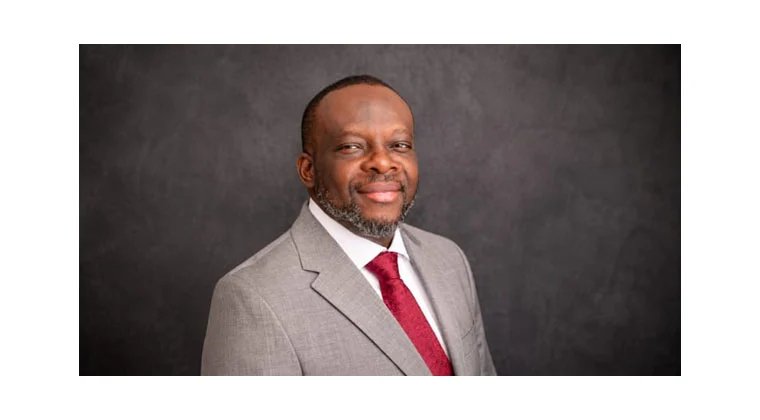
Dr Bolaji Olagunju is the Founder and Group Chairman of Workforce Group, a human capacity and organisational performance firm founded in 2004 and operating across Nigeria and Africa. He is also the Founder of Philantify and the convener of Leadership That Works, a platform devoted to the question of what really works in leadership. His books include Hiring Right: A Matter of Life and Death for Businesses and Business Owners; The Seven Disciplines of Breakthrough Results, a public sector leadership playbook for DGs, CEOs, Permanent Secretaries, Directors and Senior Leadership Teams; and Blueprint for Capacity Development Excellence, a strategic framework for strengthening the institutions and professionals at the heart of Africa’s human capital. He writes here in a personal capacity.