
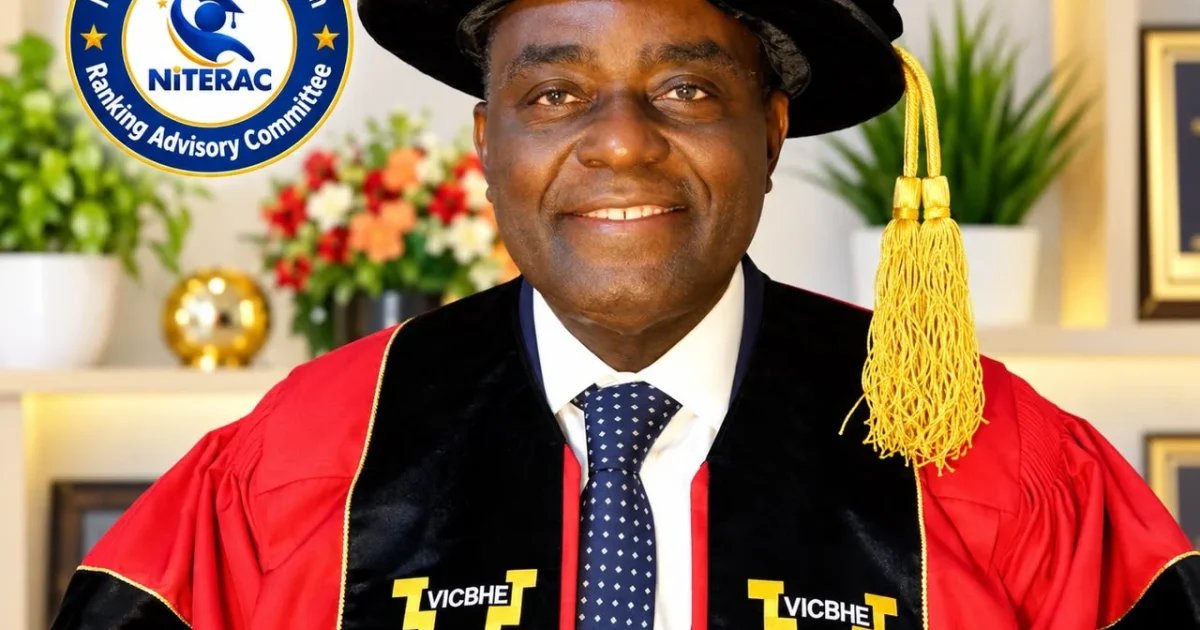
The Federal Government will release the 2026 national ranking of universities, polytechnics and colleges of education on December 15, according to the Chairman of the Nigerian Tertiary Education Ranking Advisory Committee, Prof. Peter Okebukola.
Okebukola disclosed this in a 17-step framework for the ranking exercise made available to our correspondent on Friday, outlining the processes leading to the publication of the results.
The exercise, which commenced on September 1, is expected to cover public and private institutions across the country’s three major tertiary education subsectors.
According to the framework, the final results will be published on December 15 following data collection, multi-way validation, trial ranking, review and approval by the Minister of Education.
The 17-step process includes the establishment of institutional ranking committees, consultations with Directors of Academic Planning, agreement on ranking indicators and their weightings, development of a ranking manual and a pilot exercise.
The committee will also collect data from all registered institutions, including Google Scholar records and reputation surveys, before subjecting the information to multiple validation stages.
NiTERAC will approve the ranking results and transmit them to the Minister of Education for final approval before publication.
The December 15 deadline builds on an earlier assurance by Okebukola that the 2026 ranking would be completed before the end of the year.
In an earlier interview with our correspondent in September, the former Executive Secretary of the National Universities Commission said the expanded ranking exercise would not be postponed until another academic year.
“On the question of timeframe for implementing the ranking, the 2026 edition will happen before the end of the year,” he said.
He also explained that the committee would advise the Minister of Education on appropriate assessment metrics for universities, polytechnics and colleges of education.
On September 30, Okebukola further disclosed that universities would be assessed using 22 indicators, with their respective weightings agreed upon with the League of Directors of Academic Planning.
“The national ranking is intended to stimulate healthy internal competition among Nigerian tertiary institutions and to position the Nigerian tertiary education system for improved global ranking in the coming years,” he said.
More recently, on October 23, Okebukola said the university ranking had reached the 12th stage of the 17-step process, while the rankings for polytechnics and colleges of education were also progressing.
He attributed anticipated improvements in the global standing of Nigerian universities from 2027 to increased competition among institutions, rising research citations and the introduction of the national ranking framework.
The NiTERAC chairman also disclosed plans to introduce thematic rankings from 2027, focusing on how tertiary institutions contribute to addressing Nigeria’s development challenges.
He said the proposed assessment would place greater emphasis on functional education and the practical application of knowledge rather than concentrating solely on conventional academic performance.
According to him, the proposed indicators would assess innovations produced by institutions, including patents, new products and processes developed to solve societal problems.
The expansion of the ranking exercise followed the Federal Government’s decision to extend the assessment beyond universities to include polytechnics and colleges of education.
The committee was consequently renamed the Nigerian Tertiary Education Ranking Advisory Committee from the Nigerian Universities Ranking Advisory Committee to reflect its broader mandate.
The exercise comes amid growing efforts to improve the international visibility of Nigerian universities. In the 2027 Times Higher Education World University Rankings, 29 Nigerian universities featured, compared with 24 in the previous edition, making Nigeria the most represented country in sub-Saharan Africa.
However, Okebukola has identified research funding, publication output, institutional data management and international collaboration as areas requiring sustained improvement.
The national ranking is expected to provide a domestic benchmark for measuring institutional performance, identifying weaknesses and encouraging improvements in teaching, research and community service.