
For over three years, pupils in a school in Ogun State have endured excessive heat, poor ventilation, and foul odours, while teachers struggle to create a conducive learning environment, YUSUF OKETOLA writes
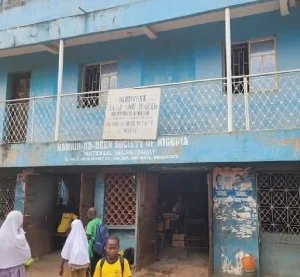
For more than three years, the sound of lessons at Nawairudeen Primary School, Isale Ijeun, Abeokuta, Ogun State, has echoed through the walls of a rented hall rather than conventional classrooms.
What was initially meant to be a temporary arrangement to protect pupils from deteriorating school buildings has become a prolonged reality, leaving more than 250 children to struggle for space and comfort in an environment that parents and teachers say is unsuitable for learning.
Established in 1925, the school, which once operated from about four buildings, is now without a single functional classroom.
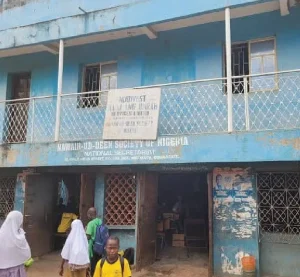
Its pupils, from Primary One to Primary Six, have been forced to share a hall belonging to the Ansarudeen Islamic Society following the evacuation of the old structures over fears of imminent collapse.
But three years after the evacuation, the anticipated reconstruction has yet to provide the much-needed relief, leaving pupils and teachers to contend with overcrowding, poor ventilation, excessive heat and unpleasant odours.
During a visit by Sunday to the school on Tuesday, more than 250 pupils were seen packed into the rented hall, struggling to carry on with their lessons under conditions that raised concerns about the quality of education they receive.
With six classes sharing the same facility, conducting lessons simultaneously has become a major challenge.
Sunday learnt that teachers have had to devise an unusual arrangement in which some classes remain silent while others receive lessons, with the classes taking turns daily to minimise distractions.
The situation, however, has not made learning any easier for the pupils, who are also exposed to excessive heat and foul odours from the surrounding environment.
Declining enrolment
For a school that once had more than 500 pupils, the decline in enrolment has become another troubling indication of the impact of the deteriorating learning environment.
Parents said many families had withdrawn their children over the years because of the school’s condition, adding that no new pupil had been admitted during the current academic session.
The Chairman of the Parents-Teachers Association, Mrs Abosede Awobadejo, described the situation as critical, lamenting that the condition of the school had continued to undermine the education of the children.
She, however, commended the teachers for remaining committed to their duties despite the difficult working environment, saying many of them could have sought transfers to other schools.
Awobadejo said, “We, as parents, are not happy about it. We have made several efforts to get the government to intervene. The government came to start the construction of three classrooms, but that cannot be enough for the six classes we have.
“They also demolished some buildings, but reconstruction has yet to commence on those. We are appealing to the government to look into the situation because this is the future of our children.”
She explained that the school had been using the rented hall for more than three years, a development she said had contributed to the steady withdrawal of pupils.
The PTA chairman added that parents had become increasingly worried about the long-term implications of exposing their children to an environment that lacked the basic facilities required for effective learning.
Another PTA member, Mrs Kabirat Sobande, said Nawairudeen was the only public primary school serving Ward 10, making its deteriorating condition particularly concerning for residents.
Sobande recalled that the old buildings had become severely dilapidated about three years ago, prompting the evacuation of pupils to the rented hall while the government was expected to undertake reconstruction.
She said the school had more than 500 pupils before the relocation but had witnessed a steady decline in enrolment since then.
“Three years ago, the old buildings had deteriorated badly. That was when the pupils were evacuated to this hall temporarily to pave the way for the reconstruction of the school.
“We had over 500 pupils before bringing them here, but we noticed that their number kept reducing from one term to another. In this current session, the number has reduced drastically,” she said.
No toilets or clean water
Beyond the challenges of overcrowding and inadequate classrooms, the school is also grappling with the absence of basic sanitation and water facilities.
A staff member, who spoke to Sunday on condition of anonymity, said the absence of a functional toilet had created serious difficulties for both pupils and teachers.
The worker disclosed that pupils had to return home whenever they needed to use the toilet, while teachers also struggled to find alternative facilities during school hours.
The staff member urged the government to ensure that the ongoing classroom construction included functional toilets and a reliable water supply, stressing that providing classrooms alone would not address the school’s challenges.
“We don’t have a toilet or water. There is also no furniture for the pupils and teachers. Some of our iron chairs have been carted away by scavengers.
“There should also be learning materials for our nursery pupils. The government should ensure that the new classrooms have toilet facilities and a functioning water system,” the worker said.
The staff member also called for the school to be fenced when the construction was completed, noting that adequate security and a conducive environment were necessary for effective teaching and learning.
For the pupils, the absence of basic facilities means that even their most routine needs have become additional challenges in an environment where concentration is already difficult.
Community seeks faster reconstruction
The Vice-Chairman of the management committee, Imam Abdulganiyu Abdulsalam, said the community had made several efforts to persuade the government to rebuild the school before the old structures were eventually abandoned.
According to him, an earlier intervention involved removing the roofs of some buildings for renovation, but members of the community rejected the arrangement, insisting that the structures required complete reconstruction rather than another round of repairs.
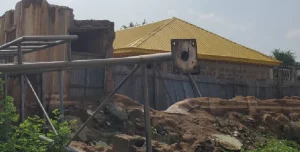
Abdulsalam said the government eventually commenced the construction of three classrooms about a year ago, but appealed for the work to be accelerated to enable the pupils to leave the rented hall.
He said, “Before the demolition of the school, we had made several efforts to get the government to reconstruct it. At one point, they came to remove the roofing sheets and start renovation, but we were not satisfied with that arrangement.
“We told them that what we needed were new buildings. However, they came about a year ago to begin the construction of three classrooms.
“We are pleading with the government to fast-track the construction so that we can move the pupils there. This hall is not conducive to learning because of the heat.”
He explained that the hall’s poor ventilation had made it difficult for pupils to remain inside throughout lessons, adding that they sometimes abandoned their classes to step outside and get fresh air.
“On many occasions, the pupils abandon their lessons to go outside and get fresh air. Apart from the heat, there is a foul odour coming from the environment because of the lack of ventilation.
“The windows are not enough, and there is no electricity. The teachers are doing their best. Many of them would have sought transfers from the school, but they do not want to abandon the pupils,” he added.
Abdulsalam appealed to the government to expedite the completion of the three classrooms and ensure that the remaining buildings were also reconstructed to accommodate the school’s six classes.
For parents and members of the school community, the concern goes beyond the physical condition of the buildings.
They fear that the prolonged neglect could further discourage families from enrolling their children in the school, particularly as the current arrangement continues to affect teaching and learning.
Govt blames contractor
Commenting on the situation at the school, the state Commissioner for Education, Prof Abayomi Arigbabu, said the government was aware of the challenges and was working to address them.
Speaking with Sunday , Arigbabu attributed the delay in completing the three-classroom block to the contractor handling the project.
He also cited a lack of adequate space as a constraint preventing the government from constructing additional classrooms, adding that the government was exploring other alternatives.
He said, “We are aware of the situation, but the challenge we are facing there is also land. The space available for construction is limited. You can see that construction is ongoing. The contractor is delaying the project.
“It should have been completed because I was there at the beginning of the session, and it has been almost five to six months now. I am wondering why the contractor has not finished the project. But he is going to complete it, and we are also considering other alternatives.
“We actually wanted to build more than three classrooms at the time, but I just spoke with the SUBEB chairman, who was also there. We are also engaging the Nawairudeen Society.”