

Naomi Chima profiles Nigerians occupying influential positions in the United Nations and contributing to global efforts in development, diplomacy, peacebuilding and sustainable energy
Amina Mohammed
Amina Mohammed is a Nigerian diplomat and international development expert who serves as Deputy Secretary-General of the United Nations and Chair of the UN Sustainable Development Group.
On December 15, 2016, then UN Secretary-General-designate António Guterres announced her appointment as Deputy Secretary-General.
Mohammed assumed office in February 2017, becoming the fifth person to hold the position and the second African woman to occupy it, after Tanzania’s Asha-Rose Migiro.
In January 2022, Guterres reappointed her for a second term.
As Deputy Secretary-General, Mohammed assists the Secretary-General in coordinating the activities of the UN system and ensuring that its programmes and policies align with common development goals.
She also chairs the UN Sustainable Development Group, which coordinates development activities across 162 countries and territories.
Mohammed joined the United Nations in 2012 as Special Adviser to former Secretary-General Ban Ki-moon on post-2015 development planning. She played a leading role in the negotiations and consultations that culminated in the adoption of the 2030 Agenda for Sustainable Development and the 17 Sustainable Development Goals in 2015.
Before joining the UN, she worked with three successive Nigerian administrations between 2000 and 2014 as Senior Special Assistant to Presidents Olusegun Obasanjo, Umaru Musa Yar’Adua and Goodluck Jonathan.
Mohammed advised on the implementation of the Millennium Development Goals, which included eradicating extreme poverty, expanding access to education and improving gender equality.

In 2005, she was assigned to coordinate debt-relief funds estimated at $1bn annually for programmes related to the goals. Between 2002 and 2005, she also coordinated the Task Force on Gender and Education for the United Nations Millennium Project.
Mohammed subsequently served as Nigeria’s Minister of Environment from November 2015 to December 2016 under former President Muhammadu Buhari. She led the country’s efforts on climate action, environmental protection and sustainable development.
She began her professional career in the private sector, working with architects and engineers involved in designing and constructing schools, hospitals and other public buildings in Nigeria. Mohammed later became an advocate for improved access to education and social services before moving into public service.
Mohammed founded the Centre for Development Policy Solutions, a think tank established to address development policy and knowledge gaps. She has also served on several international advisory boards and panels and worked as an adjunct professor of development practice at Columbia University in New York.
She was born in Kaduna State, Nigeria, to a British mother and a Nigerian father. She is married and has six children and six grandchildren.
Mohammed has received several international honours and honorary degrees in recognition of her contributions to development, education and public service.
She was also awarded the Nigerian national honour of Officer of the Order of the Federal Republic.
Her career has been closely associated with major global development initiatives, particularly the Sustainable Development Goals, which remain central to the UN’s efforts to tackle poverty, inequality and climate change.
Ahunna Eziakonwa
Ahunna Eziakonwa is a Nigerian diplomat and international development expert with nearly three decades of experience in the United Nations system.
On June 12, 2026, UN Secretary-General António Guterres appointed her Under-Secretary-General and Special Adviser on Africa.
She assumed office on August 1, 2026, succeeding Cristina Duarte of Cabo Verde.
In her current role, Eziakonwa advises the Secretary-General on African affairs and heads the Office of the Special Adviser on Africa. Her responsibilities include promoting Africa’s development priorities and strengthening cooperation between the United Nations and the African Union.
Before her latest appointment, she served as Assistant Secretary-General, Assistant Administrator and Director of the UN Development Programme’s Regional Bureau for Africa.
Guterres announced her appointment to the position on June 6, 2018, and she assumed office on August 15, 2018.
Eziakonwa oversaw UNDP development programmes in 46 African countries, focusing on economic and political development, governance and the Sustainable Development Goals.
Her previous UN assignments took her to Lesotho, Uganda and Ethiopia, where she held senior development and humanitarian positions.
Between 2008 and 2012, she served as UN Resident Coordinator and UNDP Resident Representative in Lesotho. Eziakonwa held similar positions in Uganda from 2012 to 2015, coordinating UN development activities and strengthening cooperation with the government.
From 2015 to 2018, she served as UN Resident Coordinator, UNDP Resident Representative and Humanitarian Coordinator in Ethiopia. She oversaw development programmes and coordinated humanitarian responses.

Eziakonwa also served as Chief of the Africa Section at the UN Office for the Coordination of Humanitarian Affairs in New York, where she managed operations covering more than 15 African countries.
Her other assignments included work with the UN Departments of Peacekeeping Operations and Public Information, as well as political analysis and strategic communications relating to UN activities in Africa.
Before joining the United Nations, Eziakonwa held senior positions in several African civil society organisations. She also occupied senior field positions in Liberia and Sierra Leone during critical periods in both countries’ histories.
Her experience in civil society provided a foundation for her subsequent work in humanitarian affairs, development and international cooperation.
Eziakonwa obtained a Bachelor of Arts degree in Pedagogy, English and Literary Studies from the University of Benin, Nigeria. She later earned a master’s degree in International Affairs, focusing on African economic and political development, from Columbia University’s School of International and Public Affairs in New York.
During her leadership of UNDP’s Regional Bureau for Africa, she championed initiatives aimed at strengthening development across the continent, including efforts to increase women’s participation in leadership and public service.
Eziakonwa also helped lead UNDP Africa’s socioeconomic response and recovery efforts during the COVID-19 pandemic, supporting countries as they addressed its effects on livelihoods, public services and economic activities.
Damilola Ogunbiyi
Damilola Ogunbiyi is a Nigerian energy expert and international development leader whose work focuses on expanding access to electricity, promoting renewable energy and tackling energy poverty.
She serves as Chief Executive Officer of Sustainable Energy for All (SEforALL), Special Representative of the UN Secretary-General for Sustainable Energy for All and Co-Chair of UN-Energy.
Her career has taken her from managing electricity projects in Lagos to leading international efforts to expand energy access and support the global transition to cleaner energy.
Ogunbiyi studied Project Management for Construction at the University of Brighton in the United Kingdom, where she obtained a Bachelor of Science degree in 2001 and a Master of Science degree in 2002.
Before entering public service, she worked as a consultant on public-private partnerships for the United Kingdom Department for International Development.
Ogunbiyi later joined the Lagos State Government as Senior Special Assistant to the Governor on Public-Private Partnerships before becoming the first woman appointed General Manager of the Lagos State Electricity Board.
She oversaw projects aimed at improving electricity supply to public institutions and government facilities, including hospitals, schools and streetlights. Under her leadership, independent power projects were completed to provide electricity to several public facilities across the state.
Ogunbiyi later became the first woman appointed Managing Director of Nigeria’s Rural Electrification Agency, which is responsible for expanding electricity access in rural and underserved communities.
During her tenure, she initiated the Nigerian Electrification Project, a $550m programme jointly funded by the World Bank and the African Development Bank. The project aimed to expand electricity access through solar mini-grids and solar home systems.
According to her official SEforALL profile, the project has provided electricity access to more than eight million people across Nigeria.
She also oversaw the Energising Education Programme, designed to provide reliable electricity to 37 federal universities and seven teaching hospitals through off-grid power solutions.
Another major initiative was the Energising Economies Initiative, which focused on providing affordable and reliable electricity to markets and commercial clusters to support traders and small businesses.
On October 29, 2019, UN Secretary-General António Guterres announced Ogunbiyi’s appointment as his Special Representative for Sustainable Energy for All and Co-Chair of UN-Energy.
On the same day, the board of Sustainable Energy for All announced her appointment as its Chief Executive Officer. She began leading the organisation in early 2020.
She succeeded Rachel Kyte of the United Kingdom in the three positions, placing her at the centre of international efforts to expand access to affordable and sustainable energy.
The three positions have related but distinct responsibilities.
As Special Representative of the UN Secretary-General for Sustainable Energy for All, Ogunbiyi represents the Secretary-General in international engagements on sustainable energy. She advocates policies and partnerships that promote universal access to affordable, reliable and modern energy, in line with Sustainable Development Goal 7.
As Co-Chair of UN-Energy, she helps coordinate the activities of UN organisations working on energy-related issues, promoting cooperation in electricity access, renewable energy and energy efficiency.
As Chief Executive Officer of Sustainable Energy for All, she provides strategic leadership for the organisation, oversees its programmes and partnerships, and promotes investment in sustainable energy projects.

The organisation works with governments, businesses and development partners to address energy poverty and support a fair and inclusive transition to cleaner energy systems.
Ogunbiyi’s work has earned her recognition in the global energy and climate sectors.
In 2023, she received the Energy Institute President’s Award in recognition of her contributions to the energy industry.
In 2024, Ogunbiyi was named on TIME magazine’s TIME100 Climate list, which recognises influential figures working on climate-related issues. She also received the Global Female Leadership Impact Award that year.
She was further honoured with the First Class Order of Zayed II by the President of the United Arab Emirates in recognition of her contribution to the success of the COP28 climate conference.
In March 2026, TIME named her among the recipients of its TIME Earth Awards for her efforts to advance clean energy and reduce emissions.
Under her leadership, Sustainable Energy for All has established working relationships with more than 200 partners, supported over 100 countries and secured commitments exceeding $1.6tn in energy financing. These figures represent the organisation’s reported achievements, not funds personally raised by Ogunbiyi.
She has also served on several international advisory bodies, including the World Bank’s Private Sector Investment Lab and the European Investment Bank Climate and Environment Advisory Council. She was Co-Chair of the COP26 Energy Transition Council and served on the COP28 Advisory Committee.
A major focus of Ogunbiyi’s work is the relationship between electricity access and economic development. She advocates increased investment in reliable electricity, particularly in developing countries where inadequate power supply affects businesses, healthcare, education and employment opportunities.
Through her international work, she promotes renewable energy solutions, including solar power and mini-grids, to improve electricity access in communities and businesses underserved by national grids.
She also works with governments, financial institutions and private-sector investors to address funding and infrastructure challenges in the energy sector.
Her broader mission is to advance universal access to affordable, reliable, sustainable and modern energy by 2030.
Ozonnia Ojielo
Ozonnia Ojielo is a Nigerian lawyer, academic, journalist and international development expert whose work spans governance, peacebuilding, conflict prevention and humanitarian affairs.
On March 16, 2026, United Nations Secretary-General António Guterres announced his appointment as UN Resident and Humanitarian Coordinator in Ethiopia, with the approval of the Ethiopian government. The appointment took effect on March 14, 2026.
Ojielo brings more than 25 years of experience in international development, governance and peacebuilding to the position.
He has held several senior positions within the UN Development Programme, with assignments across different countries and continents.
Ojielo served in senior capacities in Kenya and Ghana before becoming Director of Conflict Prevention and Recovery at UNDP’s Bureau for Crisis Prevention and Recovery in New York.
He later served as Cluster Director for Governance and Peacebuilding at the UNDP Regional Service Centre for Africa in Addis Ababa, Ethiopia.
Ojielo subsequently became UN Resident Coordinator in Kyrgyzstan, where he also served as UNDP Resident Representative and Representative of the United Nations Population Fund.
Before his appointment to Ethiopia, he was UN Resident Coordinator in Rwanda, leading the UN Country Team and coordinating its development activities in collaboration with the government and development partners.
As UN Resident and Humanitarian Coordinator in Ethiopia, Ojielo leads the UN Country Team and coordinates the activities of UN agencies operating in the country. His responsibilities include aligning UN development programmes with national priorities, coordinating humanitarian responses and strengthening cooperation between the UN, the Ethiopian government and development partners.
He also supports initiatives aimed at conflict prevention, peacebuilding and sustainable development while engaging international partners to mobilise resources for development and humanitarian programmes.
His academic qualifications span history, law, strategic management and peace studies.
He obtained bachelor’s degrees in History and Law from the University of Nigeria, Nsukka, and the Anambra State University of Technology, respectively.
Ojielo later earned a master’s degree in History from the University of Nigeria and another in Strategic and Project Management from the Paris Graduate School of Management in France. He also holds a PhD in Peace and Conflict Studies from the University of Ibadan.
Before joining the United Nations, Ojielo worked as a lawyer, university lecturer and journalist.
His legal experience included advising the Truth, Justice and Reconciliation Commissions and the National Human Rights Institutions in Ghana, Liberia, Malawi, Namibia and Sierra Leone.
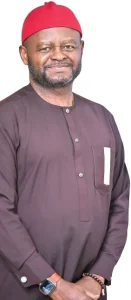
He also served as president of the Centre for Peace in Africa, a regional non-governmental organisation based in Nigeria.
He founded the Institute of Chartered Mediators and Conciliators and became its first president.
Ojielo’s interest in peacebuilding was influenced by his childhood experience of the Nigerian Civil War and encounters with people affected by violence in Sierra Leone.
He has recalled how meeting survivors of violence in Sierra Leone made him reconsider his work as a lawyer and inspired him to contribute more directly to helping communities recover from conflict.
His professional journey reflects a commitment to using law, mediation and international development to promote peaceful societies and strengthen institutions.