
Stakeholders and the Civil Society for the Eradication of Tuberculosis in Nigeria (TB Network) have urged the Federal Government to immediately release the $54 million earmarked for the procurement of tuberculosis drugs and diagnostics to avert stock-out.
They warned that a complete stock-out of TB drugs and commodities could lead to an epidemic of the condition in Nigeria.
In March 2026, the FG announced a $54 million commitment to secure TB medicines and prevent nationwide stock-outs.
“We are talking about, in the long term, spending $54 million. If you convert it to naira, then you will know the scale of the commitment.
“This is to ensure Nigeria does not experience any stock-out of TB medicines,” the Director of Public Health, Federal Ministry of Health and Social Welfare, Dr Charles Nzelu, said during a Pre-World TB Day press briefing in Abuja.
However, the fund was yet to be released despite the commitment.
With the country having the highest burden of TB in Africa, the stakeholders said a delay in the release of the fund and prompt procurement of drugs and essential commodities could see Nigeria leading TB burden globally.
While expressing concern over the looming stock-out of drugs amid rising drug-resistant tuberculosis, TB Network revealed that the country currently has no tuberculosis preventive treatment (TPT).
Healthwise reports that TPT is medication given to people who are at high risk of developing active tuberculosis.
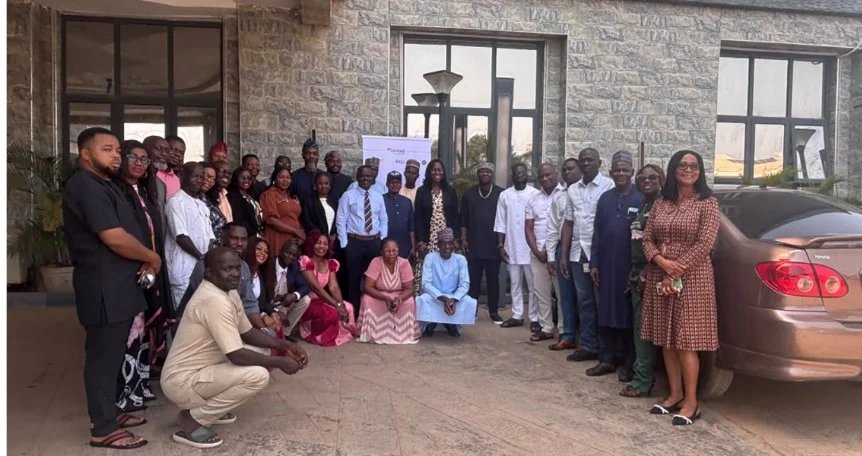
TB Network and stakeholders raised the alarm at a recent three-day training of journalists on drug-resistant tuberculosis coverage and reporting.
The training, attended by more than 20 media professionals from various platforms in 12 states, along with partners, was organised by the TB Network, under the Community-Driven Approach for Transformative Change to Combat Drug-Resistant Tuberculosis (COMBAT DR-TB) Project, to build the capacity of journalists to communicate effective and accurate information on drug-resistant tuberculosis to the public.
Speaking, the TB Network National Coordinator, Olayide Akanni, urged the FG and the Minister of Health and Social Welfare, Prof. Ali Pate, to intervene by promptly ensuring the release of $54m committed to secure tuberculosis medicines and prevent nationwide stock-outs.
According to her, many of the states’ facilities are experiencing drug stockouts.
“Some facilities have actually had to pause diagnosing new people because there are no drugs to give to them. This is a critical situation for us in Nigeria right now,” Akanni said.
With shrinking donor funds, the TB Network national coordinator lamented the delay in procurement of TB drugs despite Nigeria’s commitment of $54million for the procurement of TB drugs and diagnostics.
Failure to urgently address this, she said, the country risks an epidemic.
“The important thing is we don’t have drugs, and we risk an epidemic on our hands if the drug situation is not redressed urgently and if the Government of Nigeria does not release funding for TB,” she said.
She also warned that Nigeria could become the world capital of TB burden if total drug stock-out is not prevented.
“Because if we don’t treat people with TB, we are going to have a big problem on our hands. We already know that Nigeria is one of the countries bearing the highest burden of TB in Africa—we pray we do not get to the world,” she said
Akanni added, “And the other thing to note is that regarding TPT—the TB Preventive Treatment that we are talking about—there are stockouts in many of the facilities across the country. So even if you diagnose someone with TB and say, ‘let us place their close contacts on TPT’, there is nothing to give them.
“As we are putting the person who has TB at risk without giving them treatment, we are also putting their close contacts at risk because there is no TPT to give to them. This funding gap, we really need the government to act.”
TB is a communicable disease that affects the lungs and is caused by bacteria spread through the air when infected persons cough, sneeze, spit, or laugh boisterously, according to the World Health Organisation.
WHO noted that TB remains one of the world’s top infectious killer diseases, with more than 10 million annual infections and one million deaths.
Nigeria ranks first in TB burden in Africa and number six in the world.
Despite Nigeria accounting for the high burden of the disease, the country still has a 70 per cent funding gap in TB, with only six per cent of the National TB budget coming from domestic sources.
Although HIV, TB, and malaria programmes in Nigeria are largely donor-funded, the 2025 cuts to aid programmes by the United States Government have led to calls by stakeholders for increased domestic financing for health interventions.
For 2026, the Federal Government earmarked about N73.4bn for the procurement of TB drugs and other medical commodities to avert potential stock-outs nationwide.
In the same year, the government committed $346m in co-financing for HIV, tuberculosis, and malaria programmes, though the proportion allocated specifically to TB was not disclosed.
This is coming at a time when Nigeria is experiencing rising cases of drug-resistant tuberculosis, including multidrug-resistant and rifampicin-resistant strains.
Furthermore, the TB Network national coordinator stressed the need for FG and state governments to strengthen domestic funding for TB control programmes.
“We can see the funding climate is changing rapidly and international partners are saying, ‘own your response; carry your burden. We have helped you thus far. We really need to see ownership on the part of our government.
“Elections are coming, and we know what politicians are doing. So why can’t we, as a country and as a people who care about our citizens, commit to what we have pledged?” she said.
Corroborating Akanni, a health officer in TB management, who craves anonymity, said the available TB drugs may not last till December 2026.
“The drugs that we currently have cannot take us through this quarter of the year up to December. Let me give you an example: all the states have had a stockout of drugs for almost two months.
“They just brought drugs recently, but the quantity distributed will not even be enough for the states to clear the backlog of people diagnosed. If they give these drugs to new patients, there will be no drugs left,” he said.
Giving expert perspective, the Head of the Training Department, National Institute of Public Health and Infectious Diseases, Zaria, Kaduna State, Dr. Eunice Jiya-Chitumu, said TB drug stock-outs could disrupt treatment services, increase disease transmission and undermine gains already recorded.
She said drugs and diagnostic commodity stock-outs could weaken efforts to detect new infections, place patients on treatment and ensure that those already receiving care complete their prescribed regimens.
Jiya-Chitumu, who is a consultant pulmonologist, cautioned that patients who depend on uninterrupted access to TB medicines could be forced to interrupt their treatment if there is a stock-out.
According to her, treatment interruptions could increase the risk of drug-resistant tuberculosis, complicate patient management, and expose more people to TB.