
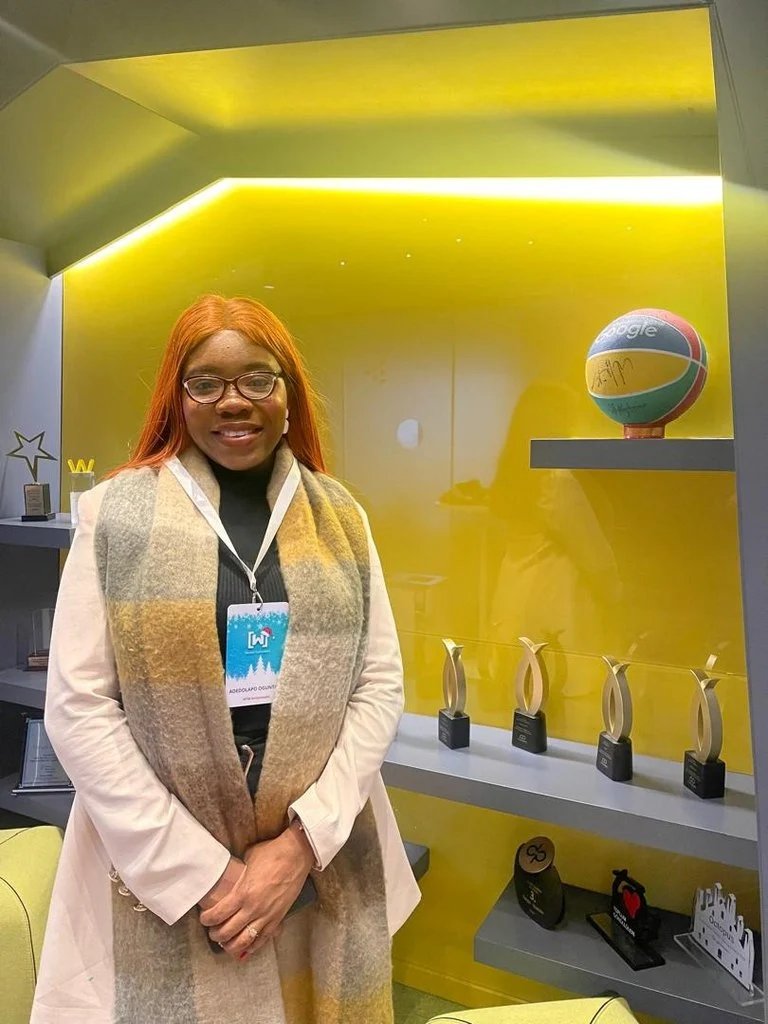
When Adedolapo Oguntayo-Williams arrived at a conference hosted by one of Nigeria’s premier banks in 2024, she was pushing her daughter in a stroller. There was no ramp. If a multi-billion-naira financial institution could overlook something as fundamental as a wheelchair pathway, what chance did persons with disabilities have inside Africa’s digital economy? She stopped waiting for corporate panels to figure it out. From childhood dreams of the cockpit and washing dishes in Cyprus on a state scholarship, to negotiating vendor contracts for Ruff ‘n’ Tumble and running global cybersecurity compliance remotely from Abule Egba, Lagos, Adedolapo’s career has never followed a straight line. Now, she is using that enterprise playbook to bootstrap LearnArk Inclusion Academy—a tuition-free tech training engine designed to move deaf, blind, and physically impaired talent from the margins into high-value tech roles. “Inclusion had to go beyond conversations and good intentions,” she tells TechCabal. “It had to translate into access, opportunities, and the ability for people to build independent lives.” In this edition of My Life in Tech, JOHN ADOYI charts Adedolapo Oguntayo-Williams’s journey from industrial engineering to building digital ramps for Africa’s most overlooked talent.
In 2024, when Adedolapo Oguntayo-Williams, an inclusion educator and technology advocate, arrived at a conference hosted by one of Lagos’s leading commercial banks, she was pushing her daughter in a stroller. There was no accessible pathway for them.
An industrial engineer by training, she had spent years in business analysis and product management, learning to scrutinise operational problems and understand whom they affect. The experience stayed with her. “If a leading financial institution could overlook something as fundamental as an accessible pathway, what would the situation be like in many other public spaces?” she remembers thinking.
The incident prompted her to examine physical and digital accessibility wherever she went. More often than not, she observed that persons with disabilities were largely overlooked. She began asking what she could do to change that.
“I knew I could not solve Nigeria’s wider accessibility challenges on my own, but I could contribute in an area I understood: education and technology,” she says.
Her answer was the LearnArk Inclusion Academy, a free technology training programme for persons with disabilities offered through her edtech platform, LearnArk. “For me, inclusion had to go beyond conversations and good intentions. It had to translate into access, opportunities, and the ability for people to build independent lives.”
It is the latest chapter in a career that began with a very different ambition.
From a childhood dream to Cyprus
Oguntayo-Williams once aspired to become a pilot, drawn to aviation and the prospect of seeing the world from a distinct vantage point. At the time, women were rarely seen in the cockpit, which made the career path even more compelling. “I wanted to be the different one. I wanted to go into a field where there were not a lot of women,” she says.
By her fifth year in secondary school, she and her mother had begun researching aviation colleges in Nigeria. They found one in Zaria, Kaduna State, in north-west Nigeria, but the tuition was well beyond what her family could afford. She pivoted towards petroleum engineering and applied to the University of Lagos, but was offered an alternative course instead.
“You know how the Nigerian university thing is, where you apply to study something and they offer you something else. Obviously, I wasn’t having it,” she says.
An alternative route emerged through her pastor’s wife, whose son had secured admission to a university in Cyprus. She shared the institution’s prospectus with Oguntayo-Williams’s mother; industrial engineering was the closest discipline to petroleum engineering on offer.
“As God would have it, I gained admission to Eastern Mediterranean University to study industrial engineering,” she says. In 2012, at the age of 16, she left Nigeria for Cyprus.
“My university experience was honestly amazing,” she says.
In 2013, she was awarded the Turkish Republic of Northern Cyprus (TRNC) State Scholarship, which included a monthly stipend. That same year, she enrolled in business administration as a second major, eventually graduating top of her class in her department.
University also afforded her the latitude to explore broader entrepreneurial pursuits. During her second year, Oguntayo-Williams founded Deroy Consults, organising entrepreneurship seminars to encourage undergraduates to look beyond traditional degrees and build viable enterprises.
“Looking back, I am particularly proud that I did not limit my university experience to writing examinations and graduating,” she says. “I genuinely took advantage of the opportunities around me.”
Studying abroad also transformed her outlook on education and equity. Engaging with peers from diverse backgrounds in an unfamiliar academic environment demonstrated how access to quality education can expand what individuals believe they can accomplish.
“Most importantly, it gave me the confidence to see myself as someone who could contribute beyond my immediate environment,” she says.
She began reflecting on young people in Nigeria who possessed the intellect and drive to excel, but lacked comparable access to global opportunities. Although she was not yet certain how to act on that realisation, the thought remained with her.
“I left university with a broader understanding of what was possible, and a strong conviction that education should not merely prepare you for employment; it should equip you to create opportunities, solve systemic problems, and make an impact.”
Finding her footing in the workplace
After graduating in 2016, Oguntayo-Williams moved to the United States, working as a paralegal secretary in Brooklyn, New York. By 2017, however, she had returned to Nigeria.
A friend establishing a management consulting practice hired her as its director of marketing on a salary of ₦50,000 a month (around $140 at the prevailing 2017 exchange rate). She remained there for nine months.
“I didn’t want to stay at home, and I didn’t want to be a broke babe. Imagine being exposed to a lot of money in Cyprus and America, then coming back with no money,” she says.
In 2018, she left and joined Ruff ‘n’ Tumble, a Nigerian children’s fashion and apparel brand, first as an executive assistant and later as a buyer. The company had vendors in Turkey, and its founder, Adenike Ogunlesi, was looking for someone who could speak Turkish.
Oguntayo-Williams says she had learned the language while studying in Cyprus, where she lived on the Turkish side of the island.
“While I was in school, I took jobs in cafes as a dishwasher and waitress. Interacting with local people helped me pick up the language quickly,” she says.
At Ruff ‘n’ Tumble, she worked directly with Ogunlesi, whose approach shaped how she approached business. She recalls how the founder reacted whenever she came to her office without a pen and notebook.
“Sometimes I would go to her office without a pen and a book, and she would shout at me. She would say, ‘Your brain is not to jot down notes; your brain is to think.’ That scared me. I made sure I always had a pen and a book with me,” she says.
Ogunlesi also taught her to read beyond the subjects she naturally enjoyed and introduced her to negotiation. Those lessons have remained useful throughout her career.
“The skills I learned while working with Mrs Ogunlesi have been instrumental in everything I do,” she says. “Whether I am hiring, doing business or working in my current role at ShortPoint.”
Moving into technology
In 2019, Oguntayo-Williams left Ruff ‘n’ Tumble to join AXA Mansard as a business transformation analyst. A contact at the insurance and asset management group informed her of its transformation programme, which targeted first-class graduates, and urged her to apply.
“He told me, ‘Girl, you are a first-class graduate. I think you are perfect for this job.’ I said, ‘Put me on.’ I sent my CV, attended the interview, and got the job,” she says.
At AXA, she worked on core internal restructuring, replacing legacy manual workflows with automated digital systems. She describes the remit as an intersection of business analysis, product management, and process optimisation.
The company invested heavily in professional development, and she complemented internal training by pursuing external technical certifications independently.
“Beyond the training they provided, I took more courses, earned certifications, and kept improving myself,” she says.
AXA provided her initial formal grounding in enterprise technology and delivered her first industry credential, clarifying the operational landscape across the digital economy.
In August 2020, Oguntayo-Williams left AXA and joined ShortPoint, a global software company that develops tools for building and customising corporate intranet websites, as an associate product manager. Her experience in business transformation, alongside the additional courses and certifications she had pursued, helped her secure the role, and she worked remotely from her mother’s home in Abule Egba, Lagos.
“I would never have thought that I could be in Lagos and be working for someone in another continent,” she says.
Within a year, she was promoted to product manager, directing software development cycles from conception to release. By 2023, she transitioned into cybersecurity and compliance, taking charge of the company’s governance and information security operations.
The pivot carried significant regulatory responsibilities, but her grounding in product design and systems architecture gave her the requisite technical foundation.
“Cybersecurity and compliance deepened my focus on what allows organisations to innovate responsibly: protecting information, managing risk, and building trust,” she explains.
In January 2026, she broadened her remit further by assuming responsibilities as human resources manager.
“My experience has really been amazing. I’ve learned a lot, and I’ve been able to excel working with colleagues from diverse countries and nationalities. My interpersonal and leadership capabilities have matured considerably,” she says.
Building LearnArk
The conceptual framework for LearnArk originated during Oguntayo-Williams’s undergraduate years in Cyprus. Experiencing how an international academic environment unlocked professional mobility made her consider the millions of young Africans unable to study abroad who nonetheless warranted high-calibre instruction.
Her initial model was an online portal where accredited universities could deliver subsidised or tuition-free courses to African students. She initiated discussions with Rutgers University, while Eastern Mediterranean University agreed to supply curriculum content. She hired a software engineer and deployed her personal savings to construct the architecture.
“Eventually, I had to pause the project because I could not sustain it financially,” she admits.
In 2023, while on maternity leave, she re-evaluated the concept. Years of informally mentoring aspiring technology professionals had revealed that the primary obstacle was not access to academic theory, but navigating the transition into formal employment.
“People were eager to learn, but finding structured learning opportunities, practical guidance, mentorship, and a clear pathway to employment was difficult,” she says.
That deficit defined LearnArk’s strategic pivot. Shifting away from an academic marketplace, she restructured the venture around practical, industry-aligned technical instruction.
“I wanted to address the gap between wanting to enter technology and knowing how to take practical steps towards a career,” she says. “People can find lots of information online, but they still struggle to understand which pathway fits them, what skills are required, and how to apply what they learn in a commercial environment.”
LearnArk now runs structured cohorts in product management, data analytics, cybersecurity, and emerging technologies, augmented by interview coaching and recruitment placement support.
“LearnArk has trained more than 1,000 learners, which is an important milestone, but I want us to deepen how we track outcomes: whether learners secure roles, apply their skills in the workplace, or advance within their respective disciplines,” she says.
Building an inclusive pathway into technology
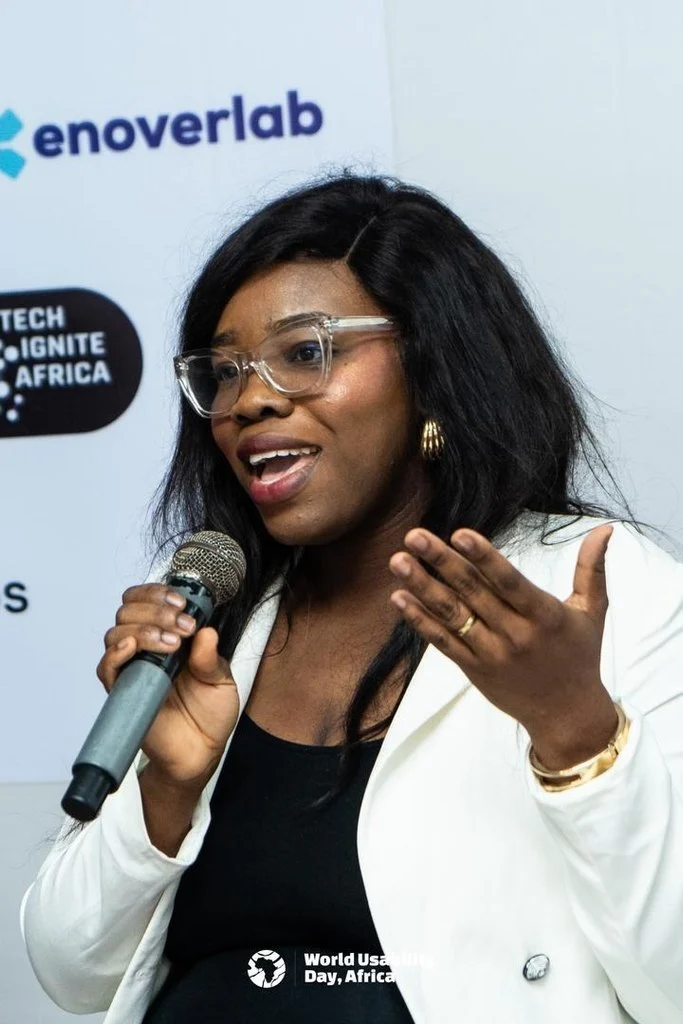
Central to this mandate is the LearnArk Inclusion Academy, through which Oguntayo-Williams delivers tuition-free virtual technology instruction to persons with disabilities.
“We designed the academy to make technology education genuinely accessible to individuals with physical disabilities, visual impairments, and hearing impairments,” she says.
Candidates register via the portal, specifying their preferred tracks and accessibility requirements. The operational team and mentors provide specialised support throughout the cohort, while the organisation works to scale up its closed-captioning capabilities and sign-language interpretation.
“I have been bootstrapping the academy from inception. There are real costs attached to providing learner support, upgrading accessibility tools, and expanding our intake,” she says. “We are open to strategic partnerships, institutional grants, and technical resources that will help us scale our reach without compromising our commitment to zero tuition fees.”
Her underlying objective remains straightforward.
“For me, the real measure of success is not simply the number of people we enrol, but whether the academy enables individuals who have historically faced structural barriers to acquire skills, secure viable opportunities, and participate meaningfully in the technology ecosystem,” she says.
Balancing work, family and purpose
For Oguntayo-Williams, one of the hardest lessons of building a career and a business while raising a family was learning that she could not do everything at once.
After experiencing burnout, she realised she could not keep relying on motivation or assume she had to do everything herself to prove her commitment. The experience changed how she approaches work. She now plans her week ahead, prioritises fewer tasks, delegates where possible and sets clearer boundaries.
“I no longer see being constantly busy as proof of impact,” she says. “I want to build things that create real value and can continue to grow without requiring me to sacrifice every other part of my life to keep them going.”
Over the next year, she wants to strengthen LearnArk’s learning pathways, build more industry partnerships and create better opportunities for learners to turn their training into employment and career progression. She also hopes to expand the Inclusion Academy, so more people with disabilities can access technology education, mentorship and opportunities in the digital economy.
Ultimately, Oguntayo-Williams wants to be remembered for more than the positions she held or organisations she built.
“I want to be remembered for the doors I helped open, the systems and policies I helped improve, and the people whose lives became different because I chose to make a contribution,” she says.