
The ocean does not recognise national borders. Neither does the waste travelling through our waterways. From Jamestown in Accra to Olusosun Landfill in Lagos, our relationship with waste reveals a shared West African crisis.
My understanding has developed through two photographic projects: Mourning Tide, developed in Jamestown and Bukom, Accra, and Guardian of Gaia, documenting waste miners at Olusosun Landfill. As a sociologist and documentary photographer, I investigate who benefits from consumption and who bears its consequences.
In Jamestown, I witnessed plastics, discarded clothing and other debris accumulating along the shoreline and entering the ocean through waterways and the Korle Lagoon. Fishermen and residents spoke about water quality, declining fish stocks and pressure on coastal livelihoods. Environmental degradation affects food security and economic survival.
Ghana’s second-hand clothing economy is deeply connected to international trade and the global fashion industry. Markets such as Kantamanto provide livelihoods for thousands and make clothing accessible. However, not every garment imported into the country finds a second owner. Some arrive damaged, unsellable or unsuitable for local demand, eventually becoming part of an already strained waste-management system.
To understand this, we must examine the political economy of global trade. Immanuel Wallerstein’s Core–Periphery Theory offers a useful framework. In this system, wealthier industrialised countries hold economic power, while peripheral countries are integrated through unequal trade, labour and resource relationships.
Applied to fashion, this framework reveals an uncomfortable relationship. Wealthier countries are major centres of consumption and commercial decision-making, while countries such as Ghana and Nigeria become destinations for second-hand clothing and other discarded materials. This trade supports local businesses and provides affordable clothing, but unsellable garments can leave local communities with the cost of disposal. When shipments contain substantial quantities of clothing with little or no resale value, second-hand trade can become a form of waste dumping.
The issue is not that all second-hand clothing is waste, or that these markets have no value. It is the imbalance of power: who controls the supply chain, who profits from consumption and who pays when products become unusable? We cannot keep exporting the consequences of overconsumption and describe the receiving countries as simply having a waste-management problem.
At Olusosun, I documented waste miners recovering materials from the city’s discarded resources. What society considers waste is an economic resource for these workers, who often work in hazardous conditions with little institutional protection. Our cities depend on economically vulnerable people to recover value from what they discard.
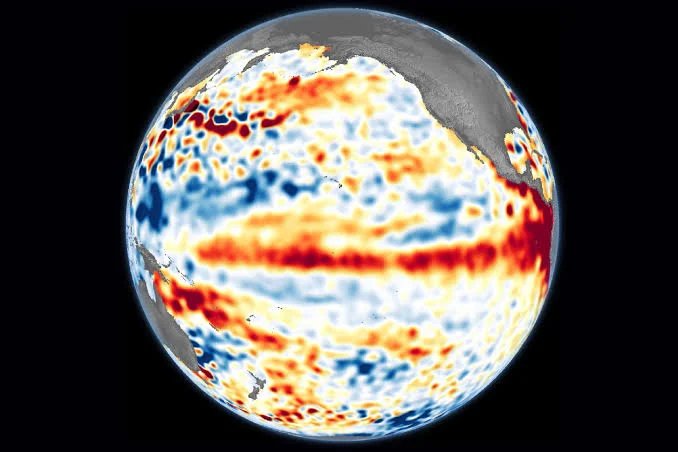
The developing El Niño phenomenon adds another layer of complexity. El Niño is the periodic warming of surface waters in the central and eastern tropical Pacific. It can alter rainfall and temperature patterns, although its effects across West Africa require regional assessment. El Niño does not cause plastic pollution or fast fashion, but climate pressures can compound existing vulnerabilities. A coastal community already facing polluted waterways, inadequate drainage and limited waste infrastructure has fewer resources to cope with additional pressure on water, food systems and livelihoods. Climate preparedness cannot be separated from waste management and economic inequality.
In Ghana, The Or Foundation works with people affected by the second-hand clothing trade through community initiatives, waste recovery, research and advocacy. In Nigeria, SustyVibes advances environmental education and community action, including the dignity and inclusion of waste pickers. As an Emerging Lens Fellow with Art Works Projects, I have seen how photography and storytelling can bring these realities into public debate. Such work cannot replace government responsibility or producer accountability.
I do not think solutions have to be either enormous or inaccessible. When I met Eva Meyer, a climate change lawyer in the Netherlands, she spoke about solutions beginning at different scales: individually, within groups and through wider policy. She shared a practical example from her own life. Rather than keeping clothes she rarely wears, she now rents them out at a lower cost so others can use them. It challenges the assumption that constant purchasing is the only way to access fashion. Clothing libraries, repair groups, swaps and resale can extend garment life.
But individual action cannot carry the burden alone. Governments in importing countries need stronger controls and transparent reporting on the volume and quality of second-hand textiles entering their markets, as well as enforcement against shipments that are effectively unusable waste.
Exporting countries and brands should share responsibility for collection, reuse and safe disposal. Extended producer responsibility can make companies help finance these systems.
There should also be economic consequences for producing disposable clothing. Rather than making all synthetic garments prohibitively expensive—which could punish low-income consumers and workers—governments can introduce fees reflecting the environmental cost of virgin synthetic fibres and hard-to-recycle products. These fees can reward durable design, repairability, recycled content and take-back programmes. Rules on product durability and waste exports would shift responsibility towards the companies profiting from these goods. Regional cooperation between Ghana and Nigeria is essential because the ocean and trade routes connecting our economies do not stop at national borders.
For me, Mourning Tide and Guardian of Gaia reveal different stages of the same cycle: one follows waste reaching the ocean; the other documents the labour involved in recovering value from what cities discard. Perhaps the most disturbing part is how ordinary we have allowed this arrangement to become. We purchase, consume, import, discard and move on. Someone else handles what we no longer want; someone lives beside it, breathes it or loses a livelihood because of it.
The waste we produce may be discarded, but its consequences are rarely disposed of. Until we question not only how we manage waste but also who produces it, who exports it and who profits from its circulation, we will continue treating the symptoms while protecting the structures that reproduce the crisis.
Lawal, a sociologist and documentary photographer and an Emerging Lens Fellow with Art Works Projects, writes via [email protected].