
Ten years ago, Guaranty Trust Bank Plc, one of Nigeria’s largest banks, launched *737#, a USSD banking service that helped redefine how Nigerians accessed financial services beyond the brick-and-mortar of traditional bank branches.
At the time, the promise was to make banking as simple as ABC’s and 123’s. “Well, in this case, GTBank has made it as simple as 737,” the bank said in its 2016 announcement.
A decade later, GTB is now betting on the same 737 brand, now in the form of a mobile app, to win over a new generation of Nigerians who increasingly favour fintechs for their faster transactions and ease of use.
This comes as the original *737# loses influence. Between June 2021 and June 2026, USSD transactions fell by 80.79%, from ₦2.15 trillion ($1.58 billion) to ₦412.85 billion ($302.85 million). Transaction values declined every year during the period, reflecting the gradual shift in how customers interact with their banks.
Half-Year Transaction Value (2021–2026)
A visual breakdown of USSD market volumes shrinking from trillions to billions.
HY ’21
HY ’22
HY ’23
HY ’24
HY ’25
HY ’26
Chart: TechCabal
For a generation of Nigerians, 737 was more than a banking service. Its catchy jingle became a familiar part of everyday life, helping GTBank build one of the most recognisable brands in Nigerian banking. But the banking habits that made the service popular are changing.
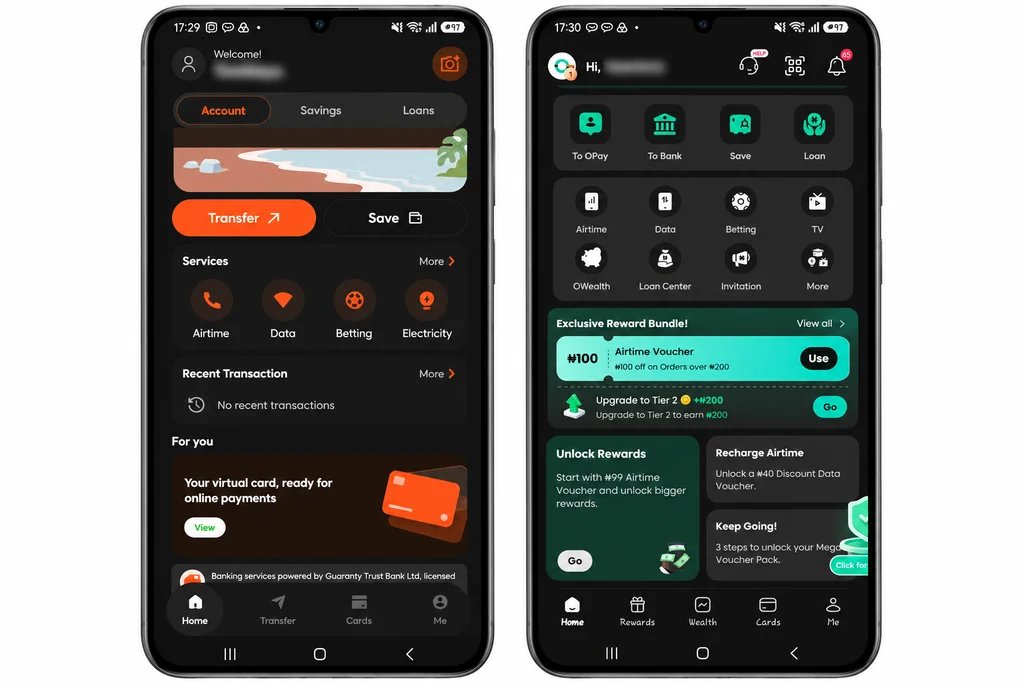
Rather than abandon the brand, GTB is giving it a second life. On November 11, Guaranty Trust Holding Company Plc (GTCO), through its banking subsidiary GTB, launched a new 737 mobile application that turns customers’ phone numbers into account numbers and combines payments, savings, lending, and virtual cards in a single interface. The product is designed to operate more like a standalone fintech platform than a conventional banking app.
GTCO described the launch as a response to younger customers who are increasingly mobile-driven, digitally connected, and accustomed to managing different aspects of their lives from their phones. But the move also reflects how traditional banks are trying to defend their position in a payments market where fintechs have built customer loyalty around convenience and transaction speed.
The 737 app joins GTCO’s other consumer-facing application, GTWorld, its established mobile banking platform. Running two consumer-facing apps suggests that the group is pursuing a multi-product digital strategy: retaining GTWorld for its existing banking customers while using 737 to attract customers who may be more comfortable with the simplified, payments-led experience offered by fintechs.
The new app also lets GTCO retain the equity of its iconic 737 brand as it attempts to revive some of the buzz that made it synonymous with everyday banking.
The Under-the-Hood Reality Matrix
Account Type
Phone Number
Friction Level
Low (Scan-to-pay)
Credit Rule
Strict: 6-mo Salary
Account Type
10-Digit NUBAN
Friction Level
Standard Banking
Credit Rule
Strict: 6-mo Salary
Account Type
Phone Number
Friction Level
Zero-friction
Credit Rule
Flexible: Txn Data
Data based on GTCO H1 2026 Earnings & App Framework
The death of *737#
USSD was one of the most important ways Nigerian banks brought financial services closer to customers. It allowed people to transfer money, buy airtime, and check account balances without an internet connection or a smartphone.
First Bank, Nigeria’s oldest lender, introduced its USSD banking service, *894#, in 2015, and by 2020, it said more than 9.5 million of its 20 million customers were using the channel.
But it was GTBank that popularised USSD banking with *737# in 2016. Through radio jingles, branded clothing and caps, its marketing strategy turned the code into a recognisable banking brand.
The conditions that made USSD attractive, however, are changing. The spread of smartphones, relatively cheaper mobile data packages and the growing popularity of fintech applications have given customers more ways to access financial services without dialling a banking code.
Nigeria’s 2G connections, which typically indicate the prevalence of feature phones on a network, fell from 60.85% of total mobile connections in July 2023 to 36.42% in September 2026. Meanwhile, 4G connections, which indicate smartphone usage, rose from 24.16% to 54.37% over the same period.
USSD has also become a more expensive and sometimes frustrating channel. Failed sessions, network interruptions, and transaction costs have weakened some of its convenience advantage. The channel has also become a source of conflict between commercial banks and telecom operators, which provide the underlying infrastructure, particularly over its billing structure.
“USSD is a clumsy technology. It’s not state-of-the-art…,” Segun Agbaje, the group chief executive officer of GTCO, said in 2023. “The whole fight about USSD has been a fantastic distraction by the telcos.”
As *737# usage declined, however, GTCO’s mobile app channel grew. Transaction value through this channel increased from ₦11 trillion ($8.07 billion) in H1 2021 to ₦26.70 trillion ($19.59 billion) in H1 2026.
Why GTCO has another app
GTCO already has a customer-facing app, GTWorld, which crossed three million active users in October 2025 and was growing at a month-on-month rate of 12%. In H1 2026, it processed 337.4 million transactions, up 15.82% year-on-year.
GTWorld has become an important bridge between GTCO’s banking business and its broader payments ambitions, but 737 takes a slightly different approach.
When GTBank launched *737#, it targeted customers who wanted to avoid banking queues and access financial services from their phones. Many of these early adopters were university undergraduates and younger Nigerians who were becoming more comfortable with digital banking.
Today, GTCO is pursuing a similar customer base, but the competitive landscape has changed. Those customers have increasingly turned to fintechs, which have popularised phone-number-based account numbers and built their appeal around a focused experience: making payments, moving money and completing everyday financial transactions with as little friction as possible.
The new 737 app borrows from that approach, turning a customer’s phone number into an account number and bringing payments, savings, lending, and virtual cards into one interface.
The phone-number-as-account-number feature reduces the friction associated with sharing and remembering bank account numbers, while giving the product a familiar identity that customers can use in everyday transactions.
The app also adopts some of the features that fintechs have made popular, including facial verification, which companies such as OPay have helped mainstream. But one of its more interesting additions is betting.
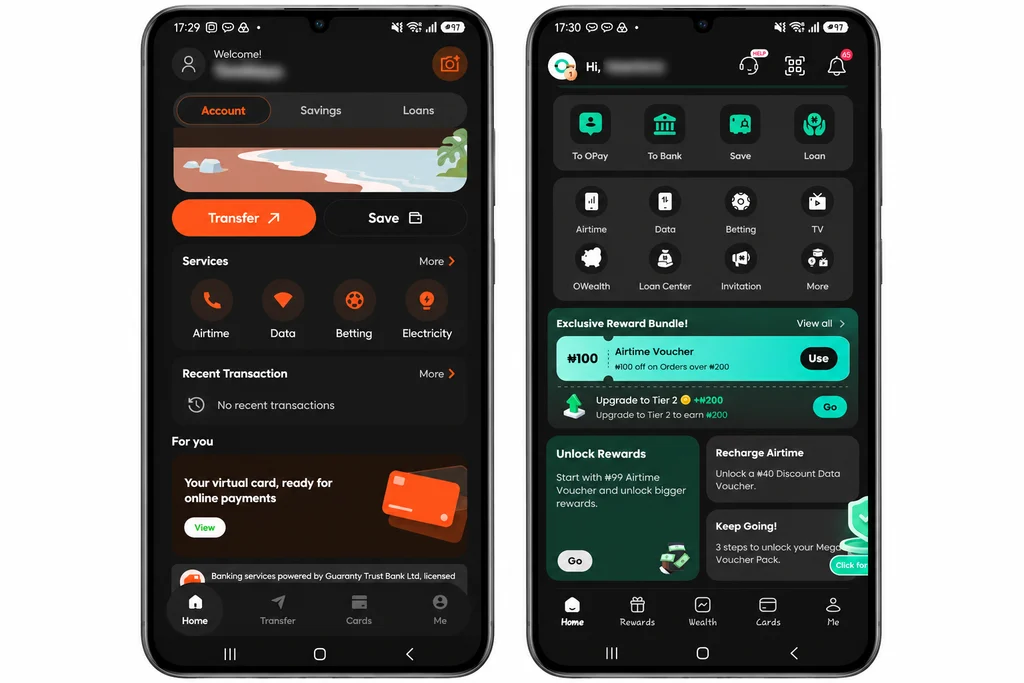
Nigeria’s betting market, estimated at approximately $2 billion in 2023, represents a sizeable opportunity for platforms seeking to attract younger, digitally active customers. Fintechs have recognised this by integrating betting services into their apps, not necessarily as operators themselves but as gateways through which customers can fund betting accounts while continuing to use the same platforms for payments and transfers.
For a traditional commercial bank, incorporating betting into its consumer-facing products may be a more complicated decision because of its broader positioning and internal considerations. 737 gives GTCO room to experiment with features that might not sit as comfortably within its established banking app.
The feature is also a part of the broader goal among fintechs to turn their applications into everyday destinations where customers can access multiple services without switching platforms.
The race for everyday payments
Commercial banks in Nigeria control much of the country’s deposit base, but fintechs have built a significant presence in everyday payments and merchant transactions. In 2025, Nigeria processed more than ₦1.2 quadrillion ($880.51 billion) in electronic transactions. Fintech giants Moniepoint and OPay accounted for a significant share of this activity, processing a combined $644.85 billion.
In 2020, Agbaje described OPay’s potential as scary while speaking about how banks could lose a significant portion of their revenue to emerging startups.
“Those models are the reason why I’m very encouraged that Guaranty Trust Bank going into the payment space will do very well, because we will pilot at scale and we will be very aggressive,” he said.
GTCO subsequently launched Habari Pay Ltd in 2022, its payments business, which has developed into a payments infrastructure business spanning switching and processing. Through GTWorld and Pay-with-Transfer, the group is processing increasingly large volumes of customer transactions. But its consumer-facing products still have to contend with fintechs that have built extensive distribution networks and captured a significant share of everyday payments.
Companies such as OPay have built their businesses around frequent payments, transfers, and other everyday financial services. Their appeal is partly rooted in the convenience of completing transactions without navigating the more traditional structures of banking.
The 737 app wants to close some of this gap by embedding itself in everyday transactions. Its scan-to-pay feature, for instance, is designed to make payments faster by eliminating the need to enter account details manually.
GTCO has already seen some success in this direction through its core banking app, GTWorld. Its Pay-with-Transfer feature recorded a 1,587.39% increase in transaction volume between H1 2025 and H1 2026.
But payment convenience alone may not be enough to win customers who already have established relationships with fintech applications. Lending could be another important battleground.
Commercial banks have traditionally been more cautious about unsecured retail lending, leaving room for fintechs to build credit businesses around transaction data and alternative credit assessment models. In H1 2026, OPay disbursed $927.6 million in loans in Nigeria, while GTCO’s retail lending stood at ₦381.27 billion ($279.68 million) over the same period.
OPay uses transaction data to assess borrowers who may lack conventional credit records. GTCO, like many traditional banks, relies more heavily on established indicators of creditworthiness, including regular income flows and account history.
On the 737 app, eligible customers can access its Quick Credit service, which is typically tied to salary or income accounts, with eligibility requiring at least six months of account ownership. The app also offers airtime and data loans.
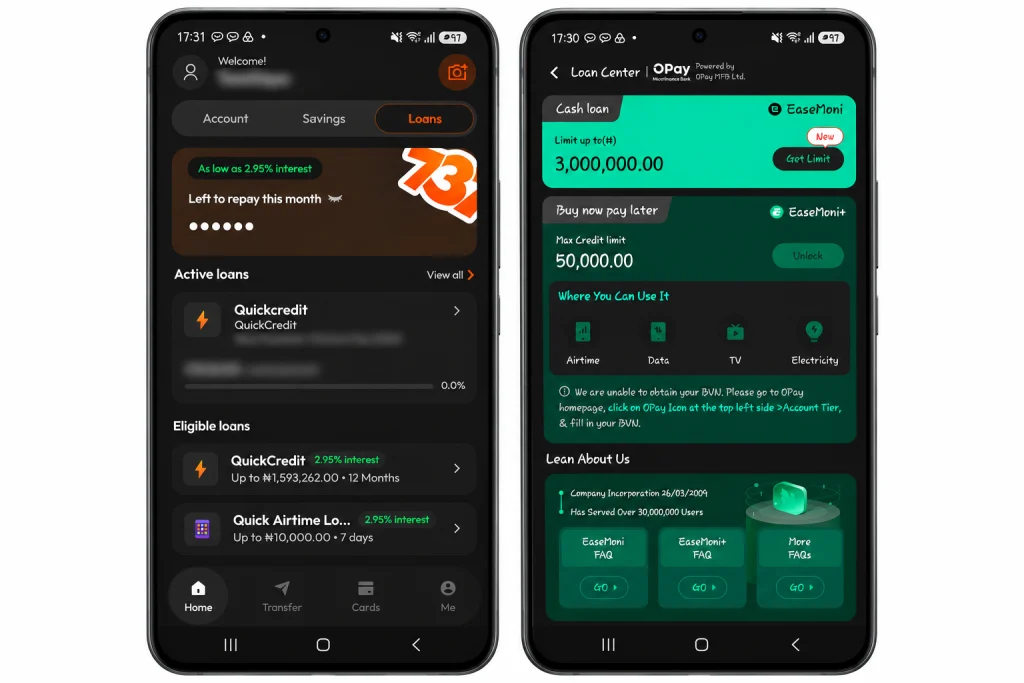
Although its 2.95% interest rate could make the product attractive, its eligibility requirements may limit its appeal among the younger and more financially diverse customer base GTCO hopes to attract.
Fintechs have built lending products around customers’ transaction behaviour, while traditional banks still depend heavily on established banking relationships and documented income. If 737 is to compete for the same customers, GTCO may need to rethink how accessible its credit products are.
GTCO is not starting from zero. The 737 brand was an early disruptor in Nigerian banking in the mid-2010s. GTCO must now prove that it can disrupt the market a second time.