
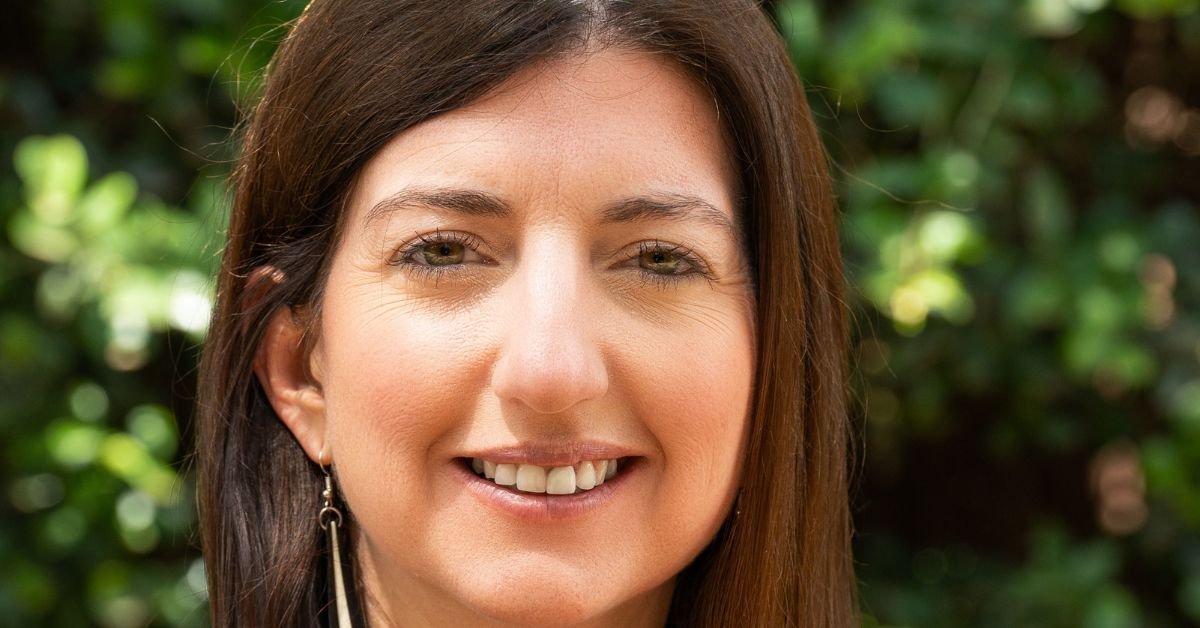
Rosanne Whalley has been investing in Africa for 17 years. In that time, she has done early-stage equity, growth-stage equity, debt, fund investments, and mezzanine structures across several African countries. She has seen what works and what does not.
She believes that the financial performance of Africa’s investment industry has been mixed, and most investors are only now starting to reassess how capital should be allocated on the continent. Whalley thinks debt funding is the best option for investors and founders.
Whalley runs AHL Venture Partners, a Nairobi-based impact-focused venture capital firm founded in 2007 by a high-net-worth European family that wanted to support African entrepreneurs. For over a decade, AHL did a bit of everything, issuing equity cheques, fund commitments, and debt deals while building networks and learning the hard way what the continent rewards and what it punishes.
Around 2020, the family behind AHL gave Whalley and her team a rare gift in African institutional investing: a blank canvas. No limited partner mandates. No sector restrictions. They gave her just one question: What can make money and have a durable impact?
The answer they arrived at was private credit. Debt recycles faster than equity in African markets, the returns are more predictable, and the liquidity profile lets you fund more businesses over time, Whalley said. AHL cleaned up its legacy equity portfolio and reoriented around lending to scaling businesses with strong cash flows and management teams that do not go quiet when things get hard.
The firm has now invested in over 35 businesses and is raising a dedicated debt fund to scale the strategy. But Whalley’s read on the broader market is sharp. She thinks impact investing has underdelivered financially, that development finance institutions treat private credit managers more as competition than partners, and that loading early-stage founders with sustainability and gender requirements before they have found product-market fit does more harm than good.
In our conversation, Whalley and Kerry Nasidai, AHL’s investment manager, walk through why they abandoned equity for debt, how they price currency risk when lending in dollars in Africa, what red flags make Whalley walk away from a founder, and where she thinks African private credit is heading.
This interview has been edited for length and clarity.
AHL moved from equity-type investments to debt. Why did that transition happen?
Kerry Nasidai: We’re in a unique position in that we have quite a long history. We were founded back in 2007 by a high-net-worth European family who had done some work on the continent and were thinking about how they could support the entrepreneurial ecosystem in Africa.
At that initial stage, it was very much about supporting the ecosystem from different angles. That meant doing some very early-stage equity investments, but also debt investments, mezzanine-type products, and even fund investments. We did that for years, building our networks and expertise with each new deal.
Then, around 2020, there was an internal reframing of how we make all the impact we are creating sustainable. That ended up looking like: can we shift our focus more toward debt investments?
There were a couple of reasons. Debt is more liquid and still very important to the market, but you can also be more prudent in how you deploy capital. The liquidity profile is quite different, and the returns profile is also quite different from equity in the African market.
From 2020, Rosanne took over with this new strategy, which was primarily increasing our debt investments but also helping to clean up our equity and fund portfolio. The aim was to create a more sustainable structure for AHL because with more sustainability, more money comes back in, and we are able to support more businesses across the continent.
Now we are at a very interesting stage where we are looking to set up a separate fund, building on the expertise we have developed since 2007 and the strong track record we have shown on debt. There has been more interest from the initial family that set up the foundation capital, but also from other investors we have interacted with. We are now in the process of beginning to close another fund, focused purely on debt.
Rosanne Whalley: I have had the opportunity of investing across the region for the last 17 years, across everything from early-stage and growth-stage equity, debt, and fund investments.
We had a very unique opportunity in 2019 and 2020, where we did not have a top-down strategy or mandate. If you think about it, most funds are dictated by their source of capital. LP capital tends to drive behaviour and strategy, especially in Africa, where a lot of capital is still development finance institution (DFI) and impact-driven.
In our case, the family behind AHL essentially said: you as a team, work out what can make money and have a durable impact. That forces you to step out of “this is what I need to do” and instead think about what works, based on everything you have seen and where the market actually is.
Because we had experience across fund investments, equity, and debt, and we were seeing how each was performing, we could assess what truly works for entrepreneurs, investors, and capital allocators in the region. That’s how we landed on the private credit strategy.
Even within private credit, we’re not a typical lender. We want to partner with strong teams building defensible business models at scale and then finance them over a long-term journey. Over that journey, they will need different types of capital, like senior secured working capital, mezzanine financing, or bridge funding, at different points.
What’s been a privilege at AHL is that we’ve been able to build this strategy bottom-up. That’s often not the case. Usually, strategies are dictated top-down. I think that’s been a key part of our ability to pivot and execute in a way that is actually working and now scaling.
You’ve been investing in Africa for two decades. What’s the biggest structural shift you’ve seen in how capital moves in Africa?
Rosanne Whalley: I think we’re going through a new era, particularly coming out of 2021 and 2022.
Impact investing as a concept is less prominent, and even terms like “social enterprise” are less central. At the same time, venture capital has become a more loaded term.
If you look at what has actually worked over the last two decades, it has largely been large-scale infrastructure funds (classic project finance and IPP-type projects), and to a lesser extent, traditional private equity with controlling stakes. Everything in between, the verdict is still quite uncertain.
There was a lot of optimism about Africa being a new frontier, with demographic tailwinds and strong growth potential. A lot of capital flowed in, often with an impact mindset or by applying models from the global north. But the financial performance of the industry has generally been mixed.
Now people are starting to reassess how capital is allocated. There is more realism, but I do not think that shift has fully happened among international allocators.
There is still a tendency to prioritise impact as the primary objective. At AHL, we believe impact will come if you build a great business. If you overload early-stage teams with excessive requirements around ESG, gender, and impact, it can actually be counterproductive because it distracts from building strong businesses.
At the same time, we are seeing a clear rise in debt and hybrid instruments. Many investors who were previously focused on equity are now shifting toward debt because there have been limited returns.
What is the value proposition of debt investing in African markets for investors?
Rosanne Whalley: We are really focused on mobilising private capital from ultra-high-net-worth family offices and foundations.
These investors are often thinking about generational wealth. If you take that perspective, it’s hard to ignore Africa as an opportunity over a 5, 10, or even 50-year horizon. The question is how to allocate to the region.
What often happens is that investors make early-stage equity investments based on relationships, or they default to philanthropy. Early-stage equity often has a low probability of generating returns within a reasonable timeframe, and philanthropy, while important, does not scale capital into the market.
Debt offers a more structured entry point. It allows investors to get exposure, generate returns, and learn about the market. At AHL, we see ourselves as a bridge. We can help investors navigate the ecosystem, introduce them to other players, and build confidence over time.
What types of businesses or business models are actually suited for debt financing in Africa? And where do founders sometimes get this wrong?
Rosanne Whalley: There is a massive shortage of debt capital, but not all businesses can absorb it.
Because we raise dollar-based capital, there is a minimum cost of capital that we have to achieve. That means we need to find businesses that can afford around 14%, and once you factor in hedging, it can be closer to 20%. That naturally limits the type of businesses we can support. We tend to look for businesses with high margins or fast working capital cycles.
We also focus heavily on the quality of the management team and the shareholder base. Businesses in Africa face shocks, and growth is rarely linear. You need resilience.
As lenders, we do not have the same upside as equity investors, so we have to be very focused on downside protection.
There’s a big currency risk in Africa, especially around devaluation. When you’re giving someone debt priced in USD and their local currency depreciates, how do you think about that risk? How do you structure around it?
Rosanne Whalley: It’s a major risk and something we think about very deeply in our structuring.
The easiest solution is to find companies that have USD-based revenues. There are businesses that either export commodities or products, or where pricing is effectively pegged to the dollar. Even if they’re selling in local currency, the pricing mechanism is linked to global prices.
If there are no USD revenues, then we consider a hedge. We’ve used a range of approaches like back-to-back structures, rolling forward contracts, and cross-currency swaps. But the business needs to be able to afford the cost of that hedge.
The third approach is to take an unhedged position. But we don’t do that based on trying to predict currency movements. That’s not our business. Where we might go unhedged is where we believe the currency mismatch is not large enough to create material financial strain.
We look at the balance sheet. If a company has $20 million of assets and $20 million of liabilities, we don’t want a mismatch between the currencies of more than about 15%. In some cases, especially with larger businesses, if most of their borrowing is already in local currency, we might be comfortable providing a smaller USD tranche, for example, in a mezzanine position, because the overall currency exposure is manageable.
Ultimately, it comes down to whether the business has enough cushion to absorb a currency shock. It may require some restructuring, but it should not completely derail the company.
How do you think about collateral and security, especially when dealing with tech startups or businesses that are typically quite light on assets?
Rosanne Whalley: I usually go into deals assuming there will be zero recoverability if the asset goes to zero.
Assuming that you can recover a substantial amount of capital through security is quite risky, especially in this market. Even if you have receivables, if the market gets wind that a fintech is in distress, it’s completely rational for customers to stop paying. We have seen that dynamic play out.
Security is important. It creates discipline, gives you some level of control, and acts as a backstop. But I would not be comfortable lending just because I have security.
That’s really one of the nuances of private credit in the African market. If you go in thinking, “I’m lending because I have security,” you are likely going to take losses.
Fundamentally, you are lending against cash flows, the quality of the team, and the strength of the business model. You need to believe the team can execute and scale and that the business will be able to raise additional capital.
In many of these businesses, especially early-stage ones, they’re growing quickly and don’t yet have free cash flow to service debt. So repayment often comes through refinancing new equity or new debt coming in. That’s very different from traditional bank lending, where you are lending against steady-state cash flows.
We are financing businesses that are scaling, often with intangible or difficult-to-recover assets. So ultimately, what we are underwriting is the team, their ability to execute, and their ability to continue raising capital.
What are some of the red flags you see in founders where you immediately think this is not someone AHL would back?
Rosanne Whalley: The quality of the team is critical. For us, a sole founder is usually a push. Building a business is such a hard and lonely job, so we typically prefer to see a broader team, whether that’s co-founders or a strong executive bench. What we’re looking for is depth.
In terms of the profile, we look at both character and competence.
On the character side, we’re looking for people who are open and communicative. Founders who will pick up the phone when things are not going to plan, rather than trying to hide issues. At this point, we’ve seen enough to know that challenges are part of the journey, so what matters is being in the conversation early.
We also look for a mindset that combines conviction with flexibility. Founders need to believe strongly in what they’re building, but also recognise that they do not have all the answers and will need to evolve. What gets you from zero to one is not what gets you from one to ten or ten to one hundred. At each stage, the management team needs to grow and adapt.
Another key factor is having an institutional mindset. We want to see teams building systems and processes, not just relying on individuals. You can have a great product and a visionary founder, but without structure, it’s very hard to scale or manage risk effectively.
On the shareholder side, we are cautious about very fragmented cap tables. We want to see a few committed investors with real skin in the game who are willing to support the business over a long-term journey.
Then there are the financial fundamentals: strong gross margins, reasonable working capital cycles, and a balance sheet that is not overly stretched. And importantly, we think about the ability of the business to scale and require follow-on capital.
One thing I have increasingly come to believe is that you do not need overly complex or “rocket science” business models in Africa. Some of the best businesses are actually quite straightforward. What matters is having a strong team that can execute consistently and with focus.
If we hear too much about disruption, new products, and expanding in too many directions at once, that can be a red flag from a lending perspective. That kind of narrative is often more suited to equity investors than lenders. For us, the growth story needs to be grounded in realistic timelines, a clear strategy, and disciplined execution.
If you had to predict where African private debt is going to be in the next five years—deal sizes, sectors, how transactions are structured—what does that picture look like?
Rosanne Whalley: I think there’s going to be 10x the number of managers out there.
There’s going to be a lot of really exciting earlier-stage debt financing that’s using a lot of technology. I am already beginning to see a proliferation of smaller funds around $5 million and $10 million, trying to do ticket sizes of $50,000, $100,000, and $200,000. For a long time, that has not been possible because of the lack of technology. But increasingly, with AI and particularly the growth of the fintech sector, we are seeing more of these managers popping up. That’s quite exciting.
I also think the DFIs need to think more about their role in this segment. DFIs are still perceiving a lot of private credit players more as competition, rather than thinking about their role as anchoring these funds. I think there is space for everyone and, critically, a need for everyone.
DFIs are also still working out how to allocate to private credit funds. Not many of them have dedicated teams focused on this. Instead, it often gets split across different sector teams—financial institutions or climate. I think we’re going to see a lot of ancillary infrastructure building up around private credit strategies, which right now is not fully there.
As more capital is deployed, there will inevitably be more restructurings and more need for specialised service providers—firms that can support collections on receivables and other parts of the value chain.
If you look at the South African debt market, securitised structures and off-balance sheet SPVs are much more established. The legal frameworks are in place, and there are many service providers that support those structures. That level of market maturity outside of South Africa hasn’t really developed yet.
I hope that as more capital flows into receivable-backed businesses, the supporting infrastructure will develop, which will help de-risk the market and ultimately bring down the cost of capital.
The final thing I would say is that I hope that in the next five to ten years, this becomes an asset class that pension funds start allocating to. In my opinion, it’s one of the most obvious entry points for pension funds. Trustee appointments are usually on a five-year cycle, and private credit in Africa is currently outperforming private equity and venture in many cases. It’s a strong starting point.
If we start to see more pension funds and local institutional capital coming into the market, we’ll also see more local currency funds coming online. The Rwanda pension fund, for example, recently put out a tender and appointed a fund manager to run a credit fund on its behalf. That’s really exciting. I hope that we’ll see much more local currency capital coming in, which will allow managers like AHL to build local currency funds.