
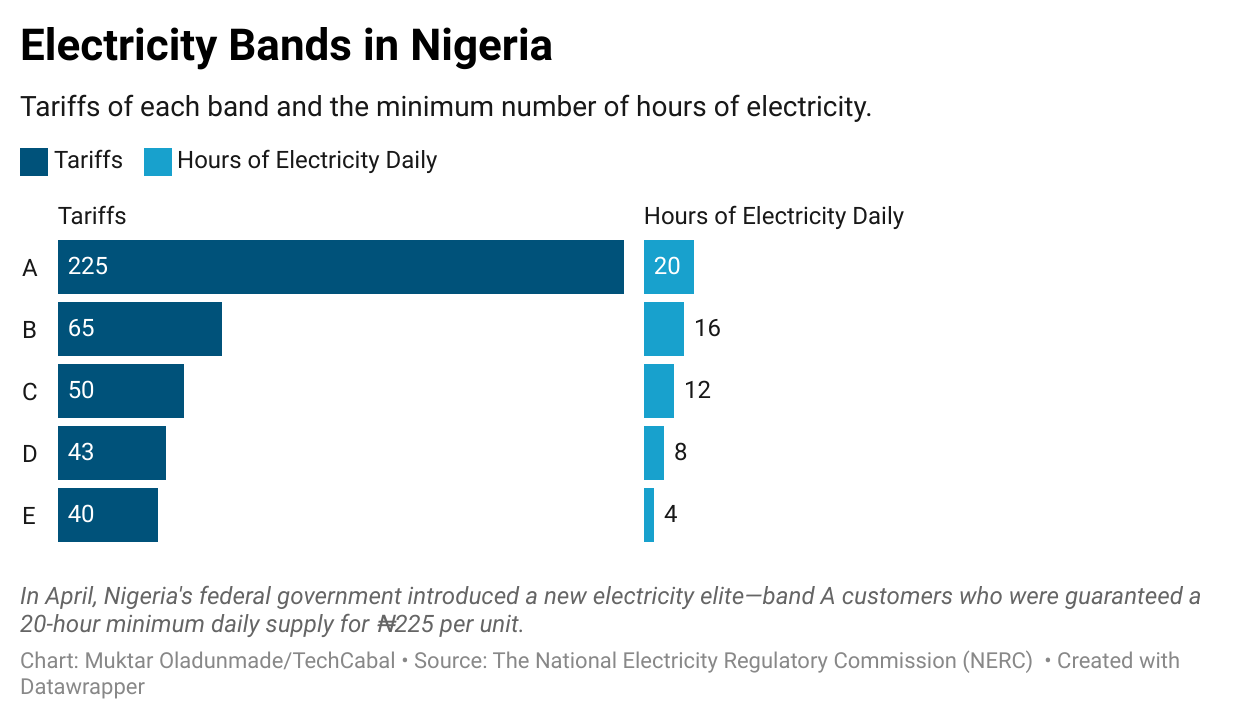
In Akiode, a community in Ojodu, Lagos, residents have been grappling with the challenges of increased electricity tariffs. The introduction of Band A, offering 20 hours of daily electricity at a higher price, has strained the finances of many residents who previously relied on shared contributions for electricity.
Before Band A, residents could pool money together for a month’s worth of electricity, but now they find themselves recharging daily or weekly, spending significant amounts that were once allocated for basic necessities like food. The tariff hike was part of the government’s efforts to address the substantial electricity subsidy and boost revenues for electricity distribution companies.
For low-income communities like Akiode, being classified under Band A has not been based on their financial capability but rather on technical aspects related to service quality standards. Many residents have voiced their struggles with affording daily electricity payments, impacting their ability to sustain their businesses and households.
While some residents have adapted by installing separate meters or investing in energy-efficient appliances to reduce costs, others face challenges meeting the daily electricity expenses. The situation has led to conflicts among neighbors and irregular payment arrangements to cope with the increased financial burden.
The community has seen a shift in reliance from generators to the grid due to soaring fuel prices, making alternative power sources like solar panels unaffordable for many. Despite the mixed feelings towards Band A, some residents acknowledge the importance of reliable electricity but advocate for a reduced tariff to alleviate the financial strain on households.
As residents navigate the new reality of higher electricity costs and diminished quality of life, there is a sense of resilience and adaptation to the challenging circumstances. Despite the hardships faced, many residents remain hopeful for better solutions to address the impact of the tariff hike on their daily lives.