
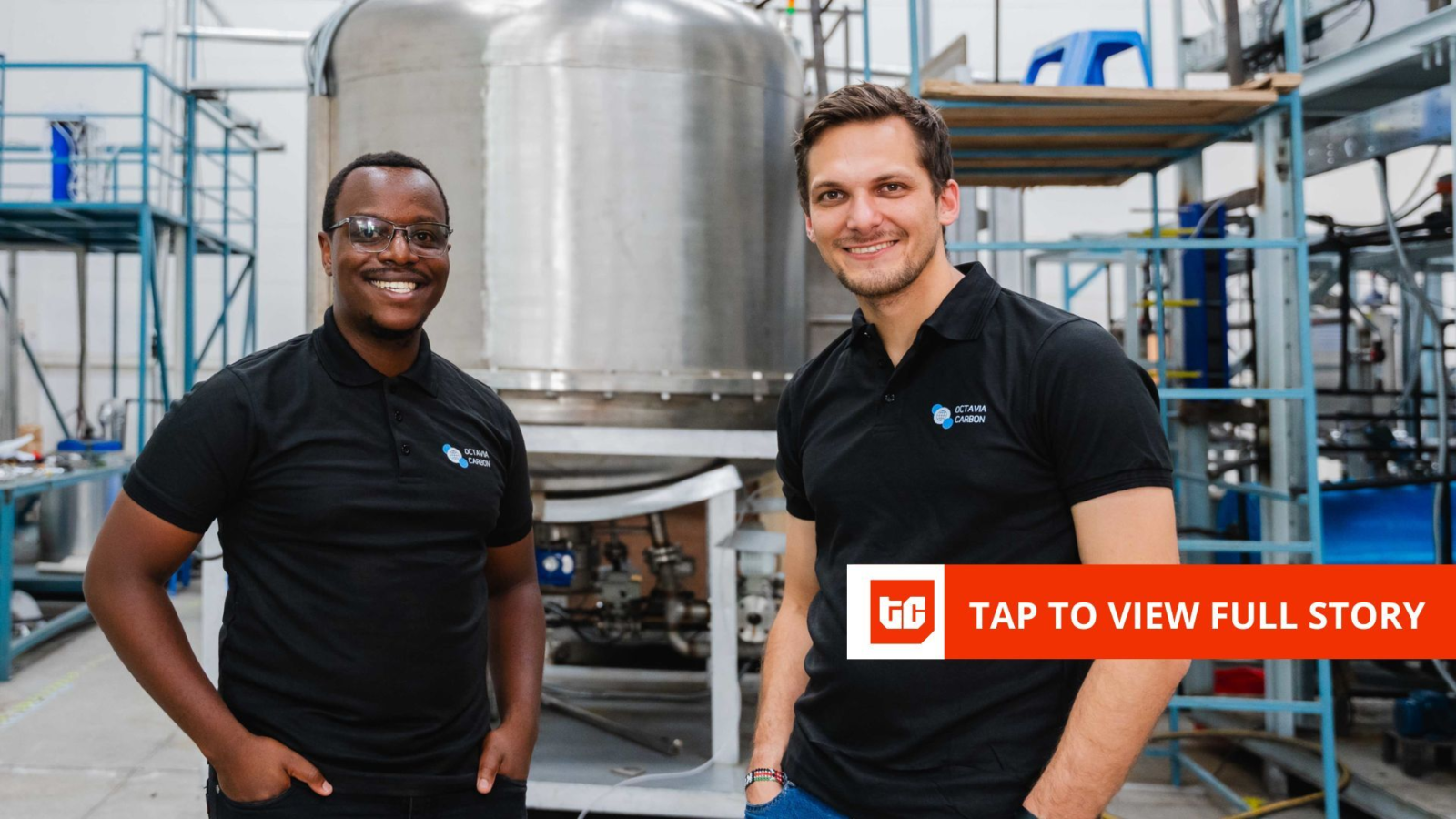
A startup based in Kenya, Octavia Carbon, has recently secured a $5 million seed round to establish its Direct Air Capture (DAC) storage plant.
DAC technology plays a vital role in removing carbon dioxide from the atmosphere by employing a process that filters out the CO2 and stores it underground. This is crucial as excess CO2 in the atmosphere can lead to various environmental issues such as ozone layer depletion and increased UV radiation.
Founded in 2022 by Martin Freimüller and Duncan Kariuki, Octavia Carbon specializes in designing, constructing, and operating machines that capture CO2 from the atmosphere, storing it underground to prevent its release back into the air.
In Kenya, the captured CO2 is transformed into solid rock by liquefying it and injecting it into the porous basalt of the Rift Valley.
The initial phase of Octavia’s plant is set to launch this year following the funding injection. The funding round was led by Lateral Frontier and E4E Africa, with additional contributions from Catalyst Fund, Launch Africa, Fondation Botnar, and Renew Capital.
With plans to complete the full cycle of deploying CO2 capture and geological storage in the field, the Co-founder and CEO of Octavia, Martin Freimüller, expressed optimism about the company’s progress.
Octavia Carbon is part of a group of 18 global direct air capture plants, including companies like Climeworks and Carbon Engineering, that focus on capturing CO2 from the atmosphere using DAC technology to support the UN’s climate goals.
One of the key differentiators for Octavia Carbon is its utilization of Kenya’s abundant geothermal energy, particularly waste heat, to reduce DAC costs significantly. The company states that 80% of its electricity needs are met through geothermal energy waste.
Octavia Carbon’s revenue model primarily revolves around selling carbon credits to organizations or individuals seeking to offset their carbon emissions. The company has already pre-sold 2,000 tons of carbon dioxide, indicating potential revenue figures of over $1 million.
The goal for Octavia Carbon is to lower the cost of CO2 extraction to around $100 per ton, compared to the current range of $680 to $820. By enhancing its efficiency, the company aims to increase its annual CO2 capture to 1,000 tons.
Freimüller emphasized the company’s ambitions to expand its carbon removal efforts significantly beyond its initial capacity, highlighting plans to become an Original Equipment Manufacturer (OEM) for DAC technology.