
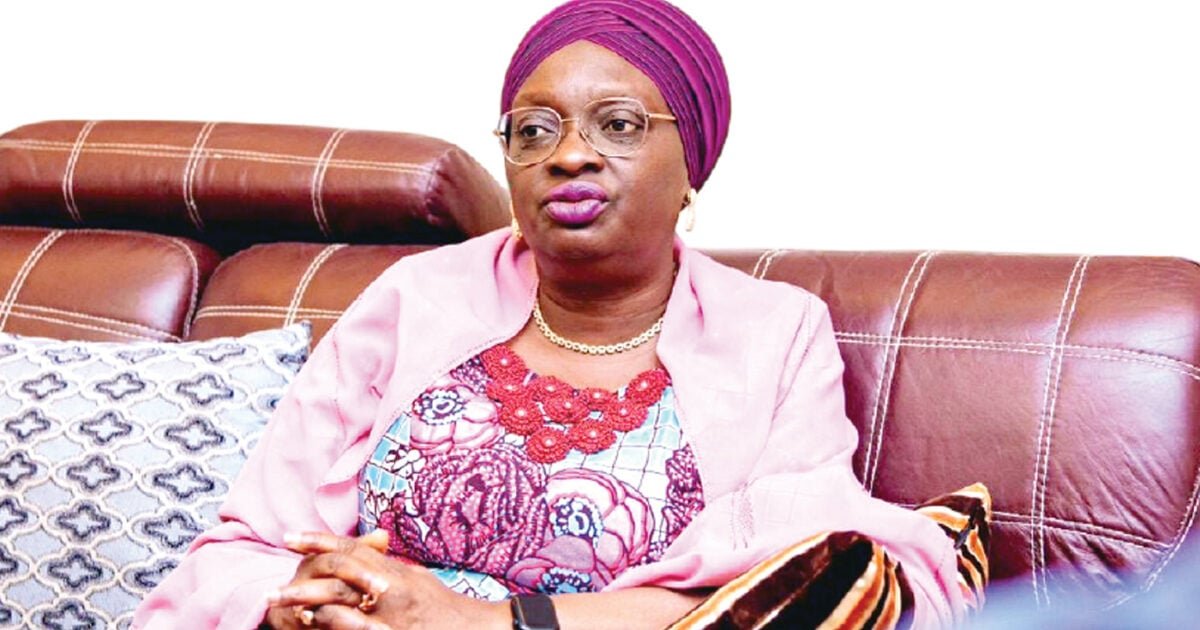
The Deputy Governor of Ogun State, Noimot Salako-Oyedele, who turned 60 recently, speaks with BANKOLE TAIWO about governance, lifestyle and other issues
At 60, you still look radiant. How would you describe the journey so far?
It has truly been a journey of grace. That is the simplest and most accurate summary of my life and times over the past 60 years. I was born on Saturday, January 8, 1966, at the University College Hospital, Ibadan, to Dr Lateef Salako and Mrs Rahmat Salako. I am the first child, with three other siblings. For my first few years, I lived abroad with my parents before we eventually returned to Nigeria.
I come from a close-knit family. My father was a medical doctor, and ours was a very academic household; reasonably blessed and intellectually stimulating.
I attended the University of Ibadan Staff School, and later Queen’s School, Ibadan, as well as the International School, Ibadan. I then proceeded to the University of Lagos, where I studied Civil Engineering. After my youth service with the Lagos State Water Corporation, I went to the United Kingdom for a Master’s degree in Public Health Engineering at the Imperial College of Science and Technology. I worked in the UK for some years before returning to Nigeria.
I recall that after completing Form 5 in secondary school, as it was called then, I wanted to study Architecture. I sat JAMB and chose the University of Ife (now Obafemi Awolowo University). I had completed secondary school at 15, and at the time, Ife was the only university admitting students under the age of 16.
Did you switch to the University of Lagos because OAU did not grant you admission?
I was actually offered admission, but I opted out. I believe my parents were concerned about allowing me to be on my own at such a tender age. So, I did two years of A-levels and then proceeded to the University of Lagos to study Civil Engineering in 1983.
Where else did you work in Nigeria after returning from the UK?
I worked independently, engaging in engineering consultancy, construction, and other meaningful entrepreneurial ventures.
So, how did politics come into the picture?
I have always loved politics. Growing up, one of my favourite activities was listening to the news and reading Time Magazine. I have always been deeply concerned about happenings in Nigeria and around the world. While in the UK, I participated actively in politics, and as a Commonwealth citizen, I was eligible to vote in their elections. So, I have always been politically engaged.
However, becoming an elected official within the mainstream of Nigerian politics is purely grace and destiny. I never imagined I would have this opportunity.
In 2018, when Governor Dapo Abiodun emerged as the candidate of the All Progressives Congress for the 2019 gubernatorial election, he needed a running mate to complement his ticket. Although I was a card-carrying member of the party, I had never put myself forward for any elective office. In fact, I have never contested for anything in my life; not even class captain.
However, I fit what the party was looking for. Four men and two women showed interest, and after the screening process, I emerged top, to the glory of Almighty Allah. And here we are today.
What advice do you have for women who want to go into politics?
It is important for people to first excel in whatever they are doing. Elective positions are incidental; one should not just finish schooling and immediately decide that the next step is to go to the House of Assembly or the House of Representatives. Approaching politics that way may suggest the wrong motivation.
Women who are interested in politics must study the terrain, understand that it is highly competitive, and be ready to work as part of a team. It is not enough to simply assert that one is a woman, because the Constitution gives everyone a fair chance.
Therefore, any woman contesting must be prepared to compete favourably. At the same time, we must continue to push for greater female representation in government, which is both necessary and important, as women are best positioned to represent the voices and concerns peculiar to them.
What is your take on women’s participation in politics, and how can it be improved?
I have attended public presentations on the bill seeking reserved seats for women, and I want to commend the Speaker and Deputy Speaker of the House of Representatives for sponsoring it. I will always support initiatives aimed at improving women’s participation in politics. However, what I do not support is tokenism. Women need affirmative action, not symbolic gestures.
What do you mean by tokenism?
Tokenism is simply placing women in positions without regard to competence, and that is something I do not support because it is counterproductive to the women’s cause. When I emerged as Deputy Governor, it was through affirmative action, but I still underwent a competitive screening alongside male candidates. That balance is crucial. Affirmative action opens the door, but competence must determine who walks through it.
Six and a half years into your role as Deputy Governor, how has the experience been?
It has been quite interesting. I remember someone telling me when I first assumed office that my life would never remain the same, and that has proved true. Before then, I was an easy-going, family-oriented woman, largely minding my own business. Today, I live constantly in the public eye, serving the people of Ogun State. In many ways, I no longer have a private life.
That said, I have no regrets whatsoever. Very few people are privileged to have this opportunity. I am grateful to God and to the governor for the opportunity to serve in both my first and second terms.
Many deputy governors have strained relationships with their governors, but yours has been different. What is the secret?
We came together with a common goal: to serve the people of Ogun State. It has never been about competition or conflict. We have both been privileged, twice, to be chosen by the people to serve them. We have therefore refused to be distracted by lesser issues. Service remains our focus.
How do you balance your demanding work schedule with family life?
Maintaining work-life balance can be challenging, but I have been able to cope because of the immense support from my husband, children, and family. I sincerely appreciate them. As I mentioned earlier, I was a family-oriented person before politics changed everything almost overnight.
I may not be as present as I would like to be, but my family understands that we are in this together. They are part of the deputy governor’s team, and they too live in the public eye. We thank God for the grace to keep moving forward stronger each day.
Ogun State will be 50 years old this year, yet Ogun West, where you come from, has never produced a governor. With 2027 approaching, what should your people do differently?
Fifty years after the creation of Ogun State, Ogun West is still awaiting its turn, but we remain hopeful. We have taken this path before, with parties fielding candidates from Ogun West who eventually lost at the general elections.
This time, however, we are working towards unity and a common front. If our party— the APC— gives the ticket to any eligible candidate from Ogun West, we will rally behind that person and also reach out to other parts of the state for support.
While the Constitution does not mandate zoning, we are appealing to the ruling party, in the spirit of fairness, to allow the governorship ticket to come to Ogun West.
What is a typical day like for you?
I wake up around 5:30am, say my prayers, check and respond to messages, take some fruits and tea, review emails, and keep up with events in Ogun State, Nigeria, and globally. I then head to the office or attend scheduled programmes. By around 6 pm, I return home and gradually wind down.
How do you handle criticism of your government?
People often assess government based on how policies affect them personally, and that is a universal reality. Public office comes with scrutiny. Constructive criticism is necessary and helps improve governance, and I take it seriously. However, abuse, threats, or incitement to violence are unacceptable.
You have been described as cerebral and knowledgeable. How did you develop those qualities?
I grew up in a very academic environment, which had a strong influence on me. There was no Internet at the time, but my father had encyclopaedias and encouraged us to use them. This instilled a strong reading culture and intellectual curiosity in us.
What is responsible for your good looks?
That is purely by the grace of God. Although my face may not show it, my knees certainly remind me that I am 60. I thank Almighty Allah for everything.
How important is family to you?
Family is everything to me. I do not sacrifice them for anything. We make adjustments where necessary, and in all I do, my family remains my priority.
What is your favourite meal?
Eba and okro soup with beef.
How do you stay physically active?
I exercise regularly using the treadmill, and prioritise healthy living.
What are your thoughts on girl-child development?
Progress has been made, but much more needs to be done. Any opportunity to support the education of the girl-child must be prioritised. Education empowers her and enables her to contribute meaningfully to national development.
Do you have any special request at 60?
I am grateful to God for life, family, and sound health. I pray for many more years of health, happiness, and prosperity, and that our children will surpass us in success and impact.
How do you stay connected to the people of Ogun State outside of official duties?
Every programme I attend is an opportunity to engage with the people. My doors remain open, because we are here to serve.
How would you assess your government’s performance so far?
Ultimately, that judgment belongs to the people. While this administration has made significant progress with available resources, history and posterity will be the final judge.
What has been your most challenging period in office?
The COVID-19 pandemic was unprecedented. Ogun State recorded the index case, and it was a period of great uncertainty. However, through coordinated leadership and interventions, we were able to manage the crisis.
What next for you after 2027?
After completing my second term, I remain open to serving the people in any capacity that contributes to the progress of Ogun State and Nigeria.