
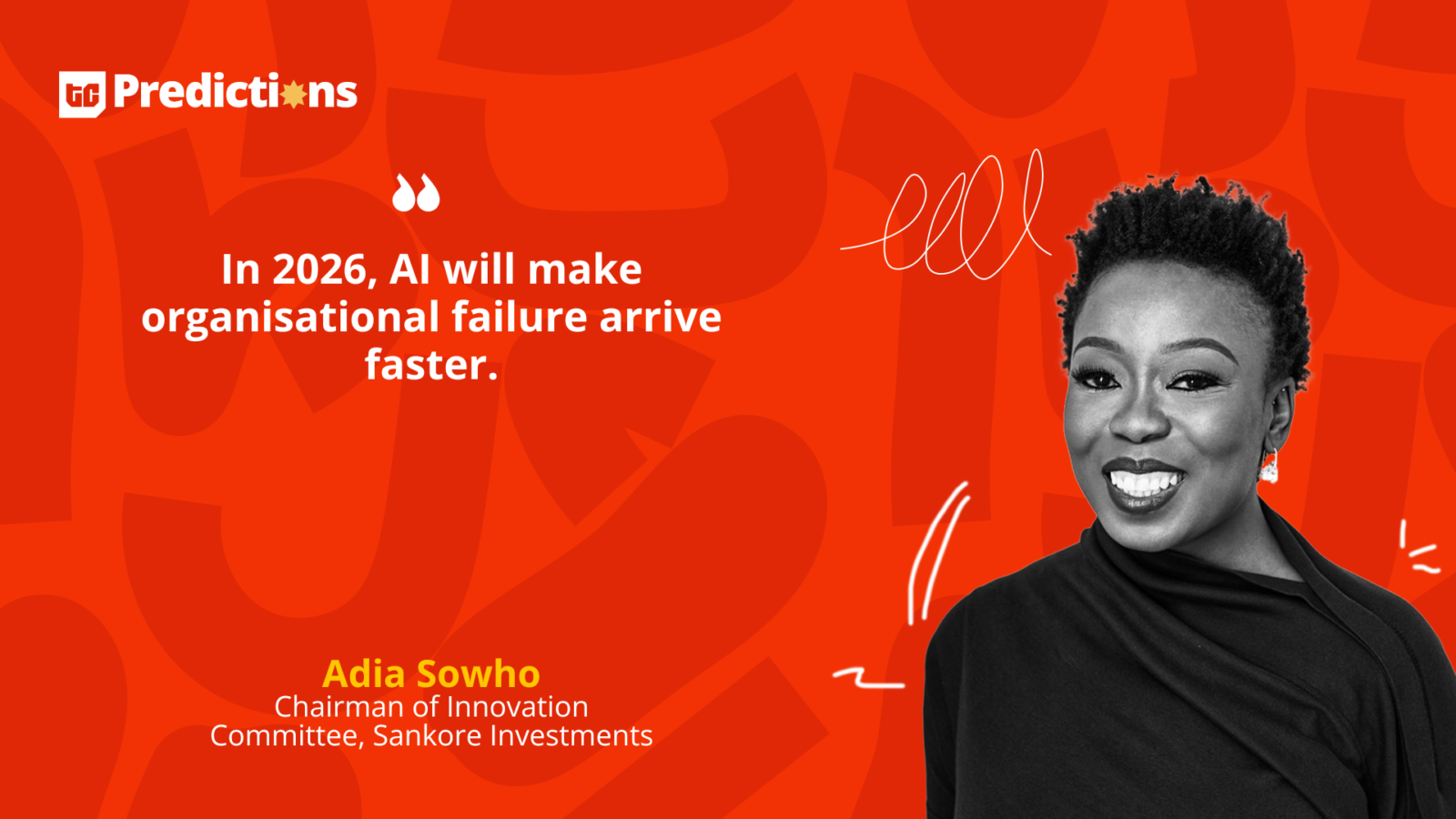
Prediction
AI will make organisational failure arrive faster. By lowering the cost of learning and execution, AI removes the buffers that once let misaligned companies survive on momentum. In African tech specifically, we’ll see sharper divergence between companies that build for real user behaviour and those that mistake activity for progress—the latter will hit walls sooner because tighter margins and weaker institutional cushions mean consequences arrive quickly.
Supporting Evidence
Teams using identical AI tools already show sharply divergent outcomes. The difference tracks to incentive design, not capability access. Companies anchored to outcome-based metrics see compounding gains; those rewarding output generate more activity without impact. This pattern is visible now—2026 just accelerates it.
Risk Factor
Continued access to cheap capital that lets companies postpone reckoning with weak fundamentals. You could say this is an unexpected upside of the current funding winter. If funding remains available without outcome discipline, misalignment stays hidden longer. But in markets where that cushion doesn’t exist, where you can’t subsidise your way past poor product-market fit, the divergence will be unmistakable.
Who is Adia Sowho?
Adia Sowho is an operator–theorist who helps companies build durable business outcomes in emergent economies by understanding how technology, consumers, and markets actually function under real conditions.
Over the past two decades, she has built and operated technology businesses across telecoms, fintech, and technology-enabled marketplaces, often in environments where infrastructure, trust, and formality don’t behave as expected. Earlier in her career, she worked with Deloitte, advising Fortune 500 companies and senior executives across developed markets — experience that informs her comparative lens on why inherited business models often fail outside those contexts.
As CMO of MTN Nigeria, Adia ran the consumer business serving over 80 million customers and more than $4B in annual revenue, sustaining double-digit growth at scale across data and voice. Her track record also includes scaling businesses from zero to nine figures across fintech (Migo), agriculture (Thrive Agric), and telecommunications (9mobile).
Today, her work focuses on partnering with growth-stage companies navigating the difficult stretch between early traction and durable scale —by building capabilities that work with — rather than against — emergent market conditions.
Adia is the author of the forthcoming book The Emergent Economy, which examines why businesses that succeed in emergent markets look fundamentally different from their Western counterparts — and what building durable businesses in the Global South reveals about the mechanics of scale for the next generation of global companies operating across uneven markets.