
First published 29 September, 2024
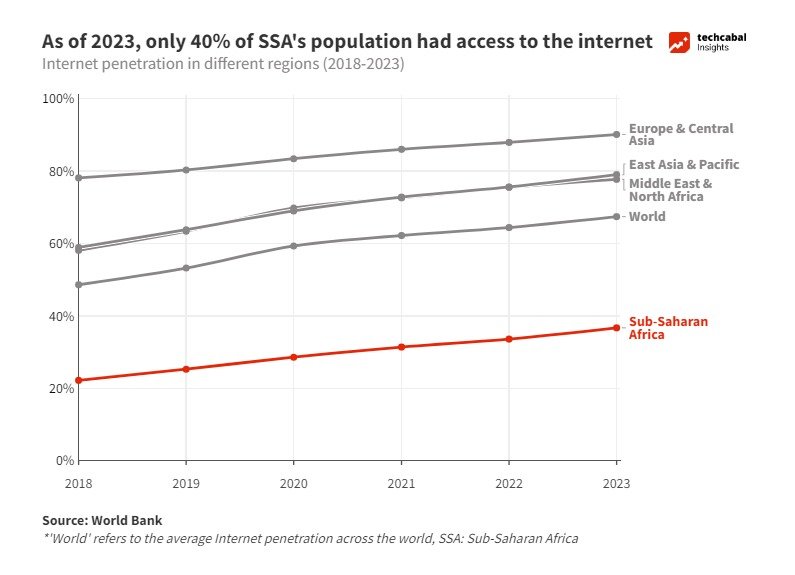
Africa has seen advancements in internet connectivity, yet challenges remain. Approximately 39% of the population has internet access, lower than the global average of 60%. Collaboration between major tech companies and local entities has led to the laying of undersea cables to enhance access and reduce costs. Despite these efforts, broadband remains more expensive in Africa, with slower speeds costing up to 356% more than in other regions.
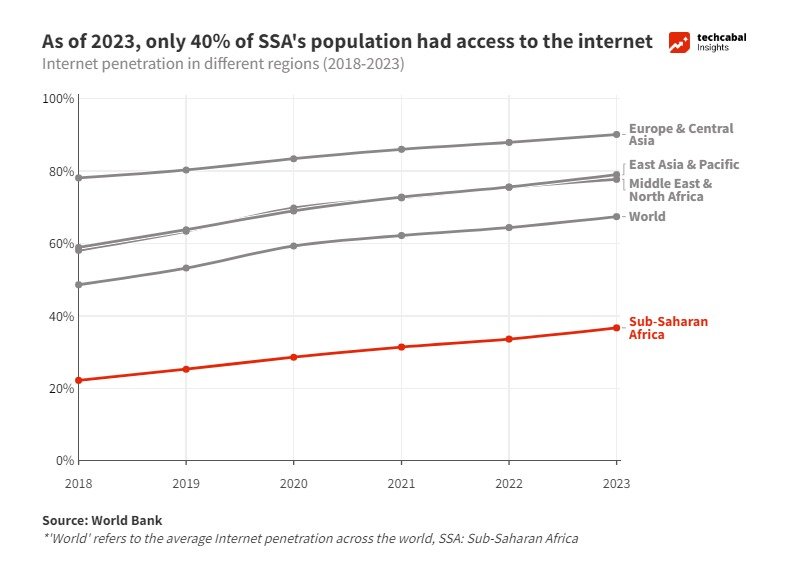
As of 2023, only 40% of SSA’s population had access to the internet. Image | Joseph Seun, TC Insights
Satellite internet is being explored as a solution to bridge the digital gap in Africa. Investments in fibre optics infrastructure and data centers have increased, with satellite internet potentially revolutionizing connectivity in remote regions where traditional infrastructure struggles to reach. Recent developments, including Starlink’s entry and price reductions, have compelled local ISPs to reconsider their offerings.
Next Wave continues after this ad.

LEO satellite operators like Starlink, OneWeb, and Amazon’s Kuiper are innovating to reduce the cost of satellite communication. By positioning satellites closer to the earth and offering affordable terminals, speeds of up to 300Gbps are achievable. This technology enables internet access in remote African regions without the need for extensive physical infrastructure.
Next Wave continues after this ad.