
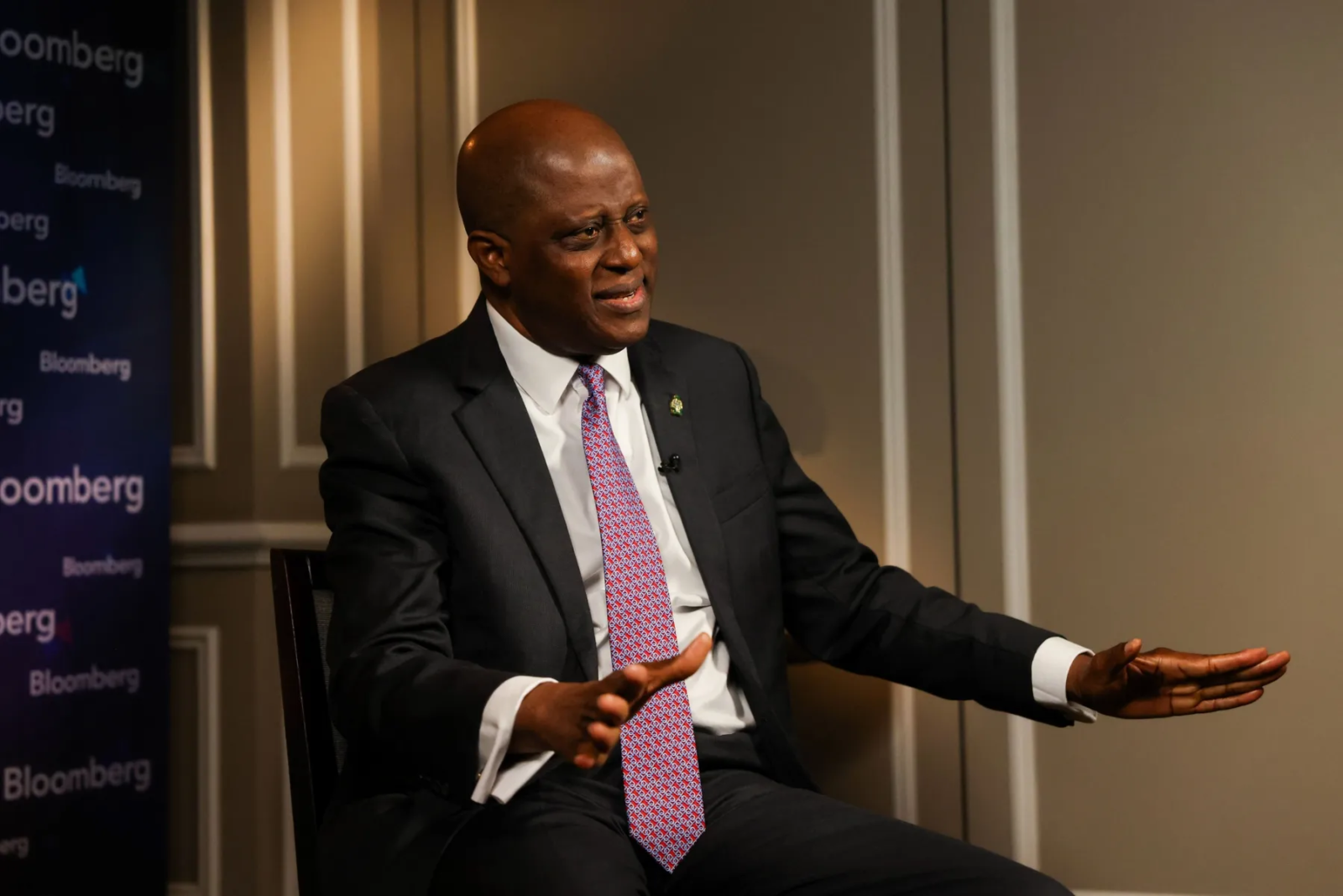
The central bank of Nigeria decided to maintain its benchmark interest rate at 27.50% following the recent adjustment of the consumer price index (CPI). Governor Olayemi Cardoso chose stability as the best course of action to address inflation while supporting the gradually improving investor confidence in the economy.
The Monetary Policy Committee (MPC) unanimously agreed to keep the rates unchanged after evaluating various macroeconomic factors such as exchange rate stability and a slowdown in fuel price increments.
Governor Olayemi Cardoso acknowledged the recent rebasing of the CPI by the National Bureau of Statistics, which led to a revised inflation rate despite persistent underlying price pressures. The decision to hold rates was widely expected by analysts who cautioned against further tightening to prevent hindering business activities or premature cuts that could exacerbate inflationary pressures.
Experts like economist Basil Abia anticipate a cautious approach by the MPC, waiting at least three more months to assess the impact of the rebased numbers before making significant policy adjustments.
Following a series of rate hikes since the beginning of the year to control inflation and stabilize the naira, the central bank’s decision suggests a pause to evaluate the effectiveness of these measures before considering further tightening.
Despite the reported slowdown in inflation rates, businesses and consumers are still grappling with increasing costs, especially in food and imported goods.
Investors are keenly observing the next MPC meeting in May 2025 for signals on whether the central bank will maintain its current stance or consider easing policies if inflation continues to show signs of moderation.