
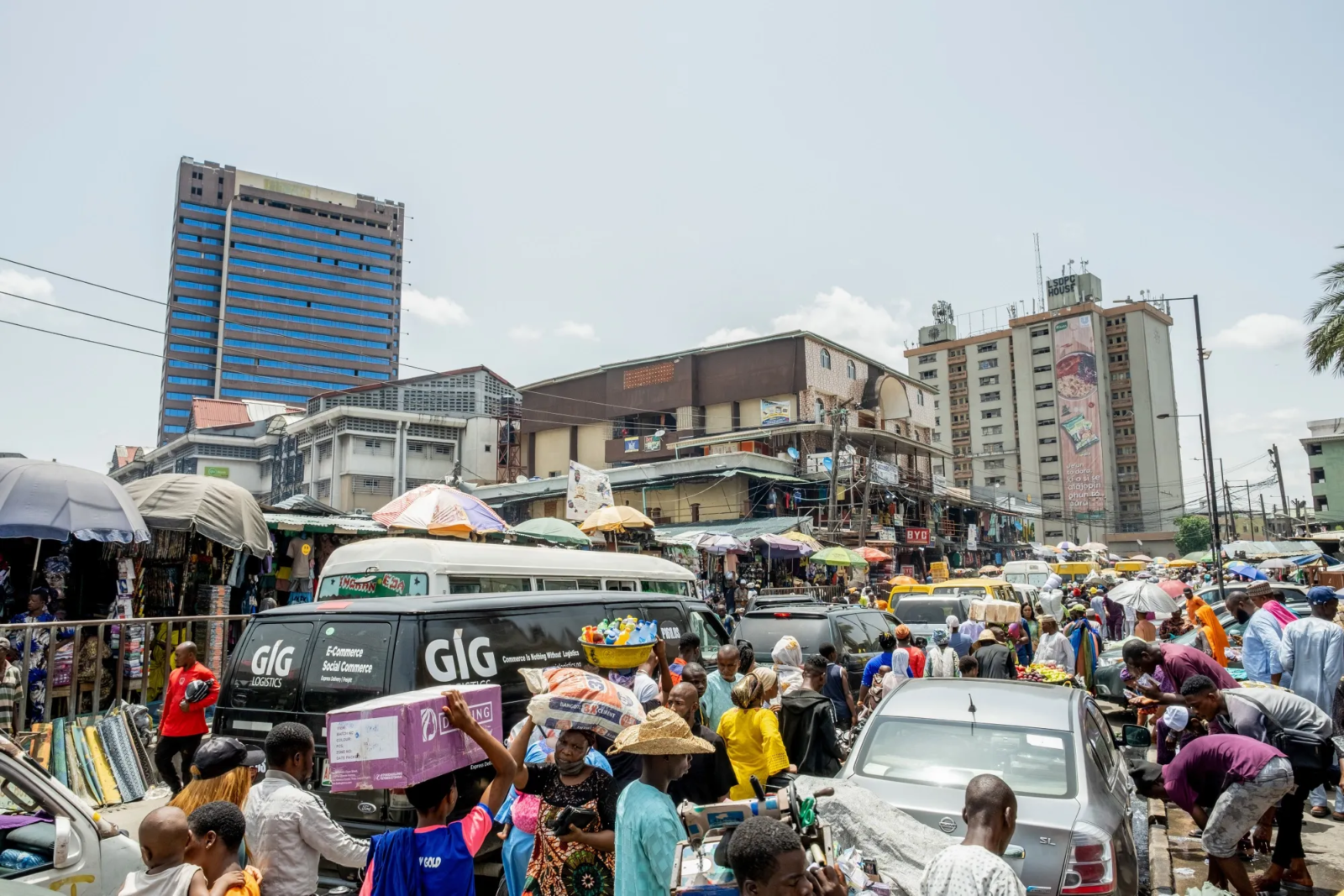
One in 20 Nigerians now earns above ₦1 million ($723.26) monthly, according to data from savings platform Piggyvest’s new savings report.
The share of those earning ₦1 million ($723.26) or more monthly rose to 5% in 2025, from 2% in 2024.
The report, which surveyed over 25,000 Nigerians, shows that while income levels are improving across several brackets, inflation, especially on food, is widening the gap between earning more and living better.
This reflects a broader economic reality in Nigeria, where income growth is struggling to keep pace with inflation and currency weakness. As prices rise faster than wages, higher earnings are doing little to improve living standards, leaving many households financially stretched despite nominal gains.
Middle-income brackets, people earning between ₦250,000 ($180.82) and ₦499,999 ($361.63) rose to 10%, and the ₦100,000 ($72.33) to ₦249,999 ($180.81) band increased to 23%.
Overall, nearly three in five Nigerians still report earning below ₦100,000 ($72.33) monthly or having no income at all.
The illusion of income growth
Incomes are rising, but purchasing power is falling.
Nigeria’s median monthly income stands at about ₦200,225 ($146.55), according to Risevest, a Nigerian fintech that allows users to invest in dollar-denominated assets. But with inflation peaking above 33% in 2024 and still at 15.06% as of February 2026, those earnings buy significantly less.
“People are earning more and affording less,” said Piggyvest co-founder Odun Eweniyi.
The pressure is uneven across demographics. Gen Z Nigerians are the most likely to earn below ₦100,000 ($72.33) or have no income, while millennials are more evenly spread across income brackets, with greater representation in higher bands.
At the same time, income diversification remains limited. Nearly two-thirds of working Nigerians still rely on a single source of income, leaving them more exposed to economic shocks.
Food is swallowing up everything
For most Nigerians (72%), food now dominates monthly spending.
Clothing and personal upkeep (39%), transport (33%), rent (31%), and utilities (38%) follow.
Food inflation hit a 28-year high of 41% in May 2024, forcing the government to temporarily remove import duties on key items. Although it is currently at 12.12%, food inflation remains elevated, accounting for a significant share of household expenses.
Most respondents reported spending less than ₦200,000 ($144.65) monthly, but even within that range, essentials are crowding out everything else, particularly savings.
Only 40% of Nigerians say they save consistently, or only when they have money left over after expenses. More than half, 53%, do not save at all. This stood at 43% in 2024.
“What we are seeing at scale is that even people with the discipline and intent to save are being forced to redirect those funds towards the basics,” Eweniyi said. “Food, fuel, rent, school fees. These aren’t discretionary expenses you can cut.”
The trend aligns with earlier data from Enhancing Financial Innovation & Access (EFInA), which found that 78% of Nigerian adults would struggle to raise emergency funds within seven days, while only 16% are considered financially healthy.
Among those who still manage to save, the priorities are emergency funds (30%), children’s needs (29%), and business investment (24%).
Low savings, low debt
Despite the pressure, relatively few Nigerians report being in debt. Only one in five respondents said they owe money. Nearly 70% of the one in five owe less than ₦200,000 ($144.65).
Rather than excessive borrowing, the data points to constrained consumption.
“Most debt is driven by timing, not irresponsible spending,” said Joshua Chibueze, chief marketing officer and co-founder of Piggyvest.
Among borrowers, 32% rely on savings to repay loans, while 17% turn to friends and family.
Overall, the report underscores that even though income growth is happening through salary adjustments, side hustles, and a small expansion of higher earners, inflation, particularly in food, is absorbing those gains almost entirely.