
PricewaterhouseCoopers Limited (PwC) has taken control of Koko Networks after the Kenyan clean-cooking fuel startup entered administration, placing a business that served over 1.3 million low-income households and invested over $300 million in bio-ethanol infrastructure under insolvency management.
More than 700 employees were laid off on January 31, and the administrators will now decide how the company’s assets are managed and how much creditors can recover.
Muniu Thoithi and George Weru of PwC were appointed joint administrators of Koko Networks Limited and Koko Networks on February 1 by the companies’ directors, according to a formal notice issued under the Insolvency Act 2015 seen by TechCabal.
The administrators have “taken over control and management of the assets and affairs” of both companies, and all operational and other matters must now be directed to them or their authorised representatives, the notice said.
The audit firm is expected to formally communicate the next steps to staff and creditors in the coming days, including how salary arrears, benefits, and redundancy obligations will be handled as the clean‑cooking startup winds down.
“The primary objective of administration proceedings … is to allow Administrators … to explore ways of rescuing the company as a going concern where feasible or achieving a better outcome for the creditors of the company than would be in the case of a liquidation,” the notice said.
The appointment of the administrators ended a frantic weekend inside Koko’s Nairobi headquarters, as board members and executives convened back-to-back crisis meetings when it became clear the company’s last lifeline, a government letter authorising the sale of carbon credits abroad, would not be signed.
According to two people closer to Koko’s operations, negotiations over the letter of authorisation (LOA) with the Ministry of Environment had been underway since 2025 and were “going well,” which gave the company’s management and investors confidence for an eventual approval.
That optimism evaporated last Wednesday when a senior official in the ministry rejected the LOA and “trashed every progress” made, the same people said.
The government’s rejection of the LOA left Koko unable to continue operating. Koko’s investors and carbon-finance backers, who had extended over $300 million in equity, debt, and guarantees tied to projected international carbon-credit revenues, had set hard timelines for the LOA to be in place. Without the LOA, Koko could not unlock the carbon credit revenues that made its subsidised prices for low-income households viable.
The collapse caps nearly two years of worsening financial and operational pressure. In April 2024, Kenya’s energy regulator, Energy and Petroleum Regulatory Authority (EPRA), suspended imports of bio-ethanol, forcing Koko to pivot to more expensive and often insufficient local supply, a shift insiders say squeezed margins and destabilised its fuel logistics.
By late 2024 and throughout 2025, customers in low-income neighbourhoods were already grappling with recurring Koko fuel shortages, a sharp contrast to the company’s promise that any amount, as little as KES 30 ($0.23), could keep their smart stoves running.
The business model depended on selling two-burner stoves at heavily subsidised prices —roughly KES 1,950 ($16) at retail—against much higher manufacturing costs, and on keeping bio-ethanol fuel cheap via carbon-credit income.
Investors such as Verod-Kepple, Mirova, Rand Merchant Bank, and Microsoft’s Climate Innovation Fund backed Koko’s growth, while the World Bank’s Multilateral Investment Guarantee Agency (MIGA) provided a $179.6 million guarantee to de-risk its expansion.
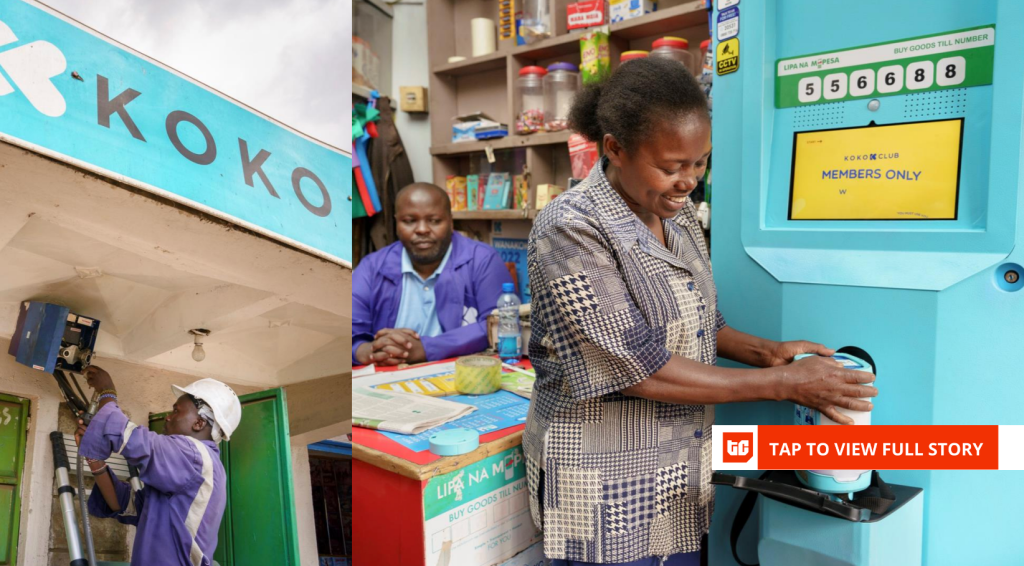
The company reached roughly 1.3–1.5 million customers and 3,000 automated fuel shops across Kenya and Rwanda, though operations in Rwanda had been paused, and most of its network had been affected by Kenya’s fuel import ban, which forced Koko to buy locally available ethanol at higher prices. The decision increased costs and depleted funds allocated to run the Rwanda unit.
The administrators have asked anyone with a claim against the companies to submit it within 14 days of the notice to be included in the creditors’ roll and have stated that they act on behalf of the companies “without any personal liability.”