
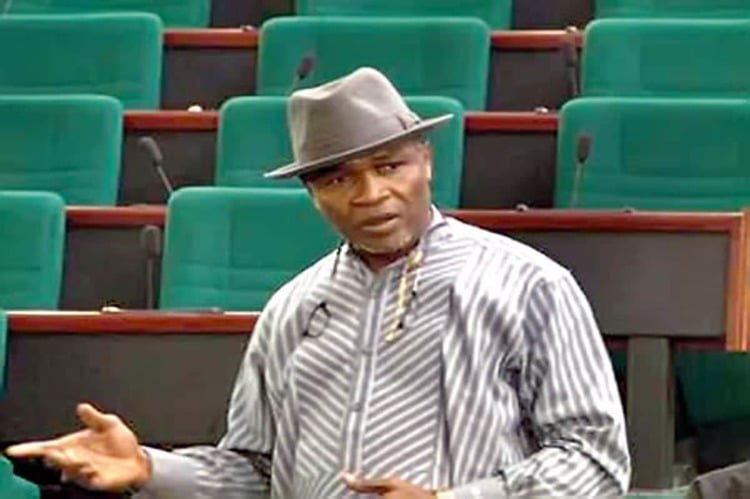
The House of Representatives Minority Caucus Ad-hoc Committee investigating the alleged distortions of the tax reform laws has explained the alterations in some of the laws passed by the National Assembly and assented to by President Bola Tinubu.
In its interim report on Friday, the committee cited the Nigeria Tax Administration Act, 2025, as the law in which the alleged alterations featured prominently, insisting that there were discrepancies between the versions of the tax laws passed by the National Assembly and those published in the official gazette.
Given what it described as “anomalies, illegalities, and impunity” that undermine constitutional powers and democracy, the committee said the evidence so far warranted deeper investigation.
Subsequently, it requested an extension of time to conduct a more thorough examination of the matter, while thanking the caucus leadership “for finding us worthy of the assignment.”
The controversy followed public outrage after a member of the House, Abdulsamad Dasuki, raised the alarm on the floor of the House over the circulation of an “altered version” of the tax laws that differed from what lawmakers passed.
Reacting at the time, the Minority Caucus, in a statement issued on December 28, 2025, vowed to “unconditionally protect the independence of the legislature and our democracy,” warning that any attempt to foist fake laws on Nigerians amounted to an attack on the constitutional role of the National Assembly.
In furtherance of the pledge, the caucus, led by Kingsley Chinda, on January 2, 2026, constituted a seven-man fact-finding committee chaired by Victor Ogene.
Other members are Aliyu Garu (Bauchi), Stanley Adedeji (Oyo), Ibe Osonwa (Abia), Marie Ebikake (Bayelsa), Shehu Fagge (Kano), and Gaza Gbefwi Jonathan (Nasarawa).
Meanwhile, on January 3, 2026, the House, through its spokesman, Akin Rotimi, announced that the Speaker, Tajudeen Abbas, had directed the release of the four tax reform Acts duly signed into law by the President for public verification and reference.
The Acts are the Nigeria Tax Act, 2025; the Nigeria Tax Administration Act, 2025; the National Revenue Service (Establishment) Act, 2025; and the Joint Revenue Board (Establishment) Act, 2025.
In its preliminary findings signed by Ogene, the Minority Caucus committee said a comparison of the Certified True Copies released by the House with the gazetted versions already in circulation confirmed the allegations raised by Mr Dasuki.
“There were some alterations as alleged, especially in the Nigeria Tax Administration Act, 2025. There were three different versions of the documents in circulation, particularly the Nigeria Tax Administration Act, 2025,” it said.
The committee further noted that the directive to “align” the Acts with the Federal Government Printing Press was “a clear indication that there were some procedural anomalies in the previously gazetted version that illegally encroached on the core mandate of the National Assembly.”
On the specific areas of concern, the committee identified several discrepancies in the Nigeria Tax Administration Act, 2025.
It said that under Section 29(1) on reporting thresholds, the certified version fixed thresholds at N50m for individuals and N100m for companies, while the gazetted version reduced them to N25m for individuals and N100m for companies instead of N250m.
“This is a clear case of the executive undermining legislative powers by illegally altering an already passed law to drag more taxpayers into the net,” the committee stated.
It also faulted the introduction of new subsections 41(8) and 41(9) in the gazetted version, which imposed a mandatory 20 per cent deposit of disputed tax sums as a condition for appealing Tax Appeal Tribunal decisions to the High Court, noting that “these sections were not in the authentic version passed by the National Assembly.”
The committee further observed that Section 64 of the gazetted Act illegally expanded the enforcement powers of tax authorities to include arrest through law enforcement agencies and the sale of seized assets without a court order.
On Section 3(1)(b), it said the gazetted version removed petroleum income tax and VAT from the definition of federal taxes, describing this as “an affront to the exclusive powers of the National Assembly to make laws.”
Similarly, it noted that Section 39(3) of the altered version mandated tax computation for petroleum operations in US dollars, contrary to the version passed by the National Assembly, which prescribed computation “in the currency of the transaction.”
The Ogene-led committee also raised concerns over the Nigerian Revenue Service (Establishment) Act, pointing out that Sections 30(1)(d) and 30(3) on National Assembly oversight were deleted in the gazetted version.
It said the authentic Act provided for parliamentary oversight through summons, reports, and accountability mechanisms, but the altered version removed requirements for quarterly and annual reporting to the National Assembly, “in total disregard and disrespect of the institution of the National Assembly and the doctrine of checks and balances.”