
Years ago, satellite dishes and television antennas were common sights on rooftops in Nigeria. Nowadays, rows of solar panels are increasingly visible as Nigerians opt for alternative energy solutions due to rising electricity tariffs.
In 2024, the Nigerian Electricity Regulatory Commission (NERC) hiked electricity tariffs for urban customers by 240%. Urban customers in Band A, who are guaranteed 20 hours of electricity daily, now pay ₦209 per kilowatt-hour.
For a three-person household in Band A with basic appliances like air conditioners, refrigerators, and televisions, monthly electricity costs can exceed ₦45,000, which is more than half of Nigeria’s new minimum wage of ₦70,000.
Alongside the increase in electricity prices, fuel costs have also quadrupled, further burdening households. In a community in Lagos, residents expressed the need to be downgraded from Band A due to cost concerns, highlighting the financial strain on households.
Solar power as an alternative
With the cost of reliable grid electricity rising and expected to increase further as government subsidies are reduced, solar energy emerges as a sustainable option. The primary obstacle, however, is the initial investment required.
Solar systems come in a range of prices, from ₦400,000 for basic setups to ₦20 million for fully off-grid solutions, reflecting varying household power needs and desired levels of independence from the grid.
For beginners in the solar energy journey, an entry-level system priced at ₦400,000 provides a modest introduction to solar power.

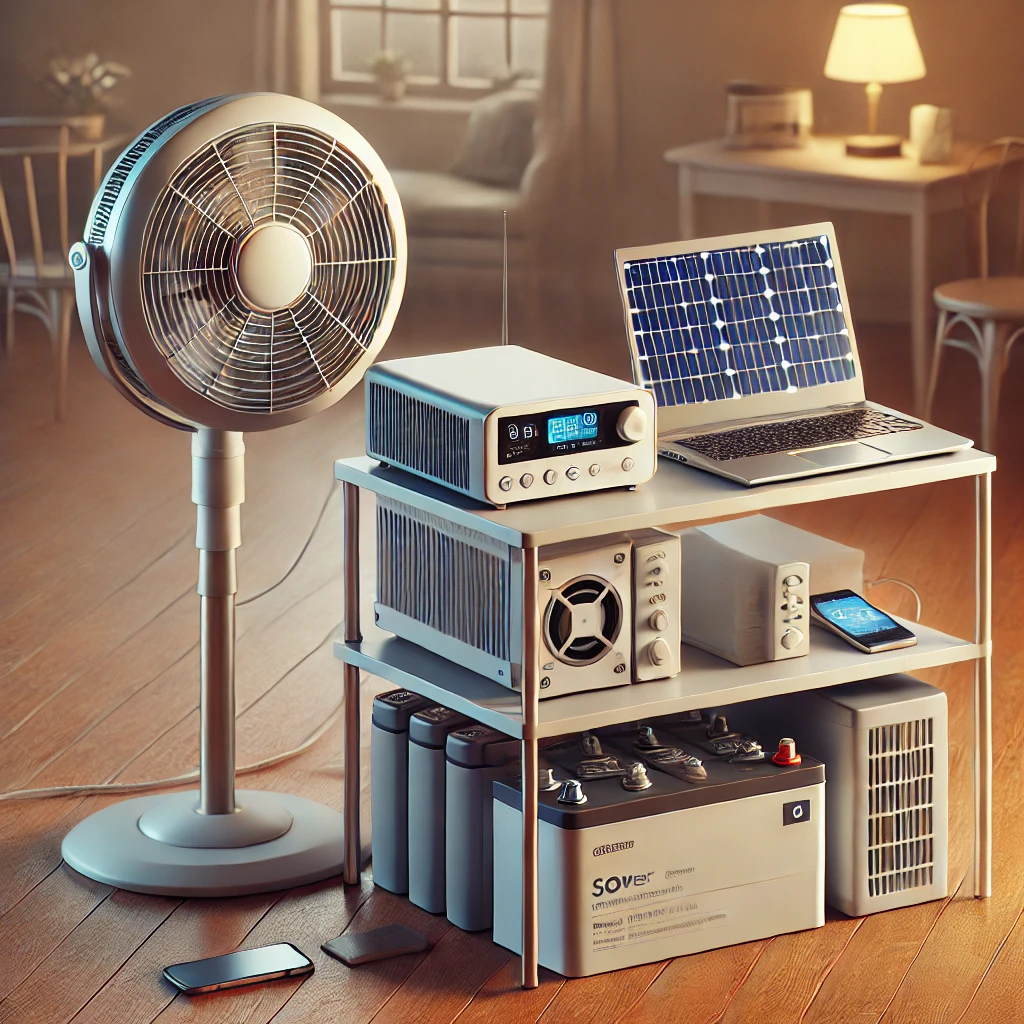
This basic power station includes an inverter and a 500Wh mini lithium-ion phosphate battery, suitable for powering essential appliances like a fan, TV, laptop, and mobile phone. However, it is not ideal for extended power outages as the backup lasts only 3 to 5 hours, making it suitable for short interruptions rather than prolonged periods without grid power.
Mid-range solar systems: ₦1 million to ₦5 million
At a price point of ₦1 million, a 1kVA solar system offers increased reliability. It consists of a 1kWh inverter, a 2.4kWh lithium-ion phosphate battery, and a 450-watt monocrystalline solar panel. This system can power multiple lighting points, fans, a TV, a laptop, and mobile devices, with a backup time of 6 to 8 hours, suitable for longer outages.
Lithium-ion phosphate batteries are favored over lead-acid batteries for their superior performance and efficiency, offering higher energy density, faster charging, and minimal maintenance requirements.
For ₦5 million, a 5kVA hybrid solar system provides an even more robust solution, supporting a range of appliances and offering backup power for 8 to 12 hours after sundown.
In 2024, a social media strategist invested ₦4 million in a 5kVA inverter system with six 400W solar panels, significantly reducing monthly expenses on fuel and electricity bills.
High-end solar systems: ₦10 million to ₦20 million
For those with higher power demands, a 10KVA hybrid solar system costing between ₦10 million and ₦20 million provides a reliable solution for continuous electricity. This system includes a 10kWh hybrid inverter, a 10kWh lithium LiFePO4 battery, and solar panels, capable of powering numerous devices simultaneously with backup power for up to 15 hours.
At the top end, a ₦20 million investment offers a 15KVA hybrid solar system with high capacity,