
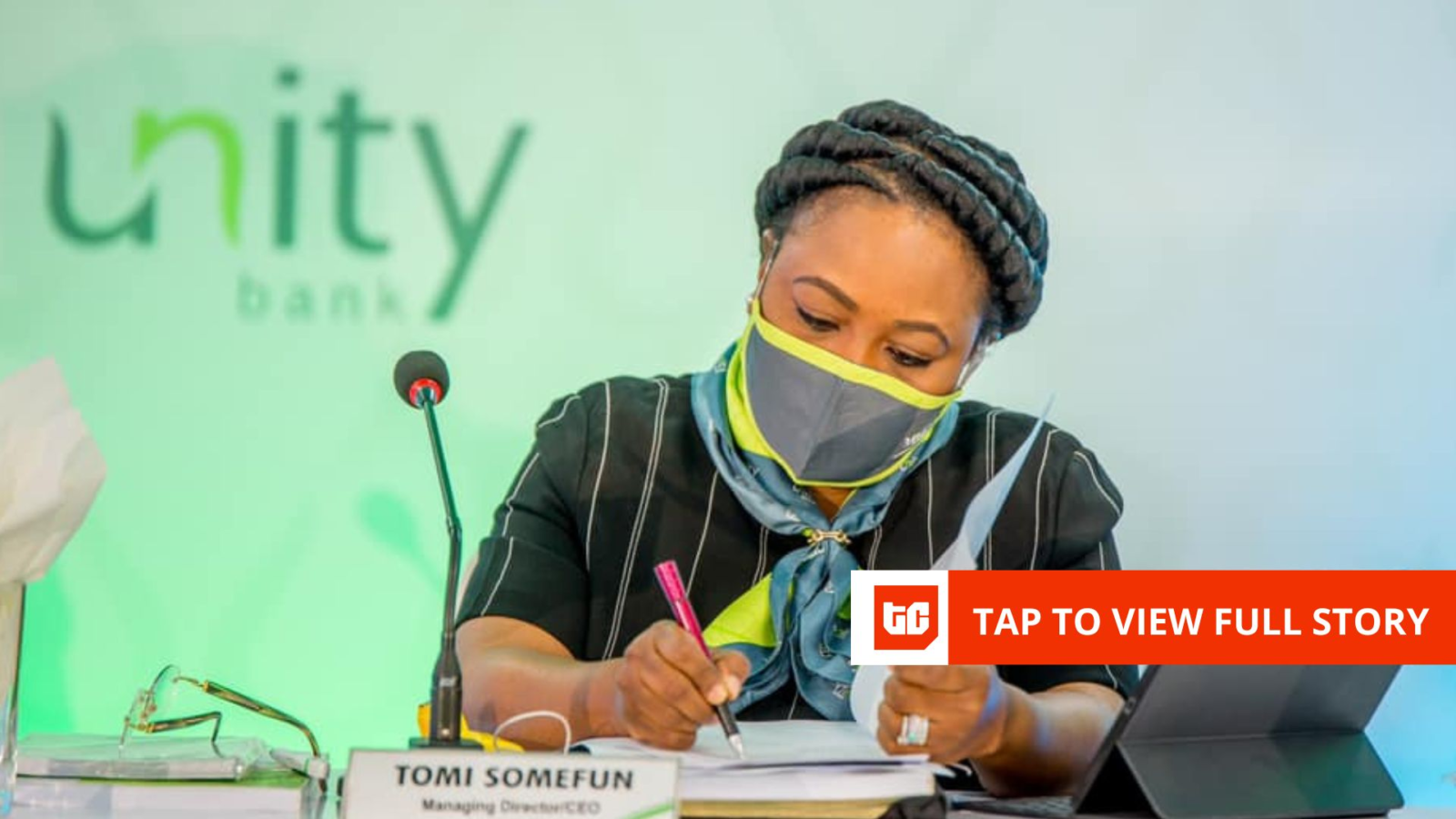
Unity Bank recently disclosed a substantial loss of ₦62.6 billion for the financial year ending December 31, 2023, in contrast to a profit of ₦941 million in the previous year. The 2023 financial statements illustrate a challenging period for the bank following its merger with Providus Bank in August 2024, which was seen as a crucial move for Unity Bank.
Delays in obtaining regulatory approvals, complexities from the merger, and extensive documentation requirements led to the postponement of the 2023 financial report until 2025. Despite a slight increase in gross earnings to ₦59.36 billion, operational expenses and impairment charges from non-performing loans resulted in a loss per share of 535.85 kobo.
The balance sheet paints a concerning picture with total liabilities exceeding total assets by ₦326.9 billion, leading to a negative capital adequacy ratio of 76.14%, well below the CBN’s required minimum of 10% for national banks. KPMG, in its auditor’s report, raised doubts about Unity Bank’s ability to continue operations without significant recapitalization, given its current financial state.
To meet the CBN’s ₦200 billion recapitalization threshold for national banks by 2026, Unity Bank is exploring various avenues for raising capital, including private placements, rights issues, and mergers. The bank has received financial support from the CBN in the form of short-term accommodations to bolster its working capital requirements.
Analysts emphasize the importance of securing substantial capital inflows and restructuring the loan portfolio for Unity Bank’s survival. With AMCON holding a significant stake in the bank, its involvement in any recapitalization efforts could be crucial. However, investor confidence may remain subdued until tangible progress is made in addressing the capital shortfall.