

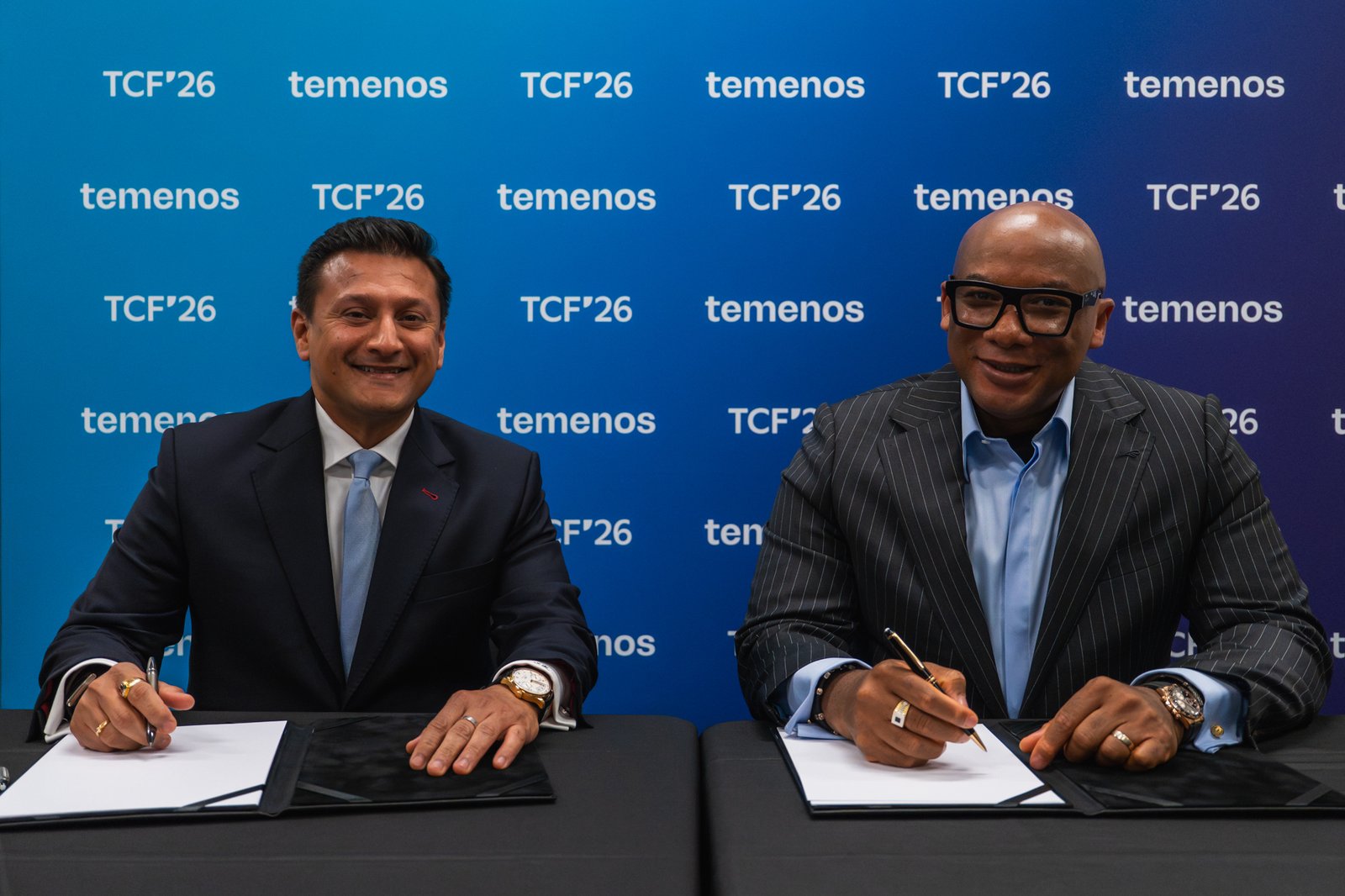
Interswitch, a Nigerian payments company that powers card payments, interbank transfers, and digital commerce across Africa, has spent the last two decades as infrastructure; the pipes through which banks, fintechs, and merchants move money.
Verve cards, Quickteller, and the interbank switching network that processes millions of transactions daily. What it hasn’t been, until now, is a banking technology vendor.
That changes with a new partnership with Temenos, the Swiss company whose core banking software runs in over 1,000 banks across 150 countries.
Under the deal, Interswitch will use Temenos technology—covering core banking, digital banking, payments, wealth management, and financial crime management—to offer managed services to African lenders, both on the cloud and on-premises. The initial target markets are Nigeria, Ghana, Côte d’Ivoire, and Kenya.
Why now: African banks are modernising, and the spend is real. Six Nigerian banks alone spent ₦268.7 billion ($171.5 million) on IT infrastructure upgrades in 2024. The banking-as-a-service (BaaS) market across the Middle East and Africa is projected to reach $27.1 billion in 2026. Interswitch is betting that African banks facing complex technology migrations would rather work with a local partner that already knows their systems than manage a global vendor relationship alone.
The competition is already there. CWG Plc distributes Infosys’s Finacle core banking application to major Nigerian banks including First Bank and GTBank. And Temenos itself is playing catch-up in Nigeria; it lost Sterling Bank in 2024 after the lender switched to SEABaaS, a custom-built local alternative. Interswitch’s existing relationships across the continent are the asset Temenos is really buying into here.
Zoom out: Verve crossed 100 million cards issued in December 2025. Interswitch has spent two decades earning trust at the infrastructure layer of African finance. The question is whether that trust transfers when it shows up not as the payments company, but as the company telling your bank how to run its core systems.