
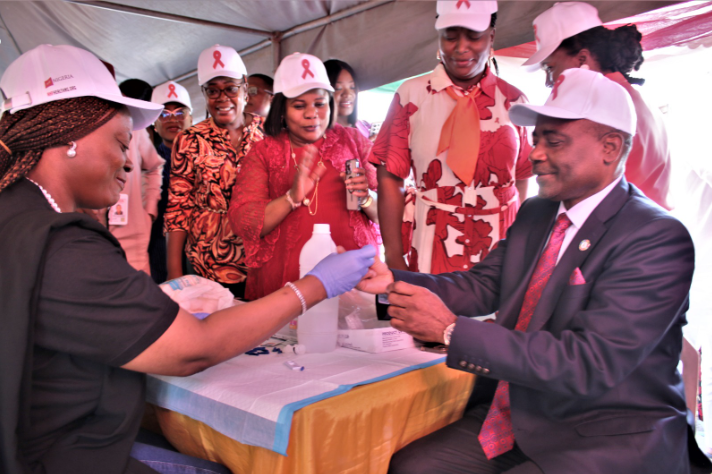
In Nigeria, the Director General of the National Agency for the Control of AIDS recently disclosed that out of the two million individuals living with HIV in the country, approximately 1.6 million are presently undergoing treatment. The announcement was made during a press conference in Abuja ahead of the upcoming World AIDS Day in 2024, with a focus on sustaining the HIV response, preventing AIDS among children, and achieving an AIDS-free Nigeria by 2030.
The prevalence of HIV in Nigeria stands at 1.4% among the general population aged 15-64 years. Despite progress, challenges persist in preventing mother-to-child transmission of HIV. The UNAIDS 2023 report indicates that there are around 160,000 children aged 0-14 living with HIV in Nigeria, with thousands of new infections and AIDS-related deaths annually. Efforts to prevent mother-to-child transmission and provide pediatric HIV coverage remain below the target of 95%.
NACA has collaborated on an international initiative, developing the Global Alliance Action Plan to End AIDS in Children. To address the gaps in coverage, a national-level acceleration committee has been established to oversee implementation. Additionally, NACA has been working on a sustainability roadmap to ensure the continuity of HIV response post-donor support withdrawal.
The agency has made significant strides in transforming Nigeria’s HIV response, calling on all Nigerians to unite against stigma, promote equity, and prevent HIV transmission among children. The vision is to achieve an AIDS-free Nigeria by 2030 through collective action and commitment.
UNAIDS stresses the importance of sustained political commitment and domestic resource allocation towards ending AIDS by 2030. Collaboration between government agencies, civil society organizations, donors, and the private sector is essential for mobilizing resources and achieving the common goal of ending AIDS.
Innovative approaches and continued investment are crucial in addressing the challenges ahead, including the integration of HIV and TB services and expanding community outreach to combat health inequalities. The call for partnership and resource mobilization underscores the shared responsibility in working towards an AIDS-free future.