
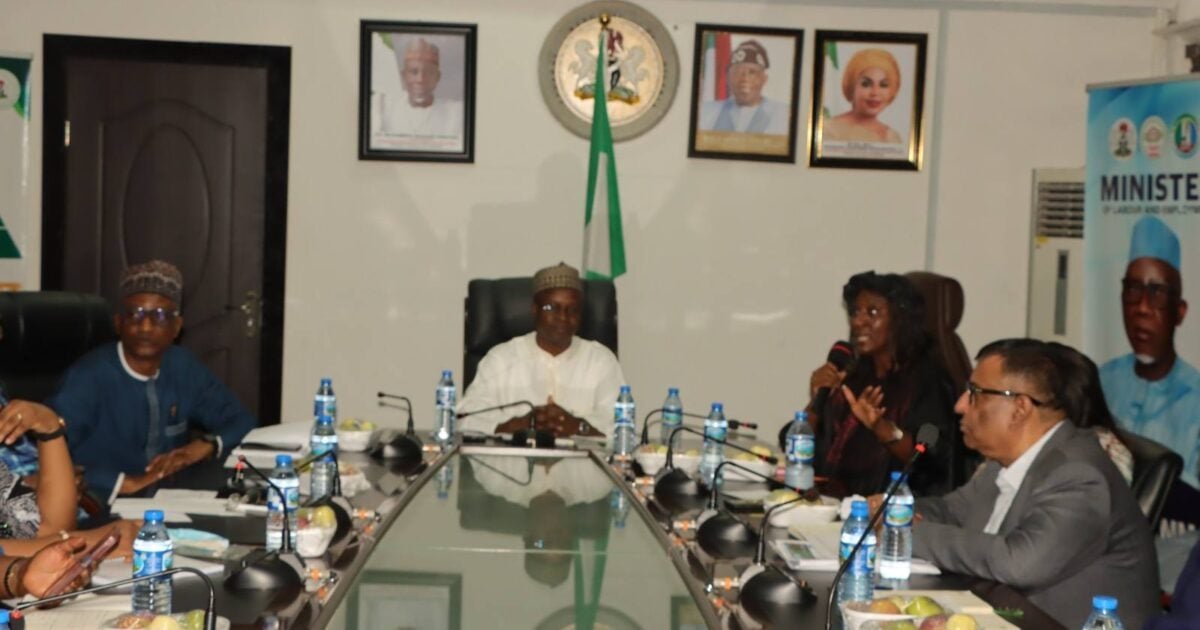
The Federal Government of Nigeria and the International Labour Organisation have reaffirmed their commitment to deepening collaboration to promote decent work, social justice, and effective labour governance in the country.
Permanent Secretary of the Federal Ministry of Labour and Employment, Mr Salihu Usman, made the announcement during a coordination meeting between the Ministry and the ILO held in Abuja.
This was contained in a statement issued on Sunday by the ministry’s Head of Press and Public Relations, Annah Daniel.
ILO is a specialised United Nations agency founded in 1919, dedicated to promoting social justice and internationally recognised human and labour rights.
Usman said the long-standing partnership with the ILO has supported Nigeria’s efforts to advance decent work, improve occupational safety and health, promote social dialogue, strengthen labour administration, and enhance the application of international labour standards.
“Joint initiatives between the ministry and the ILO have consistently produced positive outcomes in addressing labour-related issues in the country,” Usman said.
He acknowledged that coordination meetings had not been convened for some time due to administrative challenges, but said the ministry deliberately resumed them in recognition of their strategic importance.
Usman highlighted key challenges facing Nigeria’s labour sector, including rising youth unemployment, skill shortages, the growth of the informal economy, labour migration management, workplace safety concerns, the need to strengthen social protection systems, and child labour.
“Addressing these challenges requires strong institutions, coherent policies, and effective technical collaboration with development partners such as the ILO,” he said.
The permanent secretary added that the meetings would help professional departments within the ministry align their work with the ILO’s country programme priorities, reduce duplication of efforts, improve information sharing, and develop practical roadmaps with clearly defined responsibilities and timelines.
In her remarks, ILO Country Director, Vanessa Phala, reaffirmed the organisation’s commitment to strengthening collaboration with the ministry through policy alignment that promotes decent work, upholds labour standards, and supports sustainable employment initiatives.
“We have to make sure that what we are doing continues to be aligned with the ministry’s priority as well as the government’s priority under the leadership of President Bola Tinubu, especially as it relates to the renewed hope agenda.
“This forum serves to check with one another that we are still on the right track. Implementation will be seamless because what we are supporting you with is already reflected in your departmental priorities or work plan,” Phala said.
She added that the ILO would continue providing technical assistance and capacity-building programmes to help the ministry address emerging labour challenges and protect vulnerable workers across the country.
The meeting also provided a platform for strategic coordination among key stakeholders, including government institutions, workers’ organisations, employers, and other partners involved in labour sector reforms.