
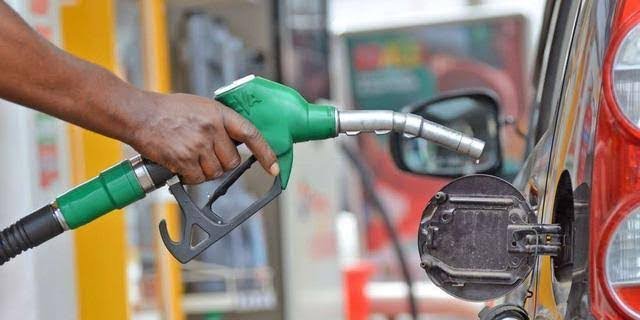
The price of Premium Motor Spirit (petrol) at retail filling stations is set to rise to at least N1,332 per litre nationwide, following a fresh upward review by marketers in response to the latest hike by the Dangote Petroleum Refinery.
This comes as MRS Oil Nigeria Plc issued a new pricing template to its dealers, signalling what could become the new benchmark for pump prices across the country.
In a communication to dealers on Saturday, the company announced a revised pump price of N1,332 per litre, while company delivery was fixed at N1,290 per litre and self-collection at N1,282 per litre.
The notice read, “Please be informed that our PMS price has been revised as detailed below. Kindly effect changes where necessary: Pump Price: N1,332, Company Delivery: N1,290 Self collection: N1,282. Also note that the portal is open to place orders and you’re encouraged to do so. The minimum quantity for company delivery is 50,000 litres.”
The company stated that all product loading would be done at the Dangote refinery, underscoring the facility’s growing dominance in the country’s fuel supply chain.
The development followed a fresh increase in the refinery’s ex-depot price, which was raised to N1,275 per litre in its fifth upward review in March alone.
Barely hours after announcing an earlier increase to N1,245 per litre, the refinery again revised its gantry price upward by N30, representing a 2.4 per cent rise, and a N100 increase from the N1,175 per litre sold earlier in the month.
It also adjusted its coastal price from N1,512,648 per metric tonne to N1,646,748 per metric tonne, reflecting an increase of N134,100, or 8.9 per cent.
In a notice sent to marketers and customers on Saturday, the refinery directed stakeholders to disregard previous pricing.
“Dear valued customer, kindly note that the prices contained in our previous correspondence are no longer applicable and should be disregarded.
“Please find below the current DPRP PMS gantry and coastal prices. The refinery increased its coastal price from N1,512,648 to N1,646,748 per metric tonne, while the gantry price rose from N1,175 to N1,275 per litre,” it said.
The refinery added that the revised prices took effect from midnight on March 21, 2026.
“Please note that the revised price will apply to all unloaded gantry and coastal volumes and is effective from 12am on the 21st of March 2026,” the company stated.
It also clarified that customers with valid Bank Guarantees would continue lifting products under existing approvals, provided they covered the price differential.
“For customers with a valid Bank Guarantee with DPRP, loading will continue with existing ATCs/PRN (if any) provided the BG credit balance covers the price change differential,” it added.
The rapid succession of price adjustments within a single day underscores the intensity of pricing pressures currently facing the market.
The hike underscores the continued vulnerability of the country’s fuel market to international crude oil price volatility and supply chain disruptions, despite the coming on stream of the Dangote refinery, which was expected to stabilise domestic supply.
Findings by our correspondent using petroleumprice.ng showed that the Dangote refinery has adjusted petrol prices five times in March, reflecting a steep upward trajectory driven by global oil market dynamics.
At the beginning of March, the refinery raised its gantry price from N774 per litre on March 2 to N874, before subsequent increases to N1,050 N1,175, N1,245, and now N1,275 per litre, while the coastal price rose from N1,512,648 to N1,646,748 per metric tonne.
This was followed by another jump to N1,050 per litre, representing a N176 increase from N874, or about 20.1 per cent.
Within days, the price climbed again to N1,175 per litre, adding N125, or 11.9 per cent.
On March 20, the refinery increased the price to N1,245 per litre, a N70 rise, representing roughly 6.0 per cent.
Hours later, the latest adjustment pushed the price further to N1,275 per litre, adding another N30, or 2.4 per cent.
Cumulatively, the gantry price has surged by N501 per litre from N774 at the start of the month to N1,275, representing a sharp increase of approximately 64.7 per cent in less than three weeks.
Similarly, coastal prices have followed an upward trend, rising from around N1.45m per metric tonne earlier in the month to N1.646m, reflecting sustained pressure on international product pricing and freight costs.
The new coastal price moved from N1,512,648 per metric tonne to N1,646,748 per metric tonne, reflecting an increase of N134,100, or about 8.9 per cent.
The latest increase is expected to trigger a fresh wave of pump price adjustments across the country, with transport fares and commodity prices likely to rise in response.
The rapid succession of price hikes underscores the continued vulnerability of Nigeria’s fuel market to global crude oil volatility and supply disruptions, despite the coming on stream of the Dangote refinery.
The development comes amid a demand surge several African governments have begun aggressive outreach to the 650,000-barrel-per-day facility.
At least three African countries, South Africa, Ghana, and Kenya, have formally reached out to the refinery, while several others are making enquiries, as disruptions linked to the Iran war continue to choke global fuel supply chains.
The refinery is seeing a significant surge in inquiries as traditional supply routes from the Middle East face unprecedented disruptions.
The refinery, however, maintained that the adjustment was necessary to reflect prevailing market realities, stressing that the pricing review was driven by external factors beyond its control.
As marketers begin to implement the new rates, consumers across the country are expected to feel the impact almost immediately at filling stations.
Meanwhile, the Dangote Refinery has once again adjusted its pricing template, raising the gantry price of Automotive Gas Oil (diesel) to N1,750 per litre.
The development signals a continued upward trend in energy costs, with immediate implications for transport, logistics, and industrial operations across the country.
The new price marks a sharp N250 jump from N1,500 per litre, which had only recently been increased from N1,430 about one week ago.
The rapid sequence of adjustments highlights the volatility currently shaping Nigeria’s downstream petroleum market.