
Every few years in Nigeria, we discover a new reform.
We discover policy reform. We discover monetary reform. We discover tax reform, fuel subsidy reform, foreign exchange reform, civil service reform, security sector reform, electricity sector reform, education reform. We commission committees. We publish white papers. We send delegations to Singapore and Rwanda. We benchmark, we adopt, we adapt. We launch. We celebrate. We move on.
And then, a few years later, we wonder why so little has changed.
I have watched this cycle for over two decades. I have advised public sector institutions, sat across the table from Permanent Secretaries, Chairmen and Chief Executives of parastatals, and worked closely with leaders trying to make Ministries, Departments and Agencies perform. What I want to tell you is something that may sound strange at first, but which I am now convinced is the single most important thing this generation of Nigerian leaders needs to hear.
“There is one reform we have not tried. We have not reformed the boards.”
The Boards of Directors of our Ministries’ parastatals. The Boards of our regulators. The Boards of our development finance institutions. The Boards of our government owned enterprises, our infrastructure agencies, our public universities, our teaching hospitals, our pension and revenue and capital market authorities. The bodies that sit, in theory, at the top of every public institution in this country, and whose decisions determine whether that institution serves Nigerians or fails them.
We have not reformed them. We have barely discussed them. Until we do, none of the other reforms will land where we need them to land. And this is not just a small point; this is the point.
The Four Levers We Have Pulled
If you survey what Nigeria has actually tried in the name of public sector reform over the last 25 years, you will find we have pulled four levers, again and again.
Lever one is Policy. We change the rules. We pass new laws, issue new regulations, update existing codes. The Nigerian Code of Corporate Governance 2018, the Companies and Allied Matters Act 2020, the Pension Reform Act, the Petroleum Industry Act. Nigeria does not lack for policy. We are, if anything, over legislated.
Lever two is People at the top. We change the Minister. We change the Director General. We change the Permanent Secretary. We bring in new blood, fresh ideas, a clean slate. Sometimes, rarely, we get a Dora Akunyili at the National Agency for Food and Drug Administration and Control (NAFDAC), and the country glimpses what is possible. Most of the time, we change the head and the institution carries on as it was.
Lever three is Funding. We allocate more money. We secure another World Bank credit, another African Development Bank tranche, another budgetary line. We pour resources into agencies on the assumption that the missing ingredient was naira.
Lever four is Technology. We digitise. We launch a new portal, a new dashboard, a new app. We promise that this time, the system will work because the system is now electronic.
These four levers have their place. They have, occasionally, produced real wins. But notice what they share. Each of them assumes that the decision-making architecture of the institution is sound, and that what is missing is only better rules, better people at the top, more money, or better tools. Each of them treats the institution as fundamentally functional, in need of upgrade. But this assumption is wrong.
The lever we have not pulled
In every well-designed public institution in Nigeria, and there are some, there is a body that sits above the management. It is called the Board.
It is supposed to set strategic direction. It is supposed to hold the Chief Executive accountable. It is supposed to monitor performance, approve major decisions, manage risk, oversee succession, protect the institution from political capture, and steward it across the long arc of public service. It is supposed to be, in the simplest terms, where the institution is governed.
In a small number of cases, this is what our boards do. The Nigeria Sovereign Investment Authority (NSIA) is the most often cited example, and rightly so. When NSIA was being designed, deliberate attention was paid to who would sit on its board, what they would be empowered to do, how they would be evaluated, and what political insulation they would have. The result has been an institution that has performed at a standard most Nigerians did not believe a federal entity could reach. The board did that. Not the policy alone, not the funding, not the personalities at the top. The board.
In most of our public institutions, by contrast, the board is something else entirely.
In most cases, the board is an appointment list. A balance of zones, parties, loyalties, debts owed. A landing pad for political allies. A reward for service rendered elsewhere. A ceremonial body that meets quarterly, approves what management puts before it, signs the minutes, collects sitting allowances, and goes home. Performance is not on the agenda because it is not what the board was assembled to deliver. The board was assembled to balance an interest map, not to govern an institution.
Here is the difficult truth I want every reader of this column to sit with. The board sets the ceiling.
No public institution in Nigeria performs above the level of its board. Not one. The board determines what management can attempt, what the institution can become, what reforms will hold, what failures will be tolerated. When the board is serious, the institution can become serious. When the board is ceremonial, the institution stays ceremonial, no matter how brilliant the management, no matter how generous the funding, no matter how modern the technology.
If you doubt this, look at any Nigerian public institution that has genuinely transformed itself over the last 20 years. In every case, you will find a board that was assembled, by design or by accident, with the discipline to insist on transformation. Look at any that has stagnated for decades. In every case, you will find a board that was assembled to do something other than govern.
“If the board is the ceiling, then raising the ceiling becomes the single highest leverage reform available to Nigeria. Not the only reform, but the precondition for any of the others to compound.”
What Does It Mean to Fix the Boards?
It means changing how directors are selected. It means making competence a higher criterion than political alignment, and making this commitment publicly, in writing, and with consequences. It means selecting for what cannot be taught, things like independence of mind, ethical spine, strategic intelligence, courage to disagree, rather than appointing based on what can be borrowed for the term of the appointment.
It means changing what boards are held to. It means giving every public sector board, in plain language, the performance indicators against which it will be measured: strategic direction quality, decision velocity, risk anticipation, succession discipline, stakeholder trust, compliance posture, renewal cadence, crisis response. It means publishing those indicators annually, the way listed companies publish theirs.
It means changing what boards do in the room. It means moving from the rubber stamp posture, where the board approves what management presents, to genuine strategic steering, where the board sets direction and management execute against it. This is not a small shift. It is a fundamental change in what a board meeting is.
It means changing the Chair. Or rather, changing what we expect from the Chair. In the most under discussed determinant of board effectiveness anywhere in the world, the Chair is the architect of everything that follows. A weak Chair can render the strongest board ineffective. A strong Chair can lift even a mixed board into useful work. We have undervalued this role for too long.
It means, above all, insisting that the board itself is held to performance. Boards that do not perform should be reconstituted, just as Chief Executives that do not perform are replaced. The notion that a board appointment is a static honour, untouchable for the duration of the term, is one of the great structural failures of our public sector.
The work ahead
This column is the first of a series. Over the coming weeks, I will lay out, piece by piece, how I believe we should be thinking about public sector boards in Nigeria. How they should be selected, composed, run, evaluated, renewed, and held to a standard the country can be proud of. I will draw on the best practices of what successful boards have in common, on what I have observed in over two decades of advising public sector leaders, and on the global evidence about what makes boards effective and what does not.
I will not be polite where the situation does not warrant politeness. I will name patterns even where I do not name institutions. I will defend a single thesis from beginning to end.
“There is no public institution in Nigeria that performs above the level of its board. The board sets the ceiling.”
Whatever this country wants from its public sector, whether performance, accountability, results, or the dignity of being served well by the institutions our taxes fund, must come through the boards or it does not come at all. We do not need more strategy. We do not need more policy. We do not need more vision documents. We need public sector boards that work. Of all the levers available to transform this country, fixing the boards is the one we have not pulled, and the one that will make the most difference. Get board selection and appointment right, and most of the rest follows. Get it wrong, and nothing else can compensate.
If this argument is right, then the work of fixing the boards is not a side project. It is the project. The country is waiting. So is history.
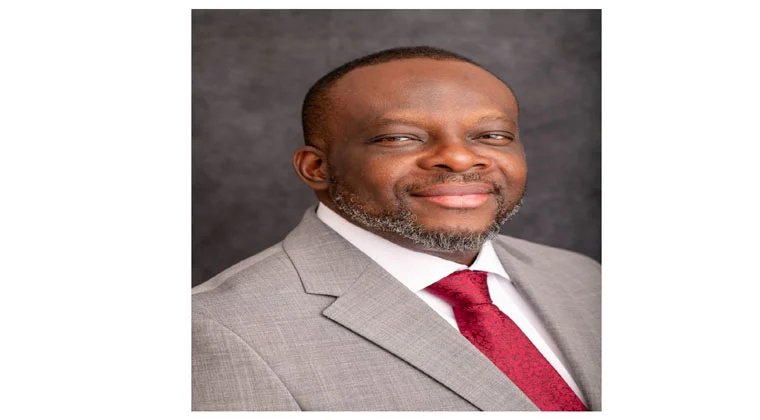
Dr Bolaji Olagunju is the Founder and Group Chairman of Workforce Group, a human capacity and organisational performance firm founded in 2004 and operating across Nigeria and Africa. He is also the Founder of Philantify and the convener of Leadership That Works, a platform devoted to the question of what really works in leadership. His books include Hiring Right: A Matter of Life and Death for Businesses and Business Owners; The Seven Disciplines of Breakthrough Results, a public sector leadership playbook for DGs, CEOs, Permanent Secretaries, Directors and Senior Leadership Teams; and Blueprint for Capacity Development Excellence, a strategic framework for strengthening the institutions and professionals at the heart of Africa’s human capital. He writes here in a personal capacity.