
The Nigeria Governors’ Forum has consulted state Attorneys-General on the proposed establishment of state police, with a strong emphasis on constitutional safeguards, federalism, and the protection of citizens’ rights.
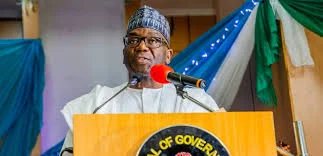
Ogun State Governor, Dapo Abiodun, disclosed this on Thursday while presenting the communiqué of the forum, signed by its chairman and Kwara State Governor, AbdulRahman AbdulRazaq, after its second meeting of 2026 in Abuja.
He noted that discussions focused on reviewing proposed constitutional amendments and developing an appropriate framework for the policing system.
He said governors stressed that any state police structure must be firmly rooted in the constitution and aligned with Nigeria’s federal system, adding that ongoing consultations would help consolidate a common position among the states.
The governors reiterated their support for the creation of state police.
For over two decades, Nigeria has faced severe insecurity driven by Boko Haram, bandits and other criminal groups, resulting in thousands of deaths and the displacement of millions.
Although the Federal Government and security agencies have recorded some successes in neutralising, arresting and prosecuting offenders, the threat persists.
Consequently, there have been growing calls for the establishment of state police as a more effective response to the crisis.
On June 10, the House of Representatives passed a bill to amend the 1999 Constitution (as amended) to allow for the establishment of state police.
The Senate followed suit on June 11, passing the bill for second reading and referring it to its Committee on Constitution Review for further legislative consideration.
Speaking after the NGF meeting on Thursday, Abiodun said governors stressed that state police must be constitutionally grounded, respect federalism and protect citizens’ rights, adding that ongoing consultations would strengthen the states’ common position.
“The forum received a presentation from the NGF Secretariat and a delegation of the Honourable Attorneys-General of the states on efforts to support establishing state police in Nigeria.
“It noted a dedicated consultation with the Attorneys-General to review the proposed constitutional amendments and frameworks.
“Governors emphasised the need for the state police to be
constitutionally sound and aligned with federalism and citizens’ rights.
“The forum noted the collaborative effort and added that
the consultation outcomes would strengthen the states’ collective position,” he said.
Speaking on the National Nutrition 774 Initiative, Abiodun said, “The forum received a presentation from the Federal Ministry of Budget and Economic Planning on progress under the National Nutrition 774 Initiative.
“The forum reaffirmed the governors’ commitment to improving nutrition outcomes and reducing child malnutrition across Nigeria.”
The governor urged sustained engagement with stakeholders to strengthen the legal and policy framework for nutrition governance, while acknowledging progress on the National Nutrition Bill.
The forum also received a briefing from the World Bank Country
Office on the proposed Country Partnership Framework for
Nigeria covering the period FY2026–2032; the proposed Nigeria
Sustainable Agricultural Value-Chains for Growth, a results-based initiative designed to improve agricultural productivity, strengthen value chains, increase private sector participation, enhance food security, and early childhood development.
Abiodun said, “The forum supported ongoing collaboration with the Federal Government, the World Bank, and other stakeholders to ensure successful implementation and deliver benefits to participating states.
“Governors approved state-specific interventions and stressed the importance of better coordination across sectors like health, nutrition, education, water and sanitation, social protection, and family support.”
On the National Solar Super-Grid Initiative, Abiodun said the proposal was to expand electricity access through solar generation.
“The forum received a presentation on the National Solar
Super-Grid Initiative, a proposal to expand electricity
access through large-scale decentralised solar generation
integrated with a national high-voltage transmission network.
“The forum noted the initiative’s potential to support industrialisation, improve energy security, strengthen state electricity markets, and accelerate economic growth.”
Governors also reaffirmed their commitment to ongoing power sector reforms and to strengthening collaboration among stakeholders to improve access to reliable and affordable electricity for Nigerians.