
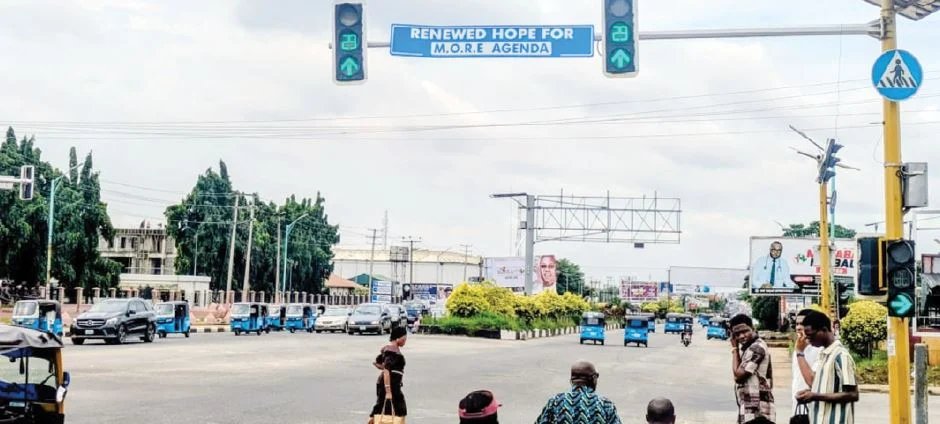
In Delta State, politics has shifted from party slogans to daily survival. From markets in Okpanam to homes in Asaba, residents say the cost of living has become the defining issue of their lives. In this report, EFECHA GOLD traces how hunger, rising prices and daily struggles are driving a new political conversation ahead of the next general elections
For many families across the Delta State today, politics is no longer about campaign posters, political parties or promises made at rallies.
It is about survival.
It is about whether there will be food on the table after work, whether transport fare can be afforded the next morning, whether rent can be paid before a landlord knocks, and whether parents can still provide for their children in an economy that grows harder by the day.
As Nigeria gradually moves towards the 2027 general elections, economic hardship is becoming one of the biggest issues influencing public opinion. Across markets, farms, motor parks and residential neighbourhoods, many residents say the rising cost of living has changed not only how they live, but also how they view political leaders.
From civil servants and traders to farmers and transport workers, the message is similar: life has become more difficult, and people are paying attention.
“People Can No Longer Afford What They Used To Buy”
At Okpanam Market, a fish seller sat quietly behind her goods, waiting for customers.
Business was slow.
According to her, the economy has affected both traders and buyers in ways she has never experienced before.
“The economy has affected us very negatively,” she said.
“Things are now costly, but there is little money in circulation. People are struggling to survive.”
As she spoke, customers walked around the market comparing prices before making purchases. Many eventually bought only small quantities.
The trader explained that while goods are available, many people simply cannot afford them.
“The major problem is that people don’t have enough purchasing power. The products are here, but customers do not have the money to buy them.”
She said the hardship is visible in many homes.
“Many families that used to eat three times a day can barely afford two meals now. That is how bad things have become.”
The impact is equally visible in her business.
According to her, sales have dropped significantly because customers are buying less than they used to.
She recalled how the price of fish had almost doubled within a relatively short period.
“A carton of fish that we used to buy for about N50,000 now sells for between N90,000 and N95,000.”
As prices continue to rise, customers who once bought larger quantities now settle for much smaller portions.
“People buy only what they can afford. Most times, they want more, but they simply don’t have the money.”
For traders whose daily income depends on sales volume, the consequences are painful.
Many spend long hours in the market only to return home with little profit.
Salary no longer lasts
For many workers in Asaba, the state capital, monthly salaries are losing value faster than ever before.
A civil servant who spoke with The said many workers now find themselves trapped between stagnant income and rising expenses.
According to him, survival has become a daily calculation.
Housing costs continue to rise, transport fares regularly increase, and food prices show no sign of slowing down.
A resident, Mr Onorah Panabukanor, said life has become increasingly difficult for average earners.
“People are now living from day to day,” he said.
“After paying rent and transportation, there is almost nothing left.”
He explained that even workers earning around N150,000 monthly now struggle to meet basic needs.
School fees, healthcare bills and feeding expenses have become major sources of stress for many families.
“What people earn today is no longer enough for the realities they face,” he said.
Asaba rent nightmare
Among young people living in Asaba, accommodation has become one of the biggest challenges.
A National Youth Service Corps member described the city’s housing situation as frustrating and exploitative.
According to her, many tenants are forced to pay huge amounts because of excessive charges imposed by agents.
“A house that should cost N400,000, N500,000 or N600,000 suddenly becomes much more expensive because of what they call a total package,” she said.
She narrated her experience.
“I paid for a house and later discovered from the landlord that the actual rent was N600,000, but the agent collected N900,000 from me.”
The revelation left her shocked.
Like many young residents trying to establish themselves, she said the burden of rent now overshadows other important life goals.
“Since I came to Asaba, securing accommodation has been challenging. I worry constantly about how to raise money for rent.”
For many youths, the dream of independence is gradually being replaced by anxiety about basic shelter.
Trapped between fuel and survival
The hardship is not limited to tenants and traders.
For transport operators, rising fuel prices have drastically reduced profits.
Emeka, a tricycle rider, said each working day feels like a struggle between earning income and spending it immediately on fuel.
“If you buy fuel for N2,000 from Okpanam to Abraka, by the time you return, you may need to buy fuel again,” he said.
According to him, what remains after expenses is often discouraging.
“Sometimes after working all day, you earn around N3,000. When you remove fuel costs, you may be left with only N1,000.”
Passengers are also feeling the pressure.
He said many now negotiate fares because they are equally struggling financially.
“Some passengers will tell you they only have ₦200. If you refuse, you may wait a long time for another passenger.”
For transport workers, every day has become a balancing act between staying in business and merely surviving.
Farmers feel impact
In the agricultural sector, rising costs are affecting both production and sales.
The Chief Executive Officer of Benrotimi Farm, Benjamin Olusoji, said the situation is becoming increasingly difficult for farmers.
“The economy has affected our business in a very challenging way,” he said.
Using farm records, he pointed to a significant decline in sales.
“In the past, we could sell between 50 and 100 crates of eggs in a week. today, sales sometimes drop to between 30 and 45 crates.”
He explained that consumers now prioritise only the most essential purchases because their incomes can no longer cover everything.
The farmer also highlighted the dramatic rise in food prices over the years.
“When we were growing up, frozen fish sold for about N200 or N300. today, it can cost as much as N5,000.”
Rising feed costs, transportation expenses and logistics challenges continue to place pressure on food production, contributing further to inflation.
Market women cry out
Market women say inflation has changed the way customers shop.
One trader explained that even staple food items have become too expensive for many households.
“For example, a cup of melon that used to sell for N400 now costs around N700.”
The increase may appear small to some people, but for families buying multiple food items, the effect is significant.
“People who used to buy four cups now buy one or two.”
She said traders are equally affected because the money they use to restock goods no longer goes as far as it once did.
Profits continue to shrink while operating costs rise.
The trader also expressed disappointment with political leaders.
“I don’t think many politicians truly understand what we are going through.”
She urged leaders to spend more time in local markets to see the reality that ordinary Nigerians face daily.
Do politicians understand?
The fish seller at Okpanam Market believes many political leaders are disconnected from the struggles of ordinary people.
“Most of them are comfortable and financially secure,” she said.
“They don’t fully understand what market traders and ordinary citizens are going through.”
According to her, many Nigerians are enduring severe hardship, yet those in positions of authority appear far removed from those experiences.
The feeling of disconnect is becoming increasingly common among citizens who believe their concerns are not receiving adequate attention.
Will hardship affect 2027 polls?
For many residents, economic hardship is already influencing political opinions.
The fish seller at Okpanam Market believes people will remember their experiences when it is time to vote.
“Yes, I believe the hardship will influence many people,” she said.
However, she also pointed to a growing concern among citizens.
Many people, she said, have lost confidence in the electoral process.
“There is a feeling among some people that their votes do not count.”
That perception has contributed to voter apathy and frustration, particularly among young people and low-income earners who feel disconnected from the political system.
Yet despite the doubts, many residents are closely watching events unfold. The rising cost of living, increasing food prices and declining purchasing power continue to shape public conversations across homes, markets and workplaces.
Professor Anthony Monye-Emina of Dennis Osadebay University, Asaba, said such economic realities would ordinarily play a major role in determining electoral outcomes in any healthy democracy.
“In a well-functioning society, economic conditions should significantly influence electoral outcomes,” he said.
According to him, the burden of rising food prices, transportation costs, housing expenses and other basic needs has placed enormous pressure on citizens, creating widespread dissatisfaction across different segments of society.
However, he noted that Nigeria’s situation is more complex.
The economist identified voter apathy as one of the major challenges affecting the country’s democratic process.
“Many citizens do not actively participate in elections, making it difficult to determine whether election results truly reflect the will of the people,” he said.
He also pointed to concerns over electoral irregularities, which have further weakened public confidence and discouraged participation among some voters.
The concerns raised by the economist reflect the frustrations expressed by several residents interviewed by The , many of whom said they feel increasingly disconnected from a system they believe has failed to address their everyday struggles.
Despite this, Monye-Emina warned that governments should not underestimate the political consequences of economic hardship.
“The quality of governance and service delivery does not provide sufficient grounds for any government to expect automatic re-election,” he said.
He called for greater civic responsibility among citizens and urged Nigerians to remain engaged in the democratic process despite their frustrations.
For many residents across Delta State, however, the issue goes beyond politics. It is about survival. And as economic pressure continues to mount, the experiences of ordinary people may become one of the strongest factors shaping political attitudes ahead of 2027.
Between anger and hope
Across Delta State, frustration is growing.
From the fish seller whose customers can no longer afford what they once bought, to the corps member struggling with rent, the tricycle rider battling fuel costs, the farmer facing declining sales and the market woman watching customers cut purchases, the stories are different but the message is the same.
Life is becoming harder
As 2027 approaches, many residents say their political choices will be shaped less by slogans and more by their lived experiences.
Whether that translates into greater voter participation remains uncertain.
But one thing is clear: in homes, markets and streets across Delta State, survival has become the most important political conversation of all.