

When PHATHISANI MOYO watched Bryan Habana deliver a presentation in Cape Town, he was intrigued by the personal journey to fintech behind one of South Africa’s most celebrated rugby careers.
Eight years after retiring from professional rugby, Bryan Habana found himself facing an unfamiliar opponent: himself.
The former Springbok winger and 2007 World Cup winner had spent much of his adult life mastering a sport that made him one of South Africa’s most recognisable athletes. He had represented his country on the biggest stage, performed under immense pressure and built a career around the discipline required to compete at the highest level.
But when he stepped into the fintech boardroom, the skills that made him a rugby star did not automatically translate into business success.
“I didn’t know how to do a PowerPoint presentation. I didn’t know how to put a table into a spreadsheet or read a budget,” Habana recalled during a presentation at BPC’s innovation event in Cape Town on October 22.
For someone accustomed to operating at the highest level of professional sport, it was humbling. The man once expected to know exactly what to do on a rugby field was suddenly a beginner in an unfamiliar world.
Yet that discomfort marked the beginning of a different career. Habana moved from the rugby field to fintech, co-founding Paymenow, a company that helps employees access wages they have already earned before payday.
His second act is about more than finding something to do after rugby. It is about applying the qualities that made him successful on the field to a different challenge, and discovering a new way to make an impact.
Watching Habana deliver his presentation in Cape Town, I was struck by how candidly he spoke about this transition. His story resonated because it was not just about an athlete moving into business. It was about what happens when the identity that has defined much of your life no longer prepares you for what comes next.
That is a challenge many people face: professionals forced to change careers, entrepreneurs rebuilding after business failure, and anyone who has had to start again after a major life change. Sometimes the hardest part is accepting that you must become a beginner again.
Habana’s second act
For elite athletes, retirement can be a particularly difficult transition. The routine, competition, team environment, and public recognition that once structured everyday life can disappear almost overnight.
Habana’s rugby career had given him a clear framework. He had training sessions, match days, coaches, teammates, and measurable goals. Success was often visible through a try scored, a match won, a trophy lifted.
Business was different—new systems to understand, unfamiliar language, and decisions whose consequences were not always immediately apparent. Habana studied computer science early in his life, before rugby took over. His interest in technology never entirely disappeared, but understanding technology was not the same as knowing how to build a business.
The transition demanded humility. His reputation on the rugby field would not automatically make him competent in the boardroom.
Habana reflected on the challenge of adapting to a world that would not simply accommodate the person he had been. “The future doesn’t go with you,” he said.
It is a striking way to describe the end of a career. The future does not arrive carrying your old identity, routines, or achievements. You have to meet it on its own terms.
A problem worth solving
In 2019, Habana co-founded Paymenow with chief executive officer (CEO) Deon Nobrega, chief technology officer (CTO) Willem van Zyl and chief development officer Gerbrand Potgieter. He explained that the company was built around earned wage access, which lets employees access a portion of the wages they have already earned before their scheduled payday.

The idea addresses a familiar problem for many workers. Salaries may arrive monthly, but everyday expenses do not wait for the end of the month. Transport, food, school costs, and unexpected bills can create pressure long before payday.
For workers with limited savings or access to affordable credit, that gap can push them towards expensive short-term loans. The pressure is reflected in Nedbank’s 2024 Financial Health Monitor, which found that 10% of workers had turned to payday loans to manage financial stress, while 12% had borrowed from informal lenders. FinMark Trust’s research offers a broader picture: 75% of South Africans who borrowed in 2024 used credit to cover essentials such as food.
Paymenow aims to give employees more flexibility over money they have already earned. Its services also include financial education and other tools intended to help people make better decisions about their money.
The idea is rooted in how people live and earn. Financial inclusion is not simply about giving someone a digital account or access to an app. It requires understanding when people receive their income, how they spend it, and what happens when money runs short.
A worker who can access earned wages when an unexpected expense arises may have an alternative to borrowing at high interest. In a country where many households live close to the edge of their monthly budgets, that flexibility can matter.
For Habana, the company’s purpose goes beyond making wages available earlier. It is about helping people manage financial pressure and improve their financial wellbeing. As he put it, “We’ve got an audacious goal of wanting to release ten million employees from financial stress through financial technology.”
From an idea to a regional business
Paymenow’s growth suggests that the problem it set out to address extends beyond South Africa. The company expanded into Namibia and Zambia before entering Pakistan.
By 2026, it reported serving more than 750,000 employees across the four markets, with clients including major employers in retail, telecommunications, healthcare and hospitality. In May 2026, Paymenow announced a merger with PayCurve, a South African employee financial wellness company founded in 2020.
The merger combines Paymenow’s wage-access service with PayCurve’s tools for identifying employees experiencing financial difficulties and helping them manage debt, build savings and improve their financial habits. The combined business will operate under the Paymenow brand.
The move reflects a wider understanding of the problem. Giving workers access to wages they have already earned can ease pressure before payday, but lasting financial stability also requires help with debt and savings.
For Paymenow, the merger broadens its services beyond short-term cash-flow problems. Habana has argued that growth must not come at the expense of the company’s purpose. “You’ve also got to stick with your purpose-driven approach,” he said.
Lessons that travel from the field
Habana’s sporting career did not become irrelevant when he left rugby. It gave him lessons he could apply in a different environment.
Teamwork is one of the most obvious. Rugby is a collective game, even when an individual player becomes the face of a defining moment. One person may score a try, but several teammates’ work often makes it possible.
Business operates in much the same way. A founder may be visible to investors, customers and the public, but a company’s success depends on people with different skills working towards a common goal.
“You can get quite far on your own, but it takes a lot longer,” Habana said.
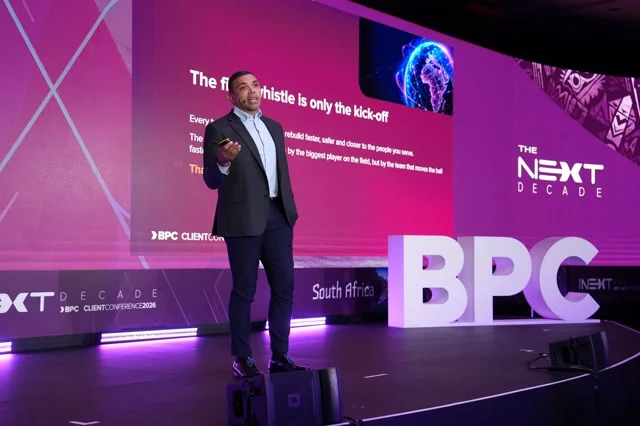
Preparation is another lesson. In sport, talent alone is rarely enough. Training and repetition allow athletes to perform when the pressure is greatest. In business, preparation helps people recognise and harness opportunities.
Habana also highlighted the importance of responding to failure rather than allowing it to define the journey.
“Fail fast, but live faster,” he said.
That requires a willingness to change. The approaches that worked in one environment may not work in another, particularly in technology, where products and customer expectations evolve.
“We have to unlearn in order to learn,” he said.
Habana said this meant accepting that he could not rely on past achievements to navigate a new profession. He had to ask questions, acknowledge what he did not know, and learn from people with different expertise.
A different kind of impact
Habana has said sport allowed him to inspire hope. For many South Africans, the Springboks represent more than a team. Their victories can create moments of shared pride in a country where sport holds a powerful place in the national imagination.
Fintech offers a different kind of opportunity. A product that works can make a difference repeatedly in the everyday lives of its users.
That does not mean earned wage access can solve the structural problems behind financial insecurity. It cannot replace fair wages, stable employment, or broader economic opportunity. But it can offer a practical alternative for workers who need greater control over when they access money they have already earned.
For Habana, fintech offers a different kind of impact from the one he experienced on the rugby field. “As a rugby player, I could inspire hope,” he said. “But at no point in my rugby journey did anyone tell me that, because of what I did, I had saved their life.”
That sense of purpose, he said, is what makes the work particularly meaningful. “With financial technology, we are able to make an impactful difference in people’s lives on a daily basis,” he added.
Some of Africa’s most relevant fintech ideas have emerged from understanding everyday problems and building services around them. Paymenow’s proposition starts with a simple observation: the timing of income and the timing of expenses do not always match.
Turning that insight into a sustainable business requires trust, affordability, and sound execution. But the need it addresses is real.
Becoming a better version
Perhaps the most compelling part of Habana’s transition was not his move from rugby to fintech, but the personal philosophy that has helped him navigate the transition.
He recalled advice from former Springbok captain John Smit, who encouraged him to ask himself a question when looking in the mirror at the end of each day: “Every night when you go to bed… is that person an improvement on the person you saw the day before?”
It is a simple question that strips away trophies, titles, and public recognition. It asks whether you are learning, improving, and becoming better at what you do.
For an athlete, that might mean refining a skill or becoming a better teammate. For a founder, it could mean listening more closely to customers, understanding the business, or making a difficult decision for its long-term health.

Starting again can feel like losing ground, particularly when the world still remembers who you used to be. Habana knows what it is like to move from being the person everyone expects to succeed to the one sitting in a boardroom trying to understand a spreadsheet.
At Paymenow, he has found a different field in which to test himself. The scoreboard has disappeared, but the work of learning, improving and making a difference continues.
Perhaps that is why John Smit’s question about the person in the mirror carries such weight. At the end of the day, Habana no longer has to measure himself by the tries he scores or the matches he wins. He can ask a different question: is the person looking back at him a little better than the one from yesterday?
For someone who has had to start again, that may be the real victory: not returning to who you were, but becoming someone you had not yet imagined.