
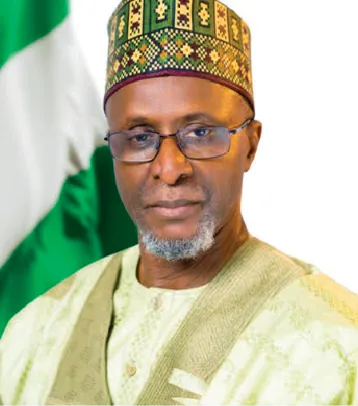
The Minister of Environment, Balarabe Lawal, Iin this interview with DAMILOLA AINA, discusses Nigeria’s expectations at COP31, climate finance inequalities, adaptation priorities and efforts to secure fairer funding and support for African countries in global negotiations
How would you assess Nigeria’s experience at the ongoing 31st edition of COP, particularly in terms of your engagements with global leaders on climate change?
As we all know, this is the United Nations Climate Change Conference of the Parties 31, and it is a conference focused on implementation. We have had many Conferences of the Parties, particularly COP28, where several promises were made and substantial funds were mobilised. This COP is special because it is expected to begin to show actual results.
From the moment we started, things have been going very well. Apart from the conference itself, we have signed a number of agreements. For example, we signed an agreement with China. About five agreements have been signed, and I believe that by the end of the conference, we will have a comprehensive list of all the agreements. I do not have the details at hand now, but I believe we will have them before the end of the week.
There is a lot of hope for this COP because several sectors are being considered. We are looking at the environment, which is very important, climate change, water resources, agriculture, health, trade and investment. We expect all these sectors to be represented, and we already have some of the ministers here.
The Minister of Agriculture is here, and we have signed an agreement under the National Agricultural Land Development Authority. The Minister of Water Resources is also expected to sign an agreement with the German Agency for International Cooperation later in the day. The Minister of Livestock also held a session, which I am sure you attended, and I believe there will be an outcome from that engagement.
This COP is going to be different because, for a long time, we have been talking about loss and damage. To me, it was like a mirage, but now I am beginning to see the light at the end of the tunnel. At least, the fund is now in place, and some money has been committed to it.
We are talking about $2bn. It is still far below what we expected because, in Dubai, $100bn was promised. However, up to this moment, we are talking about slightly above $1bn in the fund. Nigeria is also among the countries expected to benefit from it.
We have submitted our request, and it is receiving very good consideration from the fund. So, we are doing well this time, and I believe this is not like some of the previous COPs, which were more like talk shows. This is an important conference where I think we are beginning to make progress.
Nigeria’s relationship with China has continued to strengthen. You signed an agreement with China two years ago. Could you explain what the agreement concluded at this COP provides and what benefits it offers Nigeria?
The agreement we signed two years ago is not different from the current agreement. This one is intended to provide the material support needed to implement the agreement we signed previously.
The earlier agreement was the starting point. What we have signed now concerns the materials and equipment that China will bring in to support its implementation. We have to agree on the conditions under which these materials will be brought into the country, including taxes, customs duties and other related issues. That is what we have agreed with them.
We are receiving substantial equipment, instruments, machinery and other materials to support the earlier agreement. So, it is not entirely a new agreement. It is a continuation of the agreement we signed previously.
Nigeria now has a National Adaptation Plan in place. What does this signify for the country, particularly given that its development has been ongoing for the past four to five years?
The National Adaptation Plan was started in 2021, and this year, we have been able to complete it with the support of several partners, particularly the Food and Agriculture Organisation, the United Nations Environment Programme and other development partners.
The plan is designed to examine Nigeria as a whole and identify areas affected by climate change so that we can develop appropriate measures to adapt to those challenges. Most importantly, the plan is expected to help us mobilise resources to address them.
The report is ready, and our partners are willing to support us in mobilising the resources required for its implementation.
We are looking at the entire country. In the North, we are examining the challenges of Sahelian encroachment and desertification. Moving towards the Middle Belt, we are looking at the effects of land degradation and changing environmental conditions. Further south, we have forests that are increasingly being threatened by deforestation and other activities. We also have swamp and mangrove ecosystems, which are disappearing because of oil production and other human activities.
The plan examines Nigeria’s overall environmental challenges, identifies the affected areas and proposes measures through which we can adapt to or mitigate the effects of climate change.
It is important because many people are being forced to move away from their communities and traditional territories because of land degradation. That is why we must look at the issue from a national perspective.
One of the major takeaways from this COP is the support we have received. You cannot begin implementation without a proper plan. The plan has been in the pipeline for a long time, but we have now completed it, and it is available for people to examine and support its implementation.
You also participated in a meeting with the United Nations Secretary-General on the Grid Acceleration Initiative. What were the key outcomes and commitments arising from the discussions?
Yes, I had two meetings with the Secretary-General. The first concerned electricity, particularly the deployment of solar power, solar grids and other renewable energy solutions. They are already supporting Nigeria in that area.
About $500m has already been committed to supporting us in expanding mini-grids and integrating more grids into our electricity system. That was the first meeting, and we are grateful for the support.
The second meeting was convened by the outgoing United Nations Secretary-General, who invited four ministers and three presidents to participate in the discussion. The meeting was intended to review the progress made so far, identify outstanding challenges and examine what still needed to be done as he prepares to hand over to his successor.
We are very grateful for what he has done for Africa, particularly because he has been a champion of climate change action since he became Secretary-General 10 years ago.
It was a very open meeting. We were given the opportunity to raise the issues we believed needed attention, and he took notes. I was actually surprised because he was taking notes like a student.
The Vice-President of Gabon spoke first, and I spoke second. Other participants also made their contributions, and it was a very productive meeting.
I believe this is the way we can begin to implement and monitor what has been discussed over the years. No Secretary-General has worked so hard to address climate change as the outgoing one. He has done so much, particularly with Africa in focus.
He is more African than many people we know. He thinks about Africa, works for Africa and has consistently supported the continent. That is why we need to celebrate him and thank him for his contributions. We did that during the meeting.
With negotiations still ongoing, what are the key priorities and expected outcomes for Nigeria and Africa at this COP?
That is why we have brought representatives of all the relevant sectors here to present issues that are important to Nigeria.
We are looking at agriculture because we need to improve our food security, increase agricultural production and address land degradation.
When it comes to the environment generally, we are experiencing flooding in several parts of the country. Areas that ordinarily should not experience such levels of flooding are now being affected. Places such as Sokoto, Maiduguri, Katsina and other areas have experienced flooding.
So, we are looking at adaptation, mitigation and, at the same time, mobilising resources for climate finance.
Yesterday, we also strongly raised the issue of carbon credits, an area where we believe developing countries are not receiving fair treatment. We have noticed that applicants from some countries appear to receive more favourable consideration than those from countries like Nigeria. We raised this concern strongly, and other African representatives shared similar views.
Following our meeting, discussions were held with representatives of developed countries to examine how applicants from developing countries could benefit more fairly from carbon credit arrangements.
Nigeria has already developed its own plans and framework, which was launched by the President in Abu Dhabi. I believe we are making progress and will achieve as much as possible in this area.
I expect more from this COP than from some of the previous conferences because there are more concrete issues on the ground.
At least, we can now see that funds are available.
What we have strongly advocated is making it easier for countries to access these funds. In most cases, the processes involved in obtaining climate finance are very difficult and complicated.
This time, however, the Executive Secretary of the United Nations Framework Convention on Climate Change and other relevant officials have assured us that efforts will be made to simplify the processes, particularly for African countries and small island developing states.
We are working towards ensuring that the process of accessing climate funds becomes easier for countries that need the resources most.
There are concerns about disparities in the interest rates charged to countries borrowing funds for climate-related projects. While some countries reportedly enjoy lower rates, others, including Nigeria, face significantly higher borrowing costs. For instance, Germany is said to borrow at three per cent, compared with Nigeria’s seven per cent. What is your reaction to this disparity, and what should be done to ensure fairer access to climate finance for developing countries?
This is exactly the kind of inequality we have been discussing. Just as we have raised concerns about carbon credits, we have also observed that some countries enjoy more favourable financing conditions than others.
When you examine the situation, you find that lenders consider a country’s credit rating. That is why it may be easier for Germany to obtain financing at three per cent, while Nigeria is charged seven per cent.
However, this is one of the issues we discussed during our meeting, and we are pushing for a more equitable arrangement that will bring the rates to a reasonable level.
What borrowing interest rate do you believe would be fair and sustainable for Nigeria?
One per cent is fine. Thank you very much. We also have to examine the data to determine the interest rate that will help us achieve net zero in the future.