
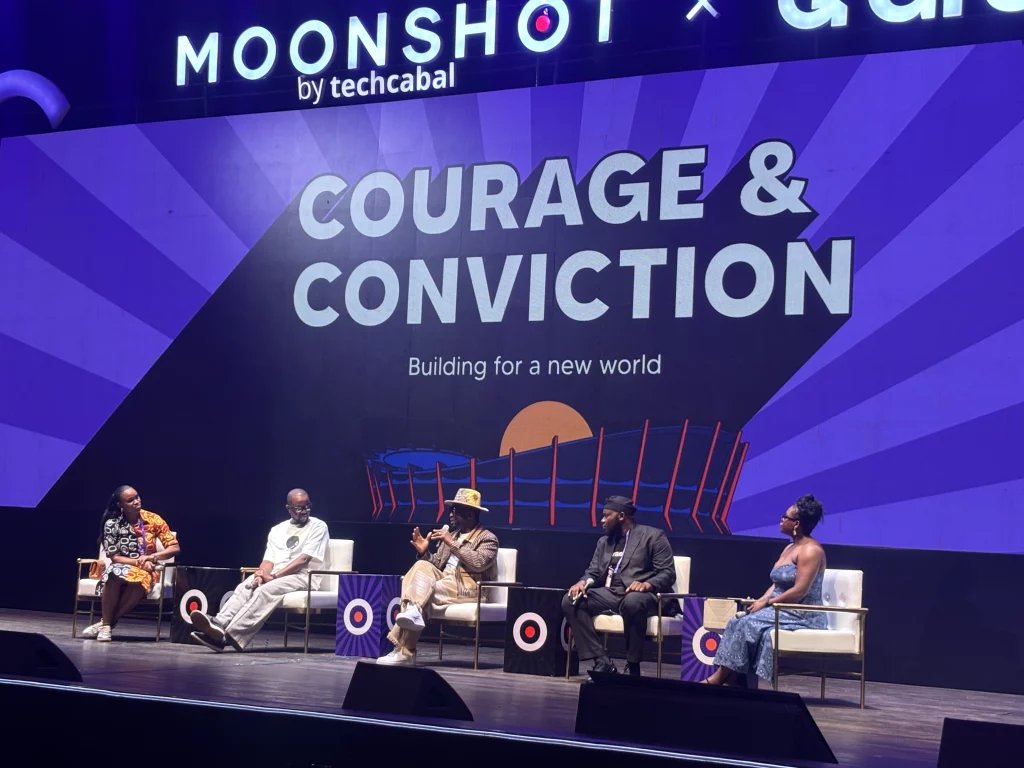
African creators have the talent and the audience. What holds them back is the infrastructure that turns attention into income. That was the thread through “Can African players build the infrastructure creators need?”, a panel at Moonshot by TechCabal on Thursday.
The session featured Richard Oyome, co-founder and COO of Raenest; Kene Okwuosa, founder and group CEO of Filmhouse Group; Darey Art Alade, co-founder and chief creative officer of Livespot360; and Kopano Cowen, CEO of Connect Channel. Kehinde Odusote-Fagbule of TechCabal Insights moderated.
The Nigerian Creator Economy Report 2025, found that 56.45% of Nigerian creators earn less than $100 a month from their work, while 3.23% earn more than $5,000. Money does reach some creators: Nigerian artists received more than ₦58 billion from Spotify in 2024, up 146% on 2023, according to the same report.
Platform payouts are part of the problem, as brand deals were often creators’ only route to income, because major platforms did not pay Nigerian creators directly until Meta switched on ads on Reels for creators in Nigeria and Ghana in 2024.
“We need to make the market bigger,” Oyome said, adding that the fix starts with growth. “We could penetrate foreign markets, especially in film, through collaboration, to produce better quality and attract international audiences.”
Getting paid from abroad is another barrier. Raenest, which offers dollar, pound and euro accounts to freelancers and creators, raised an $11 million Series A in February 2025 and said it had processed more than $1 billion in payments for over 700,000 individual customers.
Okwuosa rejected the idea that Nigeria’s market is small. “I don’t subscribe to the notion that the Nigerian market is small,” he said. “It only feels that way because we haven’t activated its size.” The real brake, he said, is piracy: “It limits the rewards and reach for creators.”
Estimates of what piracy costs Nollywood vary widely, which itself shows how little is measured. MultiChoice has put Nollywood’s annual losses at ₦10 billion to ₦15 billion, based on audience data, while other industry figures run far higher. TechCabal’s 2026 outlook adds that Netflix and Amazon Prime have cut African content spending, pushing more Nollywood filmmakers onto YouTube.
“Public-private partnerships can help expand the market,” Alade said. “We need policy and legislation that make it easier for these collaborations to happen.” The government has begun to move: its Creative Economy Development Fund is backed by a $200 million seed commitment from Afreximbank, according to the ministry.
The panellists agreed that the next wave of investment in the creator economy need not be a new standalone product. It could be a partnership or an acquisition that links players already working on payments, production, distribution and policy. For African builders, the opportunity lies in connecting what already exists.