
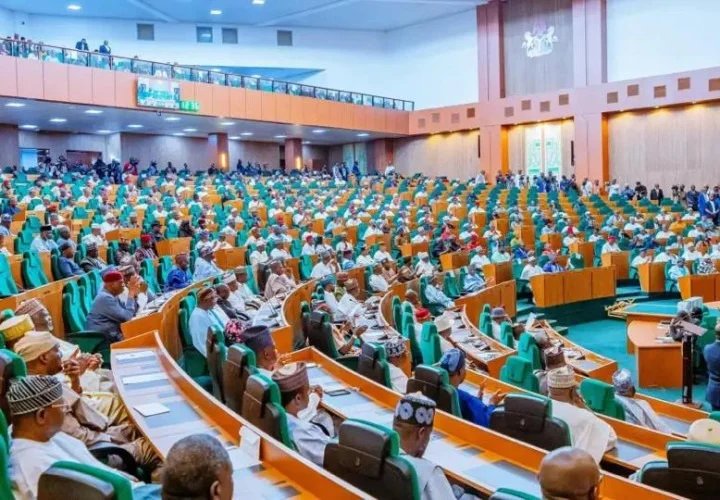
The ruling All Progressives Congress on Wednesday suffered fresh defections in the House of Representatives as two lawmakers formally announced their departure from the party, underscoring the intensifying political realignments ahead of the 2027 general elections.
The development came barely 24 hours after the National Assembly resumed plenary following a Salllah recess, during which a number of political actors across the country have been engaged in consultations, coalition talks and strategic repositioning ahead of the next electoral cycle.
At Wednesday’s sitting, the member representing Jama’are/Itas-Gadau Federal Constituency of Bauchi State, Rabilu Bala, formally defected from the APC to the Peoples Redemption Party.
The Speaker of the House of Representatives, Tajudeen Abbas, who read Bala’s letter on the floor of the chamber, said the lawmaker attributed his decision to persistent internal disagreements within the APC and the need to pursue a political platform he believes would better enable him to serve the interests of his constituents.
According to the letter, the decision followed extensive consultations with political stakeholders in his constituency and was informed by “concerns over developments within the party at both the state and national levels.”
In a separate development, Abubakar Zango, who represents Yola North/Yola South/Girei Federal Constituency of Adamawa State, also announced his resignation from the APC and subsequent defection to the ADC.
In his letter, Zango said his decision was guided by his conscience and what he described as the broader national interest. He pledged to continue discharging his legislative responsibilities diligently and in accordance with democratic principles, assuring his constituents that his commitment to effective representation remained unchanged.
Similarly, the member representing Dukku/Nafada Federal Constituency of Gombe State, Abdullahi also defected from the APC to the ADC.
The defections add to a growing list of political movements that have gained momentum in recent months as politicians across party lines begin to position themselves ahead of the 2027 elections.
Although the APC maintains comfortable majorities in both chambers of the National Assembly, recent developments have highlighted underlying tensions within some state chapters of the party, particularly over issues relating to internal democracy, leadership structures and succession calculations.
The PRP, one of Nigeria’s oldest political parties with roots tracing back to the political movement led by the late Mallam Aminu Kano, has in recent years sought to rebuild its presence in parts of northern Nigeria.
The ADC, on the other hand, has emerged as a platform attracting politicians seeking alternatives to the country’s dominant parties amid ongoing coalition discussions among opposition figures.
Political observers say the latest defections may be an indication of more movements to come as parties begin preparations for the next election cycle. While some lawmakers have cited internal crises as reasons for leaving their parties, others are believed to be aligning with emerging political blocs and alliances expected to shape the contest for power in 2027.
The APC leadership has repeatedly downplayed concerns over defections, insisting that the party remains strong and united despite isolated departures.
However, opposition parties view the recent developments as evidence of growing dissatisfaction within the ruling party and an opportunity to expand their political reach.
With less than two years to the next general election, attention is expected to remain focused on the National Assembly and the wider political landscape as parties intensify efforts to consolidate support and strengthen their structures across the country.