
For Harry Huang, the problem with moving money across borders was not something he discovered in a boardroom or at a fintech conference. He had seen it much earlier, through his family’s import-export business.
His parents were building a business in South Africa, dealing with suppliers and customers beyond the country’s borders. But making international payments was not always as simple as instructing a bank to transfer money. Sometimes it required personal connections, patience and navigating exchange rates that did not match what businesses expected.
“Sometimes, you had to find someone who knew someone just to get a payment done,” Huang said in an interview with TechCabal on Monday. “It wasn’t as straightforward as going to a bank. The exchange rates were also different from what you would see on Google or other platforms.”
For businesses trying to trade across borders, these are more than administrative frustrations. Delayed payments, unpredictable foreign exchange costs and difficulty moving money can determine whether a company pursues an opportunity in another market or walks away from it.
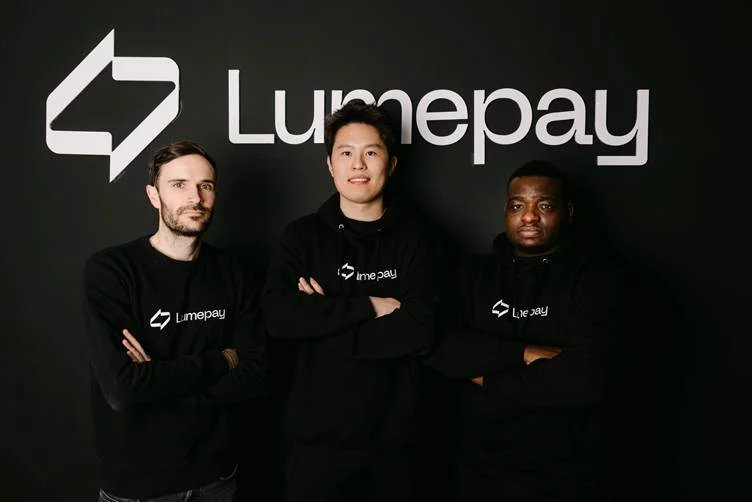
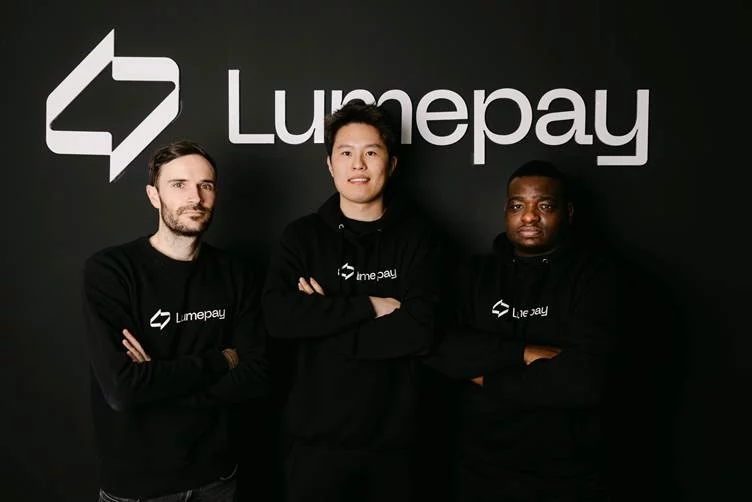
Huang believes he can help address some of those problems. As co-founder and chief executive officer (CEO) of South African fintech Lumepay, he is building cross-border payment infrastructure that combines traditional banking systems with stablecoin technology to help businesses collect, convert and move money across African markets.
Born in South Africa and raised for about 14 years in China, Huang has spent much of his life navigating two countries and their different ways of doing business. His professional journey has taken him from accounting and banking audits to the cryptocurrency industry, where he became convinced that digital assets could serve a purpose beyond speculation.
Now, he wants to use that experience to make it easier for African businesses to trade with one another and the rest of the world. Lumepay has disclosed a $6 million pre-seed funding round, alongside $10 million in capital float to support liquidity for clients. Huang insists the bigger ambition is to build infrastructure that allows businesses to pursue opportunities without worrying about how they will get paid.
Between two worlds
“I was born in South Africa, but my parents were busy building their business and trying to establish themselves in Africa. They sent me to live with my grandmother in China, where I spent about 14 years,” he said.
He returned to South Africa in Grade 7, settling initially in Port Elizabeth city, now Gqeberha. The transition was not without difficulty. He had to adjust to a different education system and learn Afrikaans while still finding his feet in English.
“One of the challenges I faced was learning Afrikaans at that stage. It was quite difficult because I couldn’t even speak English properly at the time,” he says.
He eventually enrolled at the University of Cape Town (UCT), where he studied finance and accounting. He took to Cape Town and stayed in the city as his career developed.
After completing his degree, Huang undertook the postgraduate studies required to qualify as a chartered accountant. He then joined PwC, a multinational audit and consulting firm, in Cape Town, where he was among a small group of trainees who gained experience auditing banks.
According to Huang, the work exposed him to some of South Africa’s largest retail banks and a business bank focused on foreign exchange. It also gave him an understanding of the systems and controls behind financial institutions.
Accounting, however, was never an end in itself. Huang says he chose the discipline because he wanted to understand how businesses worked, rather than pursue a career as an auditor.
“I studied accounting not because I wanted to become an auditor, but because I wanted to understand how businesses work. I saw accounting as one of the best ways to gain that understanding,” said.
From scepticism to stablecoins
“At the time, I didn’t know much about crypto and was initially more skeptical about the value of the industry,” he stated.
That was four or five years ago. But after interviewing with the founder of a cryptocurrency exchange, he became interested in the industry and the changes it could bring to financial services.
He joined the company as finance manager when it had no established finance function, tasked with putting the processes and systems in place to support its growth.
Huang had to build the finance department and recruit a team. After a few months, he was promoted to chief financial officer (CFO).
The role gave him a front-row seat to the cryptocurrency boom, when investors were buying digital assets in anticipation of rising prices. He also witnessed the growth of non-fungible tokens (NFTs) and decentralised finance (DeFi).
But as the market cooled, Huang and his colleagues began to recognise another use for the technology, particularly in Africa: payments.
“People were using exchanges not necessarily because they wanted to invest in cryptocurrencies and wait for their value to increase, but because they needed to make payments, particularly using stablecoins,” he said.
Stablecoins are digital assets designed to maintain a stable value, typically by being pegged to a currency such as the US dollar. Their potential use in payments caught Huang’s attention because they offered another way to move value across borders.
Huang and a group of colleagues began discussing whether they could build a business around the problem. They believed they had the knowledge and experience to make cross-border payments easier for African businesses.
“That was how Lumepay started about a year ago,” he said.
Building a bridge for African businesses
Lumepay is designed to bring together different parts of the payments process rather than focus on a single transaction service. Its proposition is to handle collections, foreign exchange conversion and disbursements, using traditional banking rails and stablecoins where appropriate.
The company has two brands. Lumetrade houses its digital asset and cryptocurrency activities, while Lumepay focuses on traditional remittances, payment service provider services, local collections and payouts.
“Whether we use stablecoins or traditional payment rails, the customer doesn’t necessarily need to know which technology is being used behind the scenes,” Huang explained. “The customer’s main concern is moving money.”
In some cases, customers may not even realise stablecoins are involved, he added. What matters is that Lumepay delivers on the promised transaction speed and price, executes the payment and ensures the supplier receives the funds.
This retains both ideas while avoiding back-to-back quotations and the repetition around what customers need to know.
“There is enormous potential for intra-African trade, but some of that potential isn’t being fully realised because of the difficulties involved in moving money,” Huang said.
The company says it has established a presence across several African markets, although its ability to provide particular payment services depends on the regulatory permissions and partnerships available in each jurisdiction.
It lists markets including Nigeria, Ghana, Tanzania, Malawi, Mozambique, Kenya and the West and Central African CFA franc zones, while noting that further regulatory approvals are required to expand payment capabilities.
In October 2026, Lumepay said it had received regulatory clearance from the Central Bank of Kenya and launched its payments solution there. In South Africa, Lumepay (Pty) Ltd is registered as a Third-Party Payment Provider, while related digital asset business Lumetrade holds a Category I financial services provider licence covering intermediary services in crypto assets, derivatives and deposits.
No one-size-fits-all Africa
“It’s a completely different book. You cannot take one approach and apply it everywhere,” Huang stated.
Payment habits in Kenya or West Africa, for example, can differ considerably from those in South Africa. Some markets have well-developed digital payment ecosystems and technology integrations. Others still rely heavily on cash, and payments can take four or five days.
The regulatory environment is equally varied. A payment service provider licence in one country does not automatically give a company the same capabilities in another. Businesses may need different licences and local partners to offer the services they want.
Huang believes coordinating the company’s product roadmap with regulatory approvals is a central part of his role. Expanding without understanding local requirements can leave a business with infrastructure it cannot fully use.
“It’s not enough to advertise that you can provide a particular service,” he shared with TechCabal. “Once customers start using a platform, they need to know that it can actually deliver, handle their volumes and resolve their problems.”
The company is also capital-intensive. Beyond developing technology and securing regulatory approvals, it needs sufficient liquidity to facilitate payments, support transaction flows and secure competitive pricing. The $10 million capital float disclosed alongside its funding round is intended to anchor that liquidity, It is separate from the $6 million pre-seed equity funding.
“Managing someone else’s money can be more stressful than spending your own,” bemoaned Huang. “It keeps you awake at night.”
He said responsibility is summed up in a short sentence: “There are no excuses.”
The Africa he wants to help build
Huang’s ambition for Lumepay extends beyond becoming another payments provider. He wants it to become a familiar name among businesses that trade across the continent, particularly small and medium-sized enterprises that may not have the resources to navigate complicated international payment systems.
But Huang’s measure of success is not simply the number of countries Lumepay enters or the volume of transactions it processes.
“What would motivate me is being somewhere in Africa, sitting in a coffee shop and hearing people talk about how they use Lumepay,” he said.
He imagines hearing from a business owner whose money was once stuck somewhere, but who managed to resolve the problem and is now doing more business.
“If I could hear those kinds of stories, I would know we had made a difference.”
The technology may involve banking networks, foreign exchange systems and stablecoins. But the purpose, he insists, is simply to help businesses move money so they can get on with doing business.