
Lagos on Monday intensified its campaign to position itself as Africa’s premier destination for global capital, with President Bola Tinubu declaring the state an emerging gateway to international wealth, investment and enterprise.
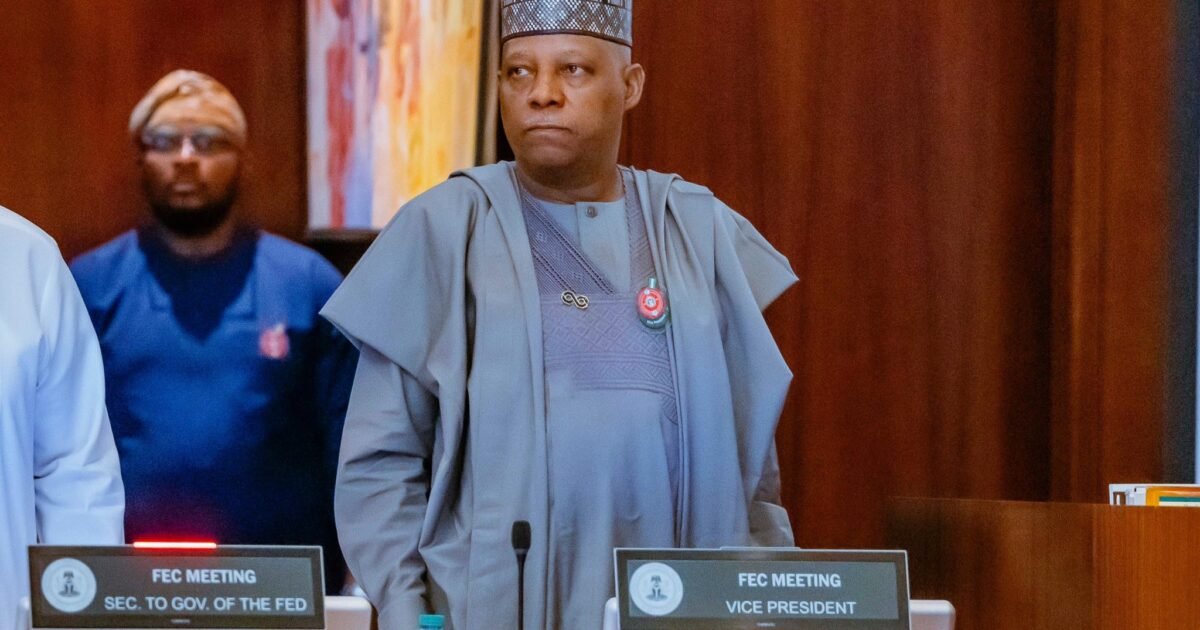
Speaking at the opening of Invest Lagos 2026 in Victoria Island, Tinubu, represented by Vice President Kashim Shettima, said Lagos had evolved beyond its status as Nigeria’s commercial capital into a strategic hub for investors seeking access to Africa’s expanding markets.
“Lagos is not merely Nigeria’s commercial capital; it is increasingly becoming the gateway to Africa’s economic future,” Shettima told delegates.
He said the state’s growing appeal was the result of deliberate economic policies, strong institutions and a business environment that continues to attract multinational corporations, technology firms and foreign direct investment.
According to the Vice President, Nigeria possesses the demographic advantage, entrepreneurial capacity and economic potential to rank among the world’s largest economies by 2050 if investments in infrastructure, innovation and human capital are sustained.
The three-day conference, themed “Lagos: Business Gateway to Africa, Powering Africa’s Next Era of Trade, Talent and Global Economic Leadership,” brought together investors, policymakers, development partners and business leaders to explore opportunities across key sectors of the economy.
Governor Babajide Sanwo-Olu said Lagos remained focused on building a resilient economy capable of attracting both domestic and foreign investment through infrastructure expansion, regulatory reforms and support for innovation.
“Our vision is to build a Lagos that competes with the best cities in the world, where businesses can flourish, innovation can thrive, and investors can achieve long-term value,” the governor said.
But it was Commonwealth Secretary-General Shirley Botchwey who offered the most expansive assessment of Lagos’ place in a rapidly changing global economy.
“The global economy is not just experiencing a passing period of turbulence; it is going through a structural shift,” she said.
According to Botchwey, investors are increasingly looking beyond traditional indicators of profitability to questions of trust, talent, regulatory certainty and long-term growth potential.
“The question is no longer simply where is the highest return. It is where is the trust, where is the talent, where is the regulatory confidence, where is the long-term growth story?” she said.
She pointed to Lagos as one of the cities best positioned to answer those questions, describing it as “a city of proof” rather than merely a city of promise.
“Lagos is proof that Africa’s growth story is real. It is proof that enterprise can move faster than expectations and that young people with ideas can build globally competitive companies,” she said.
Botchwey cited the emergence of Nigerian technology companies such as Flutterwave, Paystack and OPay as evidence of the state’s growing capacity to produce globally competitive businesses.
Inviting delegates to imagine Lagos in 2050, she painted a picture of a city powered by clean energy, connected through efficient transport networks and driven by young entrepreneurs building global companies from within Africa.
“That is not a fantasy,” she said, adding that, “It is a realistic prospect if we make the right strategic choices — and the work begins here.”
Botchwey also highlighted the Commonwealth’s economic advantage, noting that trade among member countries costs on average 21 per cent less than trade outside the bloc due to shared legal systems, language and institutional frameworks.
“An advantage unused is only a statistic,” she said, adding that the challenge was to translate those advantages into jobs, investment, stronger supply chains and economic growth.
She identified reliable electricity, efficient logistics infrastructure and improved security as critical requirements for unlocking Africa’s economic potential, while urging governments to invest heavily in skills development.
“We must ensure that young people are not spectators to growth, but its drivers and beneficiaries,” she said.
Minister of Finance and Coordinating Minister of the Economy, Taiwo Oyedele, said ongoing fiscal and tax reforms were helping to improve investor confidence and create new opportunities for growth at both national and sub-national levels.
A major highlight of the conference was the Governors’ Investment Showcase, where governors from Lagos, Abia, Imo, Nasarawa and Plateau states presented investment opportunities across sectors, including infrastructure, manufacturing, agriculture, technology, mining and tourism.
While several states pitched their investment prospects, Lagos remained at the centre of the discussions, using the summit to reinforce its ambition to serve as the principal gateway for businesses seeking access to Africa’s rapidly expanding consumer market.