
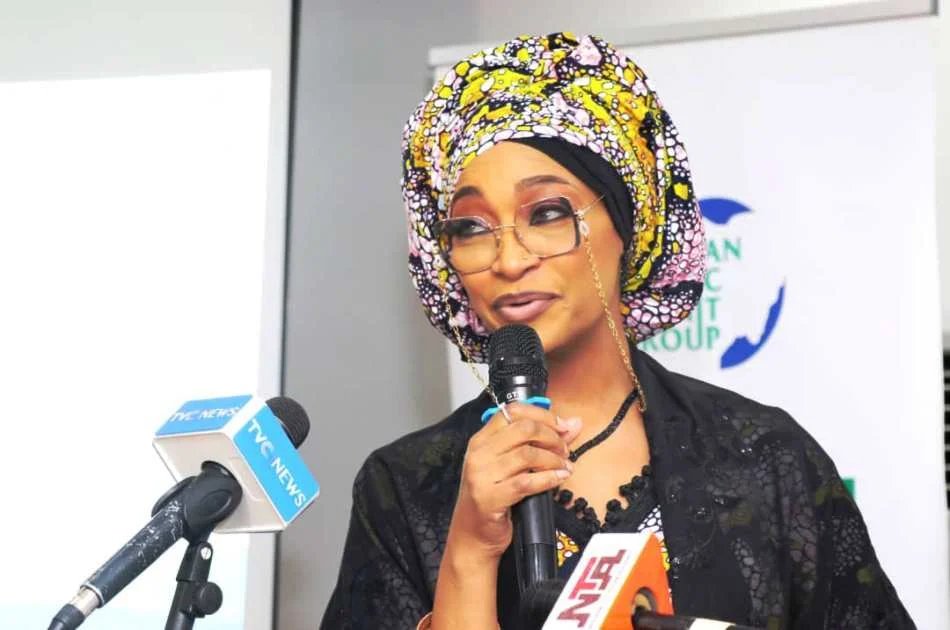
The Minister of Art, Culture, Tourism and the Creative Economy, Hannatu Musawa, has called on African governments to support efforts to grow the continent’s fashion economy from an estimated $30bn to $500bn, stressing the industry’s potential to create millions of jobs, particularly for women and young people.
This was contained in a statement issued on Monday by the minister’s Special Adviser on Media and Publicity, Nneka Anibeze, ahead of the unveiling of a fashion industry growth roadmap by the Confederation of African Fashion at the Creative Africa Nexus Weekend 2026 in Lagos.
Musawa said the Federal Government was supporting efforts to establish a structured fashion economy rooted in African heritage, driven by African institutions and positioned to compete in international markets.
She said, “Afroliganza seeks to build a structured, values-driven fashion economy rooted in African heritage, led by African institutions, and positioned for global impact.”
The minister emphasised that increased investment in the fashion industry could generate millions of jobs, particularly for women and young people, while creating opportunities across the fashion value chain.
The Confederation of African Fashion will unveil the roadmap alongside the Federal Ministry of Art, Culture, Tourism and the Creative Economy at the Wole Soyinka Centre for Culture and the Creative Arts, formerly the National Arts Theatre, on November 5.
The unveiling will also coincide with CAFA’s first anniversary.
The organisation’s President, (Prof.) Lai Labode, said CAFA was working with African governments to align sourcing, production, trade and intellectual property policies to ensure that the continent’s creative output generated greater economic value for African businesses and communities.
He said the initiative was designed to transform Africa’s fashion industry from one largely driven by creative expression into a structured economic sector with stronger manufacturing capacity, market access and investment opportunities.
“Fashion has always told the world who Africa is. Now Africa will decide what fashion pays,” Labode said.
Nigeria became the first country to sign the African Fashion Industry Growth Charter on November 5, 2025, when Musawa signed the document on behalf of the Federal Government.
CAFA, registered in Rwanda with an office in Kigali and a liaison desk at the Federal Ministry of Art, Culture, Tourism and the Creative Economy, is also working with Nigeria’s Ministry of Foreign Affairs to secure the African Union’s adoption of the charter.
Rwanda is progressing towards becoming the second participating country and the first in East Africa.
The organisation said its first year of operations recorded the participation of 50 countries at the Egbaliganza-Lisabi Festival in Abeokuta, Ogun State, as well as the signing of a Memorandum of Understanding with Türkiye’s ASRIAD.
As part of its strategy, CAFA is promoting the local processing of African raw materials into finished garments and other fashion products to increase value addition and reduce dependence on exporting unprocessed materials.
Its programmes include the ‘Own What We Create’ initiative, which focuses on intellectual property protection, while the CAFA Certified Seal and CAFA Heritage Mark are designed to promote quality standards and authenticate African fashion products.
The organisation is also establishing African Global Fashion Houses in international markets to provide platforms for African designers and fashion businesses to reach global consumers.
Another component of the roadmap is the proposed African Global Fashion Games, scheduled to debut in Nigeria in 2028.
The Games will bring together designers from different countries to compete under their national colours and will be held every three years, alternating between African and international host countries.
Beyond the competitions, the event will feature investor meetings, business deal signings and policy discussions aimed at strengthening commercial partnerships within the industry.
One of its proposed attractions is the Instant Craft competition, in which participating countries will receive identical materials and a fixed period to produce fashion items, with craftsmanship and technical skills determining the outcome.
CAFA said its exhibition stand at CANEX WKND would remain open from November 5 to 8, inviting fashion designers, artisans, diplomats, investors, economists and policymakers to explore opportunities in design, manufacturing, research, investment, trade and international partnerships.
The organisation also called on the African Union to adopt the African Fashion Industry Growth Charter and urged governments to sign the Games Register and establish national teams ahead of the inaugural competition.
The initiative comes amid growing efforts to position Africa’s creative economy as a source of employment, export earnings and economic diversification.
CANEX WKND, organised by the African Export-Import Bank, provides a platform for connecting African creatives with investors, policymakers and international markets across sectors including fashion, film, music, literature, visual arts and gastronomy.
The broader ambition is to strengthen the commercial infrastructure supporting African creativity, particularly through access to finance, intellectual property protection, local manufacturing and international distribution.
For CAFA, achieving the proposed $500bn target will depend on translating the continent’s creative talent and cultural influence into a competitive industry capable of retaining more economic value within Africa.